Advertisement
6 of the world’s most extraordinary places to dive
10th April, 2026 04:47 PM
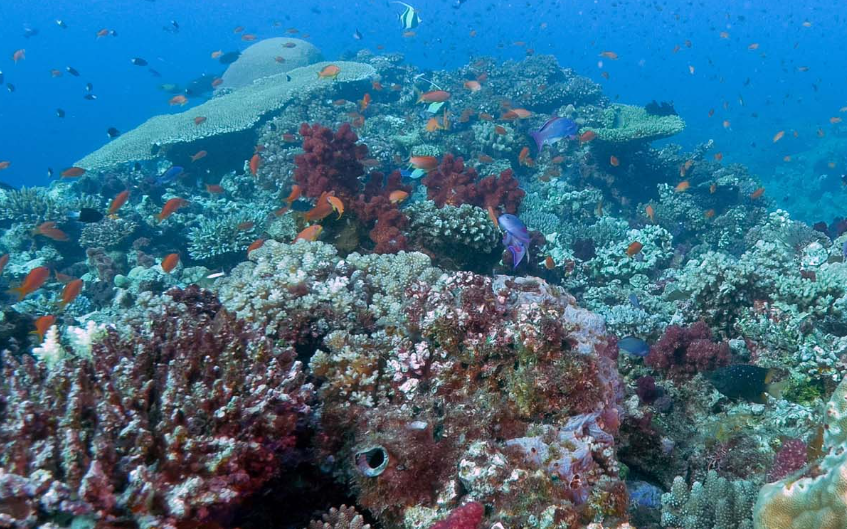
From Fiji’s kaleidoscopic reefs to shark-packed passes in French Polynesia, these six destinations offer some of the world’s most exhilarating underwater experiences.
Years ago, I impulsively signed up for scuba diving as a university elective. I was heading on a round-the-world trip and thought it might be useful. I never imagined it would shape the way I travel for decades to come.
I’m hardly alone. For a growing number of travellers, diving is not just an activity to add to the itinerary, but the reason for the trip itself. “Scuba diving fundamentally shifts how people travel and experience a destination,” says Kristin Valette Wirth, chief brand and membership officer for PADI Worldwide, which issues more than one million certifications each year. Since travel resumed post-pandemic, she says, PADI has seen a 50 per cent increase in divers earning their Advanced Open Water Certification.
In the years since my first plunge, I’ve logged more than 500 dives around the world, in locations ranging from the Arctic waters around Svalbard to Indonesia’s Spice Islands and Palau’s isolated marine lakes.
Perhaps more profoundly, however, the sport has connected me with the locals who love these places and are doing their very best to protect them for future generations of divers and snorkellers.
From Fiji’s soft-coral gardens to shark-filled passes in French Polynesia, these are six of the world’s most exhilarating places to dive – and the new experiences making them worth planning a trip around this year.
Best for diving with colourful corals: Fiji
I first understood why Fiji is called the soft coral capital of the world while snorkelling at the Great Astrolabe Reef decades ago. Even from the shallows, the colours were astonishing, with oranges, purples, pinks, and greens flashing from sponges, sea fans, crinoids, and whips. According to the World Wildlife Fund, Fiji’s waters contain more than three-quarters of the world’s hard and soft coral species.
I’ve returned many times since, most recently to Rainbow Reef in the Somosomo Strait between the islands of Taveuni and Vanua Levu, where fuchsia- and tangerine-hued soft corals blanket the reef. Migrating humpbacks also pass through the channel from July to October. At Great White Wall, the area’s most famous dive site, operators time descents for slack tide, when luminous white soft corals are in full bloom about 65ft (19.8m) down.
Best for underwater migrations: Baja California Sur, Mexico
Surrounded on nearly all sides by the Sea of Cortez and Pacific Ocean, Mexico’s Baja Peninsula is a marine migration corridor and its southernmost reaches offer some of the best diving in the country.
In a single day here, cheeky sea lions nipped my fins, I scuba dived shipwrecks, and I snorkelled with juvenile whale sharks.
Photographer Jay Clue describes Baja’s waters as a “bustling superhighway for migratory marine species, offering an incredible show that shifts with each season,” from the world’s largest aggregations of rays to powerful top predators and massive schools of fish.
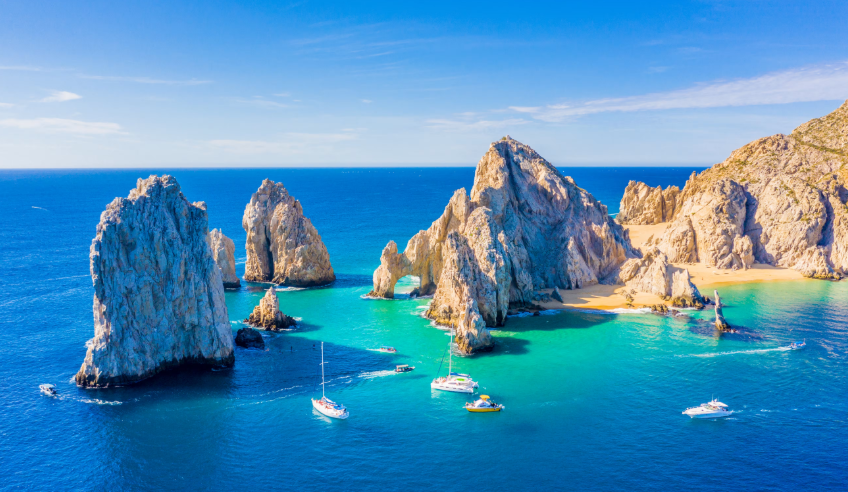
The seasonal line up is extraordinary. From mid-Dec to April, humpback whales migrate along the peninsula and it’s common to see them spouting close to shore and hear their singing on dives. Free divers and snorkellers can mingle among mobula rays when they move through the Sea of Cortez in large schools between May and July. And from mid-October to December, striped marlin put on an underwater show for divers while hunting migrating sardines and mackerel in Magdalena Bay.
Best for diving with sharks: French Polynesia
French Polynesia is one of the world’s greatest shark destinations, from the black tip reef sharks that dazzle honeymooners in the lagoons of Bora Bora and Moorea to dense aggregations of grey reef sharks at advanced dive sites in the Tuamotu Archipelago atolls. Some of the most thrilling dives of my life have been in the southern passage of Fakarava Atoll, where it’s common to see a “wall” of hundreds of grey reef sharks soaring on current updrafts through the waters of a UNESCO Biosphere Reserve. On one lucky occasion, my dive buddies and I were treated to the sight of a great hammerhead shark slicing through the scene.
“As a shark sanctuary, French Polynesia has some of the highest shark densities on the planet,” says Yannis Papastamatiou, associate professor at Florida International University, who studies the physiological and behavioural ecology of marine predators. “The islands and atolls are uniquely different and offer opportunities to see large numbers of sharks, without the need for bait.” He notes that species including tiger, great hammerhead, blacktip reef, grey reef, silvertip and lemon sharks can all be found here, depending on location.
The destination is also expanding its water protection. After the 2025 creation of a vast marine protected area (MPA) across nearly five million square kilometres of French Polynesia waters, President Moetai Brotherson committed to adding another 500,000 sq km by World Oceans Day in June 2026. That’s good news for sharks – and the divers who want to see them in thriving ecosystems.
Best for liveaboard diving: Raja Ampat, Indonesia
For divers looking to maximise their water time, few things beat the “eat, sleep, dive, repeat” mantra of liveaboard diving, where your days revolve entirely around the sea.
Built to accommodate divers on multi-day trips, these specialised ships have accessories like air compressors and tenders onboard and range from simple bunk-berth boats to luxury yachts with onboard spas.
Raja Ampat is one of the best places on Earth to do it. Set at the heart of the Coral Triangle, this remote West Papuan archipelago is renowned for its marine biodiversity, with more than 600 species of hard coral and 1,700 species of reef fish, according to Oceanic Society. It’s commonplace to see such bucket list creatures as whale sharks, mantas, dolphins, sea turtles and wobbegong sharks during a week-long cruise.
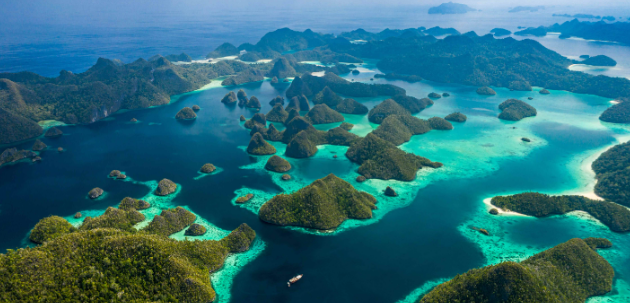
While modern liveaboards operate in Raja Ampat, it feels especially magical aboard a traditional wooden phinisi, gliding between karst islands and dive sites in a place recognised as both a UNESCO Global Geopark and a biosphere reserve.
Best for artificial reefs and wrecks: Florida, US
The Sunshine state is best known for the Florida Reef Tract, the largest coral barrier reef in the continental US (and part of the third largest barrier reef system in the world), but the state is also one of the nation’s strongest destinations for artificial reefs and wreck diving.
From the Keys to the Panhandle, divers can explore shipwrecks and other purpose-sunk wonders, including Miami’s new Reefline, an underwater art installation at snorkelling depths that debuted off South Beach in late 2025.
There are nine major wrecks to dive along the Florida Keys Wreck Trek from Key Largo to Key West, and more within eyeshot of downtown Miami’s skyscrapers, including the MV Princess Britney (a former drug-running ship purposely sunk as an artificial reef) and Belcher Barge.
Up in the Panhandle, the USS Oriskany off Pensacola is the world’s largest artificial reef at 911ft (277m) long. Soon, though, it will be overshadowed by the SS United States, which is due to be sunk off the coast of Destin-Fort Walton in 2026 to take the crown as the world’s largest artificial reef at 990ft (301m).
The retired ocean liner’s upper decks, suspended in 50 to 60ft (15 to 18m) of water, will be within reach of recreational divers, while its deeper sections will suit more advanced divers.