Advertisement
Holy Donor explains why he sings secular music despite being Akorino
07th June, 2025 12:25 AM

Emerging Kenyan dancehall artiste Holy Donor has openly addressed the fusion of secular music with his Akorino faith.
Speaking during a live interview with a local media station on Friday night, June 6, 2025, Holy Donor emphasised that there is no explicit doctrine forbidding Akorino members from engaging with secular music.
He further stated that his choice to sing secular songs is not a departure from his Akorino beliefs but rather an adaptation to the evolving music industry and audience preferences, adding that he could not sing only gospel music, as he had talent and would sing any genre.
“Hakuna mahali imeandikwa Mokorino asiimbe secular music. Kama ingekuwa Mokorino, anaimba tu gospel, watu wote wangeenda huko ndio waende heaven.
“Siwezi imba tu gospel, niko na talent na nitaimba.”

Turban
He went on to explain that wearing a turban is a personal expression of his faith, and he would not remove it despite joining the secular industry.
In addition, he stated that he does not concern himself with others’ opinions.
“Turban is just about dini yangu vile inabelieve sitatoa turban. I don’t mind what people say,” he added.
Akorino artistes
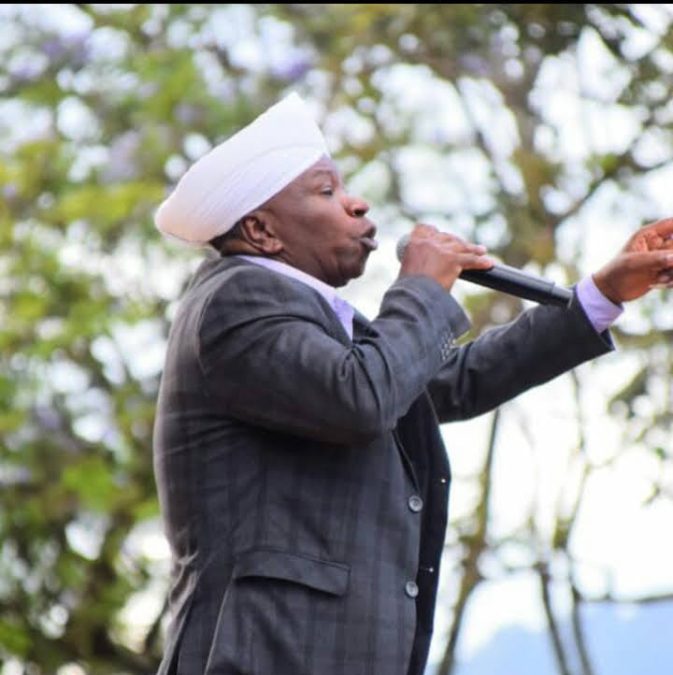
Holy Donor’s perspective comes months after veteran Akorino musician Hezeh Ndung’u advised gospel artists not to shy away from singing in bars.
Speaking during an interview in December 2020 with Jeff Kuria, he encouraged fellow gospel artists to perform in bars, emphasising that there is no scripture prohibiting such performances.
He argued that singing in bars does not make an artist unclean and that artists should utilise their talents to earn a livelihood.
“Even alcoholics are our fans, bars and alcohol do not sin, but it is we, the humans, who do, hence why I find no big deal in showing up there and staging your show. As long as you do not become part of the acts and utterances outside the scope of Godly dictates. Do not be a fool,” he advised.
“If singing in bars will give you a livelihood, go and utilise your talent to live.”
Ndung’u likened the act to the biblical shepherd leaving 99 sheep to find one lost sheep, suggesting that reaching out to those in bars can be more rewarding than performing for churchgoers. He also noted that many individuals in bars are grounded in religion, having been raised with strong religious foundations.
“Even God advocates for going out there in the field, leaving 99 sheep safely home in search of only one lost,”he added.
“You will be surprised to hear that most of those you find in bars are only living a lifestyle…but they are grounded in religion since their parents gave them that foundation. Singing for those you dismiss as sinners is more rewarding than doing it for the church people.”