Advertisement
Wetang’ula defends controversial Cybercrimes Act as key to safeguarding families
26th October, 2025 05:34 PM

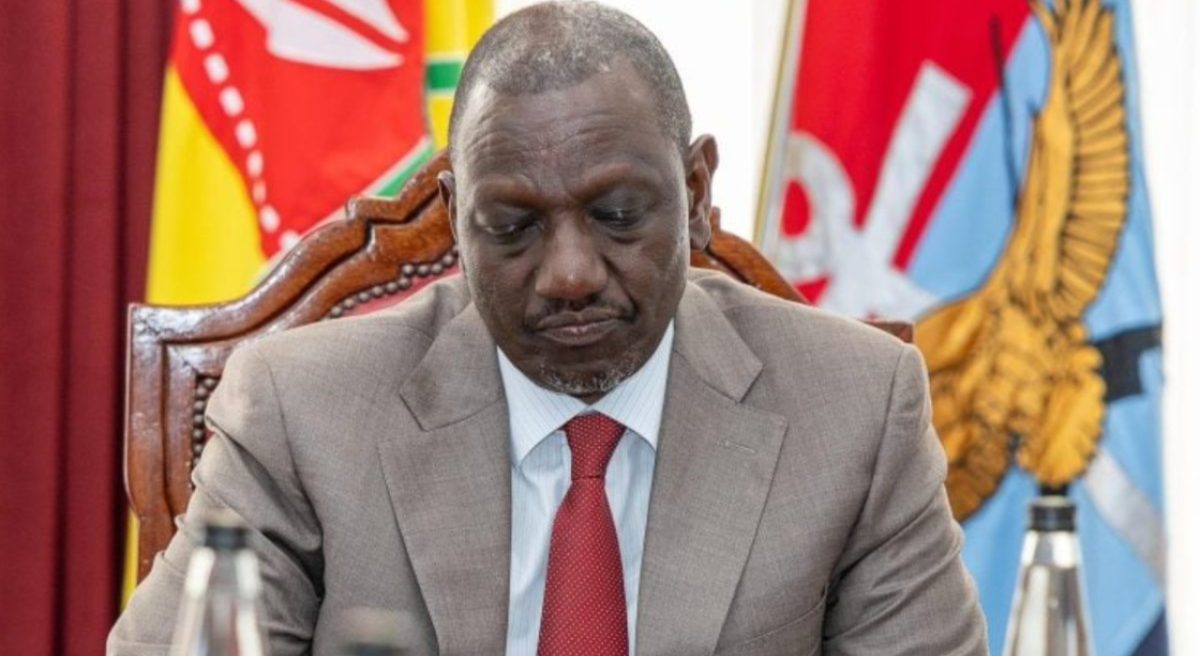
National Assembly Speaker Moses Wetang’ula has backed the recently assented Computer Misuse and Cybercrimes (Amendment) Act, 2025, by President William Ruto, saying the law is designed to safeguard the sanctity of the family unit.
This comes amid backlash over the Act, with the government already petitioned by the civil rights organisations, who term the new law punitive, and it is aimed at silencing the rights of expression.
However, Wetang’ula, speaking on Sunday, October 26, 2025, during a church service at St. Teresa’s Isanjiro Catholic Church in Malava Town, Kakamega County, dismissed claims that the law seeks to curtail freedom of expression.
Elsewhere, the Catholic Church in Embu has expressed strong support for the newly enacted Cybercrime Act, saying it will promote morality and encourage responsible use of social media among citizens. Church leaders believe the law will play a vital role in curbing the spread of harmful and insensitive content online.
“Sometimes, as a Catholic, I feel saddened when people spread falsehoods about this law. The Act is not meant to gag anyone or restrict legitimate expression,” Wetang’ula said.
“It is meant to protect our families, especially our children, from harmful online content, deter violent extremism, and stop the spread of cult-like ideologies that prey on the young and vulnerable.”
The Speaker, instead, said the Cybercrime law aims to promote responsible digital behaviour while combating violent extremism, online exploitation, and the spread of cultism in Kenya.
Earlier, the government spokesperson assured Kenyans that the cybercrime law does not infringe on freedom of speech.
Meanwhile, the High Court in Nairobi has temporarily suspended the enforcement of a section of the Computer Misuse and Cybercrimes Act that introduced tougher penalties for cyber harassment, including fines of up to Ksh20 million or imprisonment for up to 10 years.
Justice Lawrence Mugambi issued the conservatory order following an urgent application filed by gospel musician Reuben Kigame Lichete and the Kenya Human Rights Commission (KHRC).
The petitioners challenged the constitutionality of Section 27(1)(b), (c), and (2) of the amended law, warning the state could use the provisions to infringe on freedom of expression to silence dissent or legitimate online criticism.
Section 27 expanded the definition of cyber harassment to include online communications that are “detrimental,” “indecent,” or “grossly offensive” and “affect a person,” even indirectly.
But for Wetang’ula, Kenya’s rapid digital transformation has yielded enormous benefits in commerce, education, and communication, but has also opened the door to serious social risks such as cyberbullying, child pornography, online radicalisation, and the spread of misinformation.
“It would be irresponsible of us as leaders to look away while children are being exposed to violent, pornographic, or extremist content online,” he said.

Also watch: Ichung’wah Defends Cybercrimes Law, Cites 2018 Assent by Uhuru.
Cybercrime legal battle
In his ruling, Justice Mugambi directed that the implementation and enforcement of Section 27(1)(b), (c), and (2) stand halted pending full determination of the petition.
He ordered the respondents, among them the Kenya Union of Journalists, the Media Council of Kenya, the Attorney General, and the Directorate of Criminal Investigations (DCI), to respond within seven days.
“The enforcement, implementation, and operation of Section 27(1)(b), (c), and (2) of the Computer Misuse and Cybercrimes (Amendment) Act, 2025 [are] hereby suspended,” read the order issued on Wednesday, October 22.
The court further directed that the application and supporting documents be served within three days and set November 5, 2025, for further directions.
On his part, the Speaker, citing a case in the United States in which an adult was imprisoned for inciting a minor to self-harm through online interactions, said the new Kenyan law draws inspiration from international best practices that prioritise the protection of minors and families.
“As a lawyer of many years, I can assure you this law is sound. Countries like the United States, France, Australia, and the United Kingdom have enacted similar laws to protect their societies. Kenya cannot be left behind,” he argued.
According to Wetang’ula, the law empowers a dedicated commission to monitor, penalise, and take down websites that promote harmful content such as cultism, violent extremism, and pornography.