Advertisement
Scientists create ‘Superwood’ that’s 10 times stronger than steel
14th October, 2025 03:55 PM
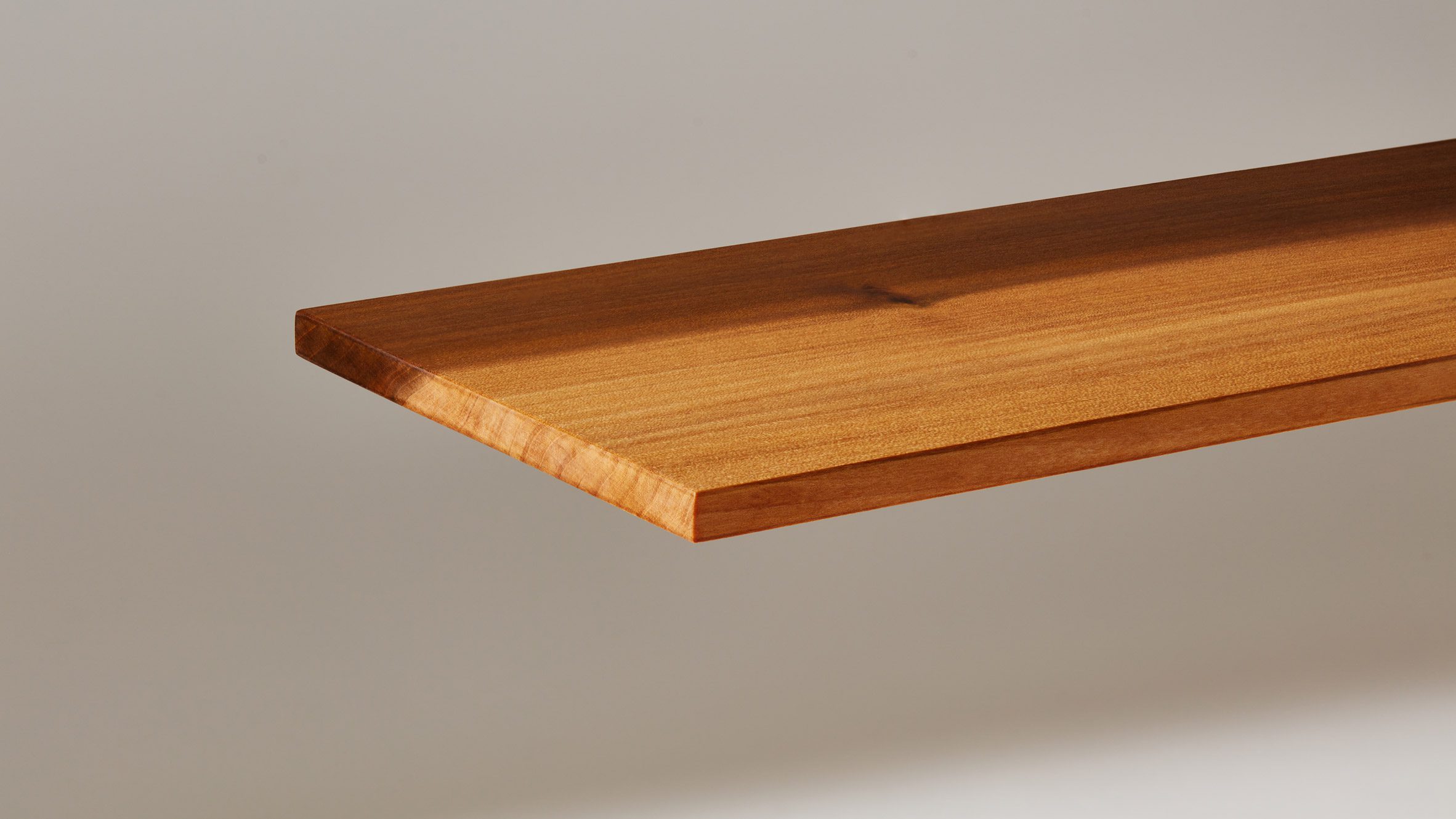
A US company has engineered a new type of wood that it says has up to 10 times the strength-to-weight ratio of steel, while also being up to six times lighter.
“Superwood” has just launched as a commercial product, manufactured by InventWood, a company co-founded by material scientist Liangbing Hu.
Over a decade ago, Hu set out on a quest to reinvent one of the oldest building materials known to humankind. While working at the University of Maryland’s Centre for Materials Innovation, Hu, who’s now a professor at Yale, found innovative ways to re-engineer wood. He even made it transparent by removing part of one of its key components, lignin, which gives wood its colour and some of its strength.
His real goal, however, was to make wood stronger, using cellulose, the main component of plant fibre and “the most abundant biopolymer on the planet,” according to Hu.
The breakthrough came in 2017, when Hu first strengthened regular wood by chemically treating it to enhance its natural cellulose, making it a better construction material.
The wood was first boiled in a bath of water and selected chemicals, then hot-pressed to collapse it at the cellular level, making it significantly denser. At the end of the weeklong process, the resulting wood had a strength-to-weight ratio “higher than that of most structural metals and alloys,” according to the study published in the journal Nature.
Now, after years of Hu perfecting the process and filing over 140 patents, Superwood has launched commercially.
Superwood is made using real wood, which is chemically treated and then compressed. Courtesy InventWood
“From a chemical and a practical standpoint, it’s wood,” explained InventWood CEO Alex Lau, who joined the business in 2021. In buildings, that would allow for structures potentially up to four times lighter than today, Lau said, meaning they would be more earthquake resistant, as well as easier on foundations, making construction faster and easier.
“It looks just like wood, and when you test it, it behaves like wood,” Lau added, “except it’s much stronger and better than wood in pretty much every aspect that we’ve tested.”
Competitive with steel?
InventWood is manufacturing Superwood in its plant in Frederick, Maryland, and although the production time is now measured in hours rather than days, it will take some time to scale up, Lau said.
Initially, the company plans to focus on external applications such as decking and cladding, before moving on to internal applications such as wall panelling, flooring and home furniture sometime next year.
InventWood says Superwood is up to 20 times stronger than regular wood and up to 10 times more resistant to dents, because the natural porous structure of the wood has been collapsed and toughened. That makes it impervious to fungi and insects. It also gets the highest rating in standard fire resistance tests.
InventWood says its tests show Superwood is up to 20 times stronger than regular wood. Courtesy InventWood
Superwood currently costs more than regular wood and also has a larger manufacturing carbon footprint, but Lau said that compared to steel manufacturing, the carbon emissions are 90% lower.
He added that the target is “not to be cheaper than wood, but to be competitive with steel,” when manufacturing scales up.
Timber trend
Other types of engineered wood have existed as construction materials for a long time, but InventWood says that these are simply rearranged pieces of wood that are held together with adhesives, rather than wood that has been altered at the molecular level like Superwood.
Timber construction has had a resurgence in recent years, and wood is now used to build skyscrapers. The city of Milwaukee, which already hosts the world’s tallest timber tower, the 284-foot (87-meter) Ascent MKE, has revealed plans to build an even taller one, at a whopping 600 feet (183 meters) in height.
Currently, concrete is by far the most-used construction material on Earth, and even though its production has plateaued in recent years, making concrete generates 7% of the world’s global carbon emissions.
However, he points out that existing engineered timber products are already competing with steel and concrete. “The barrier to more timber buildings isn’t really the need for more strength,” he explained, “it’s that the construction industry is risk-averse and slow to change.”
To see more timber in buildings, he argued, we need better education, pilot projects and improved regulatory frameworks: “But stronger timber products like this Superwood could allow architects to create larger spans and more durable finishes with timber, which would certainly be beneficial and could foster greater timber uptake.”