Advertisement
Say bye to chewing: Meru University puts Miraa in quick pop capsules
13th September, 2025 12:35 AM
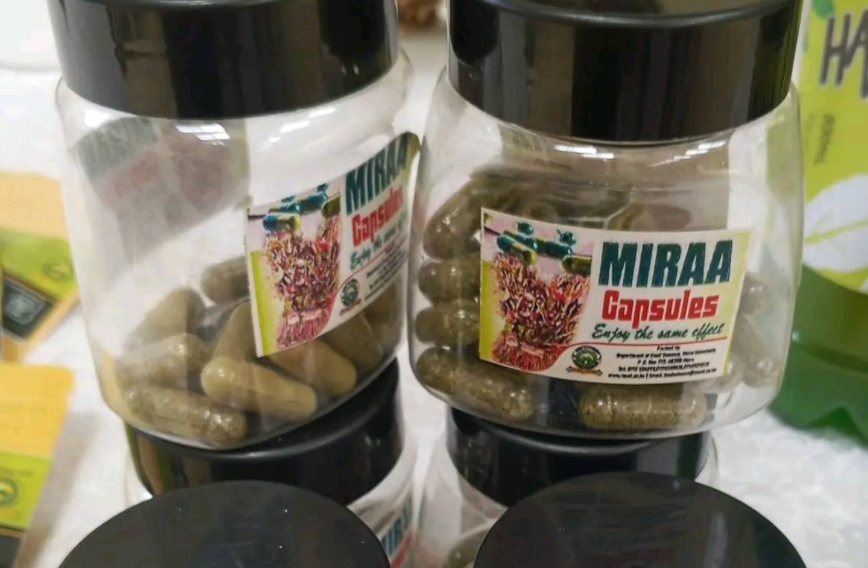
Miraa fans will no longer need to stuff their cheeks with twigs after Meru University of Science and Technology unveiled a new way to consume the stimulant in capsule form.
The institution said the innovation is set to transform miraa use by offering consumers a neat and discreet option.
In a statement on Friday, September 12, 2025, the university announced that its School of Agriculture and Food Sciences had developed capsules that retain the potency of miraa while doing away with chewing, waste and stigma.
“At Meru University of Science & Technology (MUST), brilliance meets tradition in the School of Agriculture & Food Sciences (SAFs). Led by our visionary lecturers, we have revolutionised miraa consumption — transforming it from chewing leaves into a modern scientific capsule,” the statement read.
According to the university, the capsules deliver a precise dosage, making consumption cleaner, healthier, and smarter.
Watch: Miraa exporters accuse airport cartel of extortion, warn of 14-day ultimatum to government
The university described the capsules as a global standard set in Meru, noting that its lecturers had proven that science can refine culture without killing it.
They declared that the capsules are the future of miraa, neat, safe and proudly Kenyan.
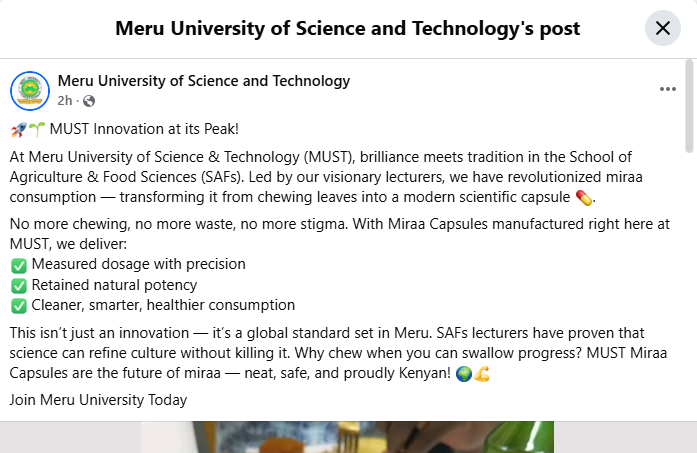
“No more chewing, no more waste, no more stigma. With Miraa Capsules manufactured right here at MUST, we deliver measured dosage with precision, retained natural potency, and cleaner, smarter, healthier consumption,” the university said.
Adding;
“This isn’t just an innovation, it’s a global standard set in Meru. SAF’s lecturers have proven that science can refine culture without killing it. Why chew when you can swallow progress? MUST miraa capsules are the future of miraa, neat, safe, and proudly Kenyan.”
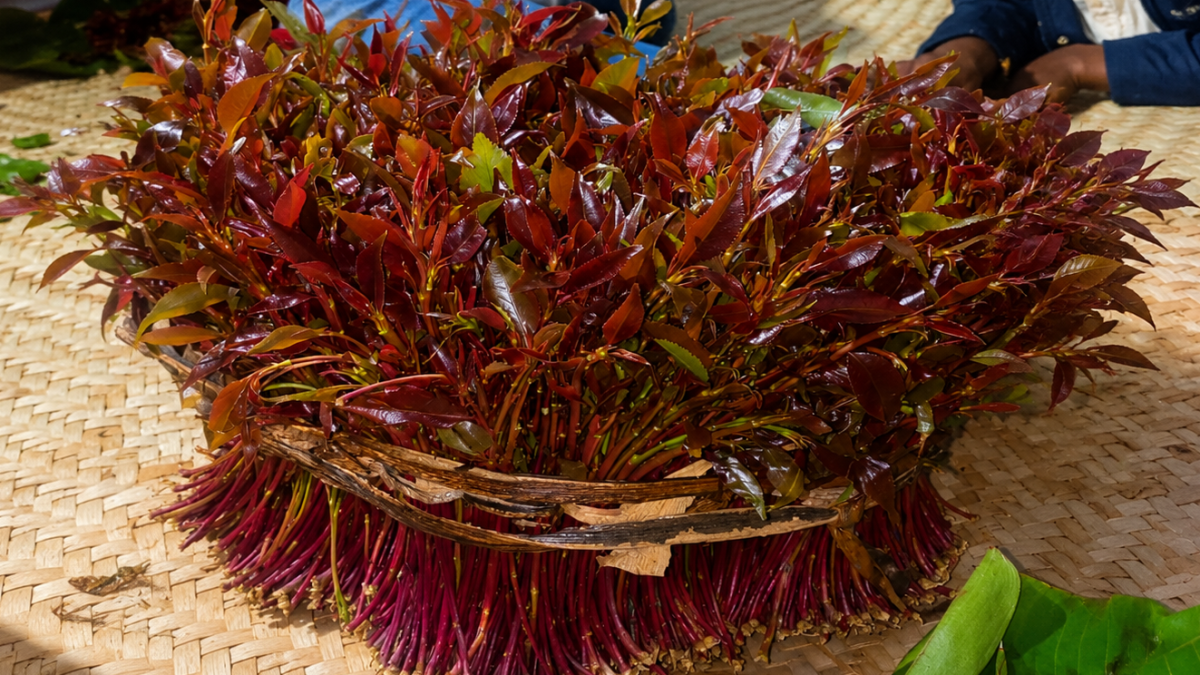
Miraa remains one of Kenya’s most valuable cash crops.
The country produces approximately 32,000 tonnes of the product every year, valued at over Ksh13 billion, with Meru and Embu counties accounting for nearly 90 per cent of the production.

While most of the crop is consumed locally, exports to Somalia and other markets have been rising steadily, with 2023 shipments hitting more than 6.2 million kilograms.