Advertisement
Ruto signs Computer Misuse Bill into law; govt can now delete your online content
15th October, 2025 06:38 PM
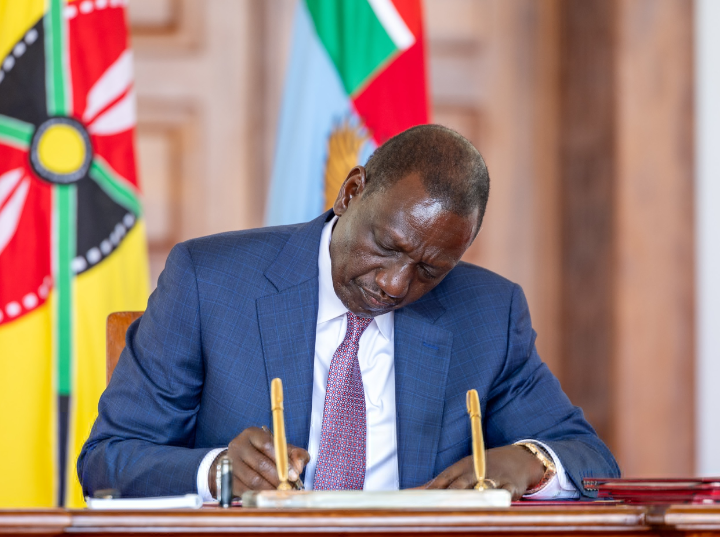
Kenyans should be prepared for content deemed illegal, whether posted on websites or digital devices such as mobile phones, to be taken down after President William Ruto assented to the Computer Misuse and Cybercrimes (Amendment) Bill, 2024.
The said illegal activities include those touching on child pornography, terrorism, and extreme religious or cultic practices.
Also watch: Penalties for offensive online posts: fines and jail terms explained
Assented into law on Wednesday, October 15, 2025, the same day former Prime Minister Raila Odinga died, the new law empowers the government to apply for pre-emptive shutdowns if investigators believe an online platform is being used to facilitate criminal activity.
Further, the new law, which has far-reaching ramifications, henceforth gives courts and investigative agencies the legal authority to block websites hosting illegal content, order their closure, and compel offenders to remove harmful material.
The new powers follow the introduction of Section 46A, which grants courts broad authority to order the deletion of content from digital devices or websites, shut down offending platforms, and approve urgent intervention in suspected cases.
Under this provision, investigators will no longer need to wait for harm to occur, as they now have the power to move to court to seek authority to rein in on offensive areas before illegal content spreads or goes viral.
The new law reads:
“Where an authorised person believes that a computer system, website, or digital device is being used to promote illegal activities, child pornography, terrorism, or extreme religious and cultic practices, the authorised person may apply to court for an order for the removal of the content or materials from the computer system, website, or digital device.”
It adds:
“Computer misuse refers to the unauthorised use, modification, or access to a computer system, program, or data; and cybercrime refers to an offence committed through the use of information and communication technology to target networks, systems, data, websites, or technology, or to facilitate a crime.”
Apart from accessing electronic devices, the new law also expands the definition of identity theft to include passwords and explicitly criminalises digital impersonation, data harvesting, and phishing.
The law provides that a person who willfully causes unauthorised alteration and unlawfully takes ownership of another person’s SIM card with intent to commit an offence will be liable to imprisonment for a term not exceeding two years, or a fine not exceeding KSh 200,000, or both.
Also watch: Parliament approves regulations that will protect government infrastructure from cyberattacks
According to the bill, a computer system means a physical or virtual device that uses electronic, magnetic, optical, or other technology to perform logical, arithmetic, storage, and communication functions on data, or to perform control functions on physical or virtual devices, including mobile devices.
The assent of the bill into law came after MPs approved it with various amendments proposed by the Departmental Committee on Information, Communication and Innovation, chaired by Dagoretti South MP John Kiarie.
In his submissions on the bill, Kiarie defended it, saying it would expand the definition of identity theft to include passwords and explicitly criminalise digital impersonation, data harvesting, and phishing.
He said:
“What we are observing is that phishing is becoming the order of the day. We seek to avert these increasing incidences of phishing, which can be executed by use of hyperlinks — stealing identities, money, and private information.”
Kiarie claimed that Kenyans spend up to four hours and twelve minutes online daily, making the country vulnerable to fake news, cyberbullying, and AI-generated disinformation.
He said:
“With more than eight out of every ten posts likely to be fake or toxic, we are simply fortifying our laws.”
Dagoretti North MP Beatrice Elachi said the changes would address mounting international pressure, particularly from the EU, which has criticised Kenya for failing to police digital child abuse.
She cautioned that young Kenyans seeking to study abroad may jeopardise their chances due to their online footprints.
But Funyula MP Wilberforce Oundo warned that using terrorism to deal with online activity could be prone to abuse.
He regretted that under the said provision, even citizens sharing photos of protests could be unfairly targeted.
He said:
“We already have an Anti-Terrorism Act. Introducing ‘terrorism’ here is making a rope, and it will hang us very soon.”
“It might look harmless, but to be honest, it has far-reaching repercussions, and we will regret it as a country not long from now,” he cautioned.
Tigania West MP John Mutunga argued that the law will protect the dignity of Members of Parliament, executives, and other innocent Kenyans who are routinely attacked on social media.
“If there is anything this law will do for us, it is to protect our dignity. If this amendment gives us that cushion, it will safeguard many people in this country,” Mutunga said.
Eldas MP Adan Keynan defended the digital conduct law, calling it a safeguard, not censorship — meant to protect Kenya’s sovereignty, security, and social fabric.
He urged young people to see the law as protection, not restriction, noting that guardrails today could prevent future regret.
Keynan said:
“This is not punitive. It is guidance. Follow procedure, respect due process, and do not be abusive.”
Apart from the said bill, Ruto also assented into law several others, including the Privatisation Bill, 2025, the Wildlife Conservation and Management (Amendment) Bill, 2023, the National Police Service Commission (Amendment) Bill, 2024, the Air Passenger Service Charge (Amendment) Bill, 2025, the Virtual Asset Service Providers Bill, 2025, the National Land Commission (Amendment) Bill, 2023, and the Land (Amendment) Bill, 2024.