Advertisement
Lake Naivasha families defy eviction orders amid rising floods
25th November, 2025 11:19 AM
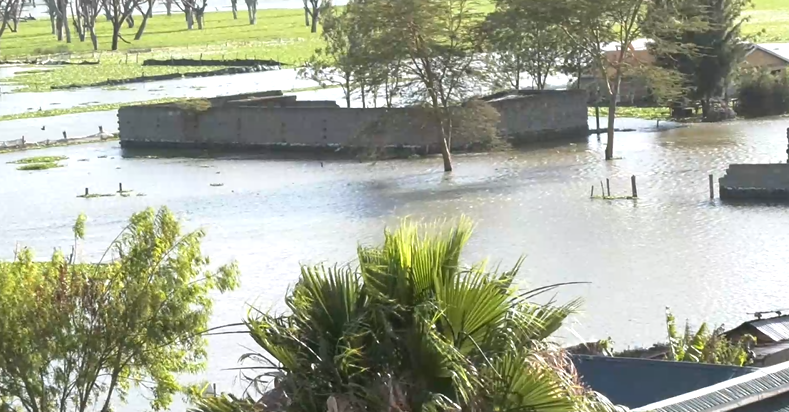
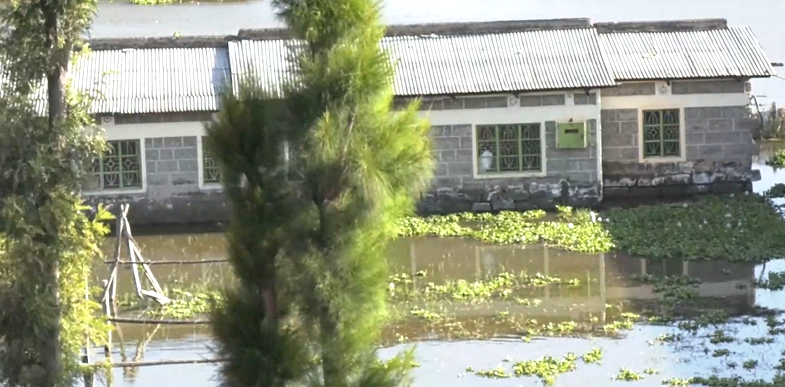
Caption:Kihoto residents protest fears of forced eviction as Lake Naivasha flooding worsens. VIDEO/K24TV Tens of families affected by the rising waters of Lake Naivasha have vowed that they will not move out of the estate amid reports of planned eviction by the State.
With the number of those affected surpassing the 4,000 mark, the affected families said that they legally obtained the land that borders the lake and would not expand.
This came as more families continued to relocate from the estate as more homes, schools, churches, and even a police station went under the waters.

According to Lakeview Ward MCA Alex Mbugua, there was fear and anxiety in the estate after some state officers described Kihoto as an area that must eventually be cleared.
Compensation standoff
He criticised the possibility of removal without compensation, arguing that many residents were business owners, civil servants, and retirees who built their homes using lifelong savings.
Mbugua said it was contradictory for the government to disown land it once helped formalise through the issuance of genuine title deeds as well as decades of investments in roads, power lines, and water systems.
“Evicting families already affected by flooding without offering support will amount to penalising victims of a natural disaster,” he told K24 digital on Tuesday, November 25, 2025.
Kihoto Residents’ Chairman, Stanley Wachanga, questioned why government agencies allowed land sales and development if the area was considered riparian land.
He noted that prominent lakeside hotels and tourist facilities continued to operate without any mention of eviction, despite their proximity to the water.
“Information circulating in the settlement suggests that schools, churches, health centers, and businesses have been notified to relocate, and this is worrying,” Wachanga said.
He added that so far over 10,000 families have since relocated, noting that many residents who have stayed behind were living in constant fear as they waited for compensation.
Local trader Evin Jomo said small business owners were among the most vulnerable, adding that any plans to relocate must include necessary assistance to rebuild their lost livelihoods.
Long-time resident Zakayo Kinyanju said his family settled in Kihoto under administrations that never raised concerns about riparian boundaries.
He said recent meetings with state officials have failed to provide clarity, leaving residents signing documents whose intentions they did not fully understand.
Another resident, Esther Wambui, said her elderly mother was among the original 30 owners of the affected land, with the original map indicating the area boundaries.
She rejected attempts to label the community as illegal occupants, insisting that every transaction was conducted openly and with government knowledge.