Advertisement
Karua decries redeployment of plain-clothed officers in several parts of the country
08th July, 2025 11:22 PM

People’s Liberation Party leader Martha Karua has decried what she terms as the redeployment of a special branch of the police to areas which experienced violence during the Saba Saba Day protests on Monday, July 7, 2025.
Speaking during a live TV interview on Tuesday, July 8, 2025, Karua disclosed that she was aware that the officers had been redeployed to the troubled areas even after the protests ended.
“I am receiving reports that ununiformed people who could be security officers or part of the militias of yesterday, have been dropped all over the towns where there was trouble yesterday: In Mwea, Ruiru, Thika and Rongai,” Karua said.
Police presence
How will people believe that these are not security officers and not militias who have come to inflict more terror on them? When a regime sends out sponsored militia, do they have control anymore? Can they guarantee Kenyans’ security?” she posed.
The officers, who used unmarked Subaru vehicles, were deployed to Rongai, Kiserian and Ngong areas of Kajiado County, where they were seen quelling protests which had escalated in the region.

On Tuesday evening, several shop owners in Rongai town rushed to close their businesses as reports emerged that police officers were conducting an operation in the area.
In the aftermath of their presence, several people were killed in Kiserian and Ngong towns, sparking a national debate on the role and command structure of the uniformed officers.
Court order violation
A high court ruling by Justice Bahati Mwamuye in August 2024 prohibited plain-clothes police officers from being deployed to manage protests; a decision aimed at enhancing accountability and transparency within the National Police Service (NPS) during public demonstrations.
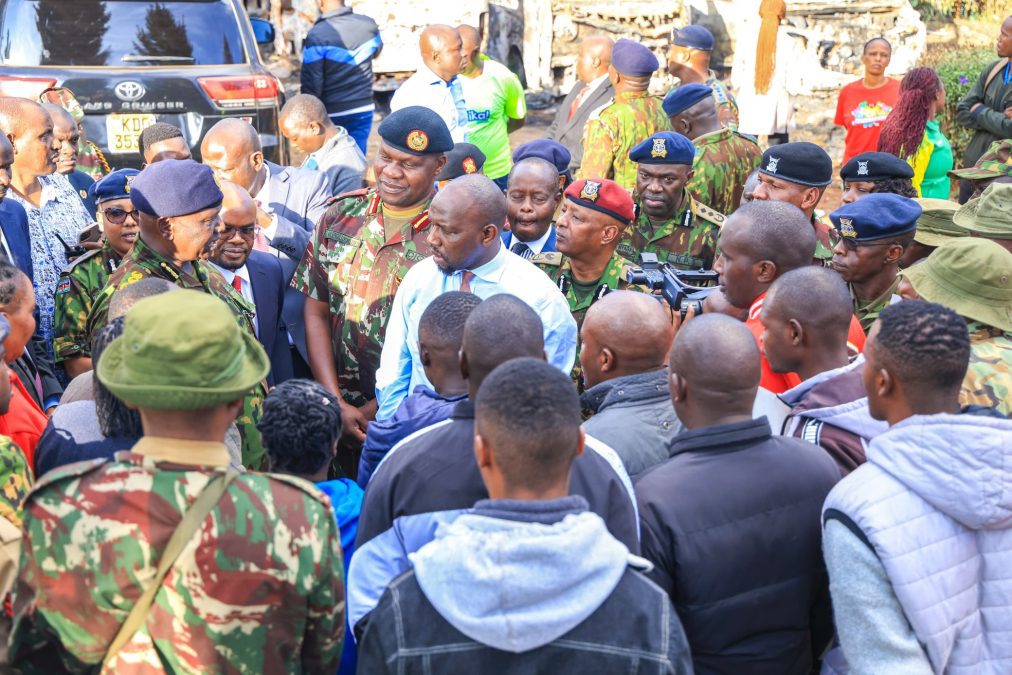
Additionally, the ruling explicitly prohibited plain-clothed officers from concealing their identities with balaclavas or other means, and further stipulated that all vehicles used by the police in protest management must bear clear identification or markings.
The court’s decision was a direct response to a growing public outcry over police conduct during protests, with numerous reports of brutality and arbitrary arrests by officers whose identities could not be ascertained.
Human rights advocates have long argued that the lack of visible identification hinders accountability, making it nearly impossible to report or pursue justice for alleged violations committed by individual officers.