Advertisement
Hussein Khalid: Nepal’s uprising sends warning to Kenyan leaders
09th September, 2025 05:33 PM

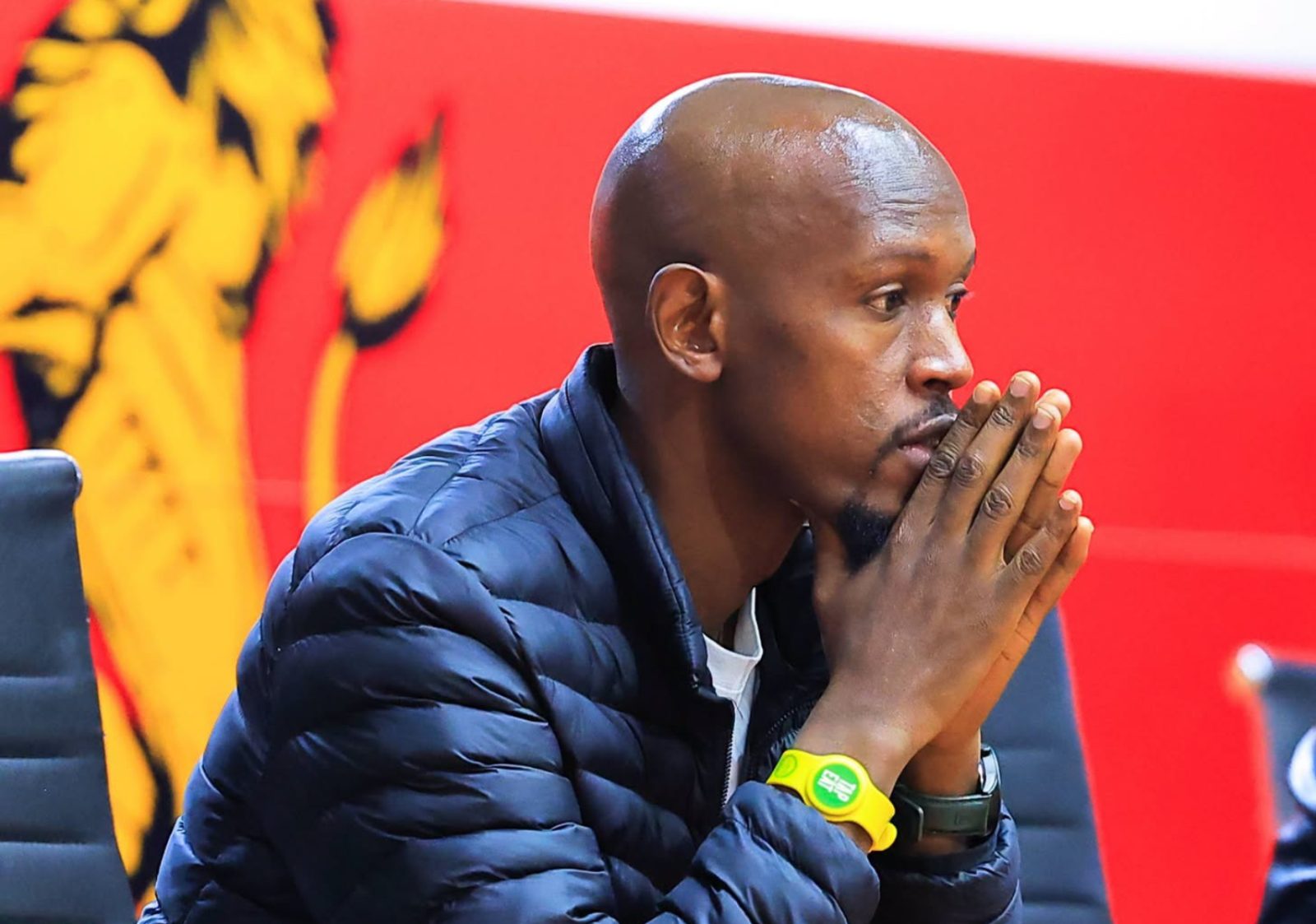
Activist and VOCAL Africa chief executive Hussein Khalid has warned Kenyan leaders to take notice of the uprising in Nepal, saying the events there are a reminder that popular anger can overwhelm those in power.
In a statement shared via his X account on Tuesday, September 9, 2025, Khalid urged politicians to respect the people they serve and to listen to citizens’ demands.
Also watch: DP Kindiki claps back at opposition criticism of empowerment program
“People power is greater than the people in power! A message from Nepal to leaders in Kenya and across the world – never take the people you lead for granted,” Khalid stated.
Nepal’s uprising
Nepal has been swept by violent protests this week after the government briefly banned major social media platforms.
Demonstrations led mostly by young people grew into a wider anti-corruption movement after security forces clashed with crowds, leaving dozens dead and many more injured. The unrest brought attacks on government institutions and the homes of senior politicians.
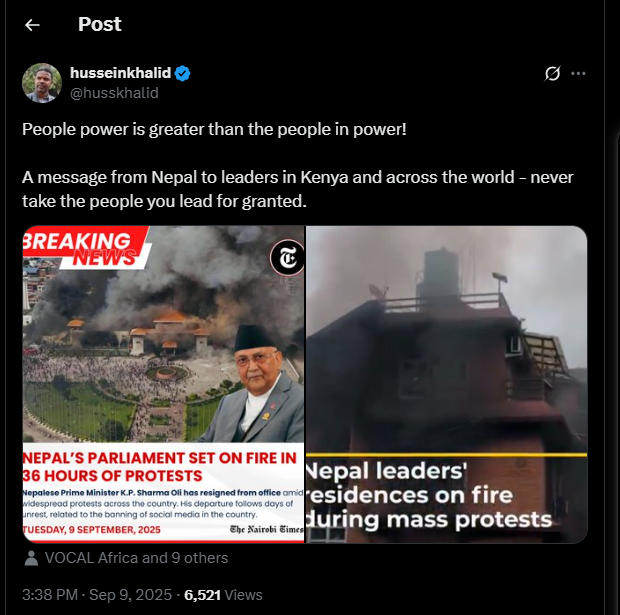
On Tuesday, Prime Minister K.P. Sharma Oli resigned as protests intensified and protesters broke into the parliamentary complex. Rioters set fire to the parliament building and other state institutions in Kathmandu, and videos from the capital showed thick black smoke rising over the city as people defied a government-imposed curfew.
The resignation followed a day in which at least 19 people were reported killed during clashes with security forces.
The turmoil began after authorities blocked access to platforms including Facebook and Instagram under new rules they said were meant to curb misinformation. The ban touched off immediate anger among young Nepalis who depend on social media for news and organising.
After the violence and loss of life, the government later reversed the social media restrictions, but the decision came too late to stop the unrest that had already spread across the country.
The scale and speed of the protests have alarmed many observers in the region. Buildings targeted by demonstrators included the Supreme Court and party offices, while several senior politicians saw their homes attacked. Faced with mass anger and the collapse of public order in parts of Kathmandu, the prime minister chose to step down rather than try to quell the rising movement.