Advertisement
Fury grows in Israel over delayed release of deceased hostages
15th October, 2025 07:37 AM
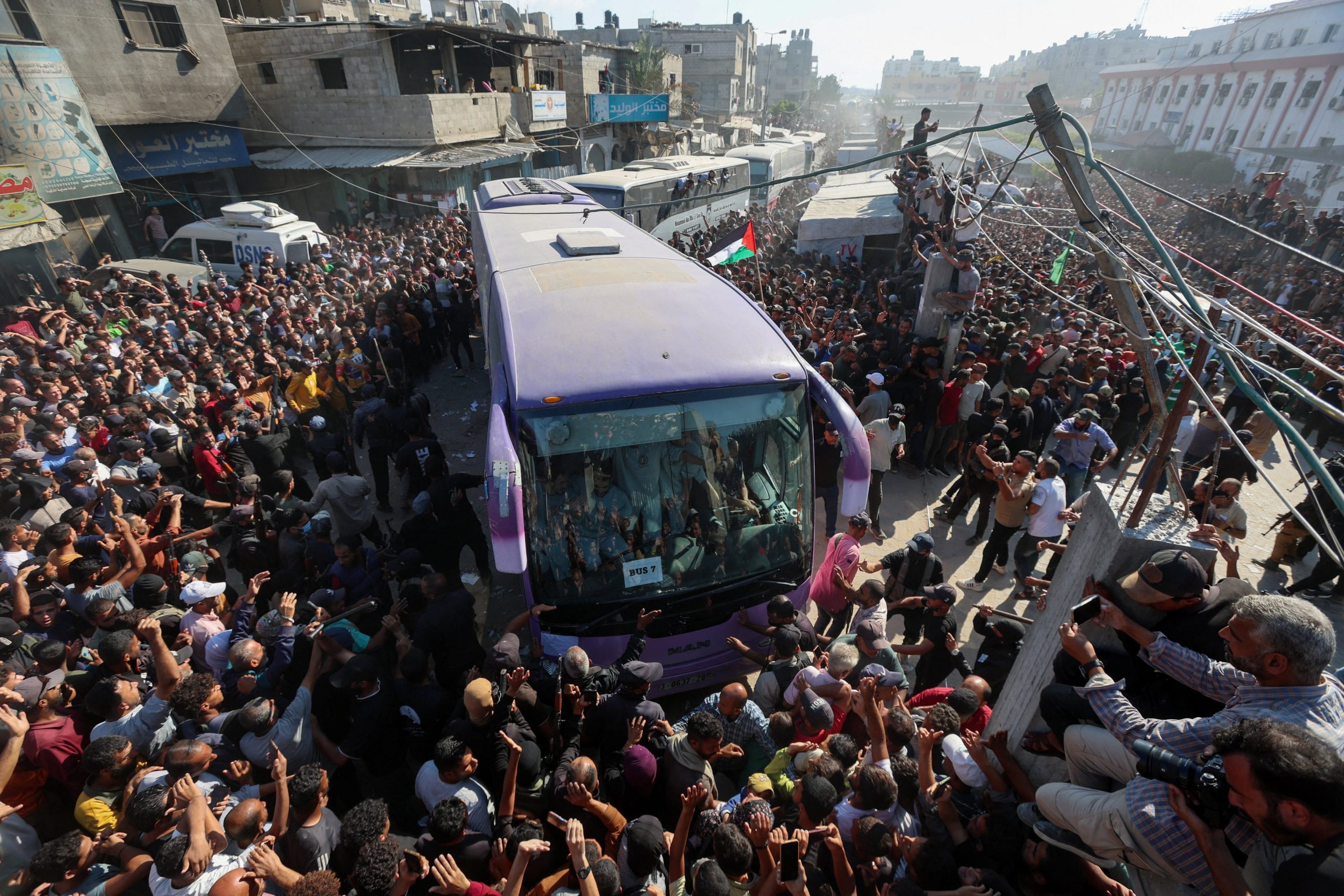
Just hours after the 20 remaining living hostages were released by Hamas and brought back to Israel on Monday, the speaker of the Israeli parliament took off his yellow ribbon pin, an emblem of solidarity and an omnipresent reminder of the nation’s commitment to securing the captives’ return.
As he turned to thank US President Donald Trump – who had arrived earlier to thunderous applause in the Knesset for brokering the ceasefire deal – Amir Ohana said he was “honoured to take it off.”
Ohana’s pin was given to him by the father of one of the newly released hostages.
Yet, the celebratory moment felt deeply inappropriate to some of those still waiting for their loved ones to return, some of whom were sitting in the very same room.
“It was disrespectful – no sympathy,” said Ruby Chen, the father of American-Israeli hostage Itay, who was taken captive to Gaza and later confirmed dead.
“It was part of the narrative that he wishes to push, which is the deal is done – the prime minister (Benjamin Netanyahu) got the deal done and that it’s over,” he told CNN, adding: “Well, it’s not – because there’s still (hostages inside Gaza).”
By Tuesday evening, just eight of the 28 deceased hostages still in Gaza had been released by Hamas, adding anguish to many families who watched the country celebrate the return of the living captives as a great success.
Under the ceasefire deal, Hamas had until 12:00 local time (4 a.m. ET) Monday to hand over all hostages to Israel – alive and deceased. Only four of the deceased – Guy Illouz, Yossi Sharabi, Bipin Joshi and Daniel Peretz – were released that evening.
More than 24 hours later, on Tuesday evening, the Israeli military said it had received four additional bodies, which will undergo a formal identification process in Israel.
For months, Israel had assessed that Hamas may not be able to find and return all the remaining dead hostages.
Israeli sources have indicated that maps and intelligence exist pinpointing several deceased hostages, but efforts to enter those zones have been hampered by two years of Israeli bombardment that have left vast swaths of the enclave in rubble, where an estimated 10,000 Palestinians are also believed to be buried.
The Israeli military is slated to work with an international task force, which was agreed on in the ceasefire plan, to retrieve the bodies of any remaining hostages. But it’s still unclear how that will work.
By Tuesday, fury was growing among the public – and the Israeli government – over how Hamas had returned few of the deceased hostages.
Israeli Defence Minister Israel Katz called the lack of progress “a failure to uphold commitments,” but stopped short of issuing military threats, interpreted as a signal that the ceasefire could still hold.
Israeli officials, meanwhile, announced they were considering keeping the Rafah border crossing – the primary entry point for humanitarian aid –closed.
The United Nations stated that Israel confirmed it would only allow 300 aid trucks – half the agreed-upon number – into Gaza on Wednesday, and there would be no fuel or gas shipments, except for those meeting specific humanitarian needs.