Advertisement
EAC urges Africa to take charge of AI future
15th July, 2025 03:59 PM
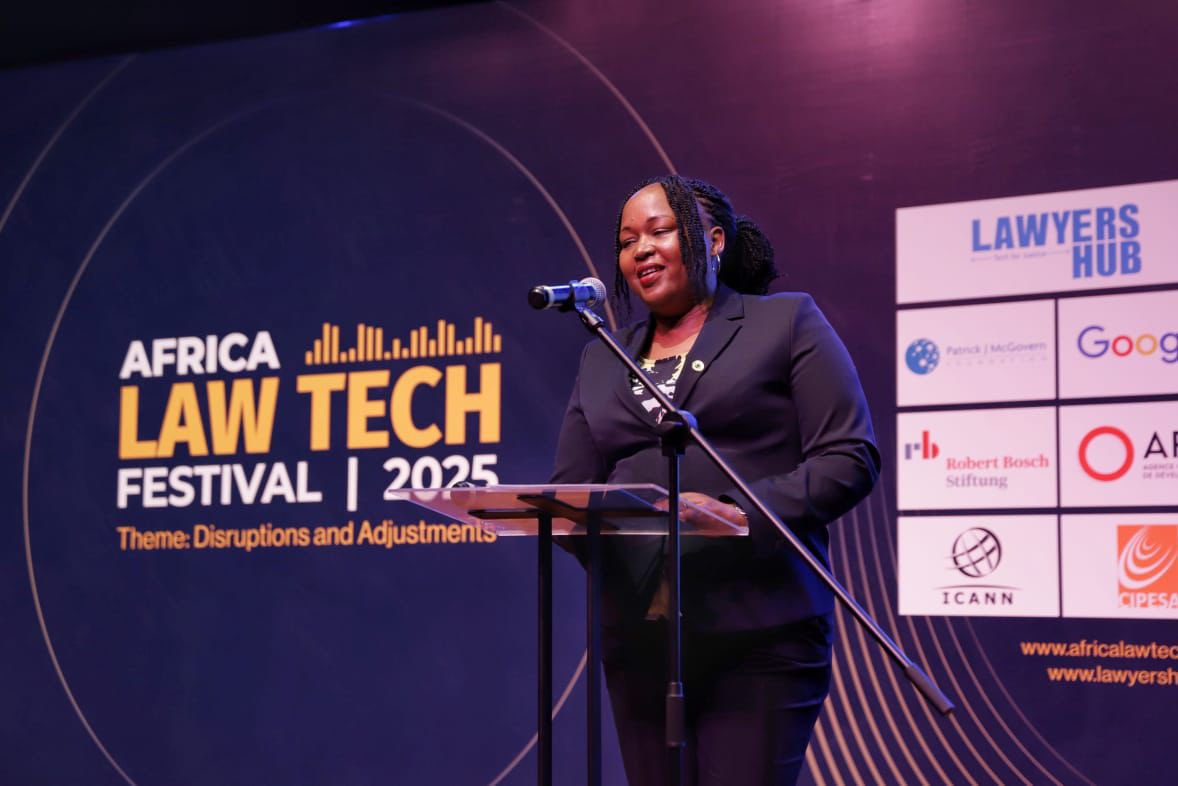
The East African Community (EAC) has called on African countries to take an active role in shaping the continent’s technological destiny, warning against the risk of becoming mere consumers in the global Artificial Intelligence (AI) space.
Speaking at the Africa Law Tech Festival 2025 in Nairobi on Tuesday, July 15, 2025, EAC Secretary General Veronica Nduva urged governments, innovators, educators, and civil society to ensure Africa has a say in global decisions on emerging technologies.
She underscored the need for the continent to move beyond adoption and actively participate in setting the terms of AI development and deployment.
“AI should not stand for African Ignorance,” Nduva said, setting a bold tone that has since triggered online discussions about Africa’s position in the global tech ecosystem. Her speech, delivered under the theme “Disruptions and Adjustments”, challenged African nations to stop being bystanders and instead secure a seat at the decision-making table where the future of AI is being shaped.
Nduva urged regional regulators to develop interoperable, locally grounded legal frameworks to guide ethical and inclusive AI use. She said there is an urgent need for Africa to build internal capacity to design and manage its own technological systems rather than depend on imported solutions that may not always align with the region’s values or realities.
She pointed to the example of Kenya’s mobile money platform, M-Pesa, as proof that locally tailored innovation can drive global impact. According to her, Africa has the potential to lead in technology when solutions are designed to meet the specific needs of its people.
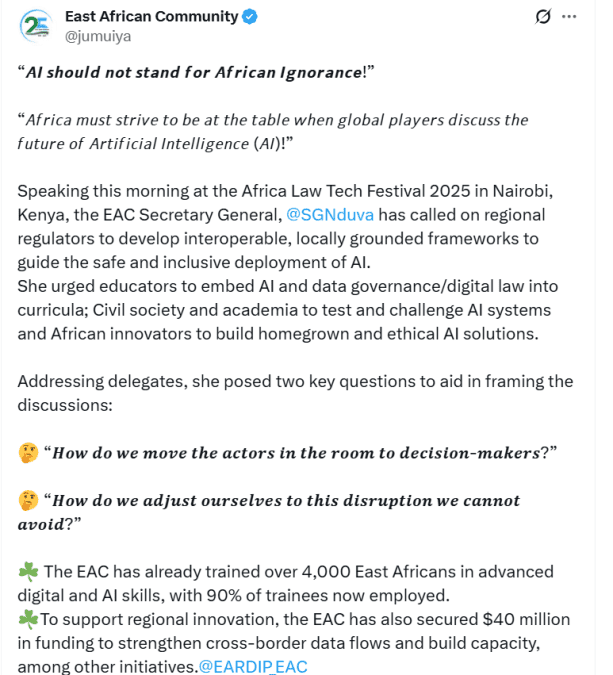
Addressing participants at the festival, Nduva posed two central questions that shaped the day’s conversations. She asked how those in attendance could transition from passive actors to decision-makers in AI development and how the continent can adjust to the technological disruptions that are inevitable.
The EAC has already begun efforts to build regional capacity in AI. According to Nduva, over 4,000 East Africans have been trained in advanced digital and AI skills under EAC programmes, with a reported 90 per cent of the trainees now employed in the tech sector. The bloc has also secured Ksh 5.2B in funding through the East African Regional Digital Integration Program to support innovation, enhance cross-border data flows, and improve technical infrastructure.
Despite these advances, Nduva acknowledged several challenges slowing AI adoption in the region. She cited fragmented policies, legal gaps, and infrastructure deficits as key barriers, warning that failure to address them could widen the technological divide between Africa and the rest of the world.
Her remarks mirror concerns raised in a 2023 UNESCO report, which revealed that only 12 per cent of African countries have formal national AI strategies.
In response to the call, AI regulators attending the festival committed to pushing for harmonisation of AI principles across the East African region, strengthening cross-border cooperation, and creating platforms for ongoing dialogue on best practices.
As the Africa Law Tech Festival continues, the focus remains on ensuring that AI serves as a tool for empowerment and development, rather than another marker of exclusion for the continent.