Advertisement
From zero to viral: List of Kenyans who rose to fame instantly in 2025
28th December, 2025 02:00 PM

2025 was a year when ordinary Kenyans – vendors, teachers, technologists, and activists – were thrust into the national spotlight overnight.
Some rose to fame through tragedy, others through resilience, and many because their stories captured the raw, chaotic energy of a country in the grip of protest and political tension.
Here are the figures who became household names almost instantly in 2025.
Boniface Mwangi Kariuki — the mask vendor

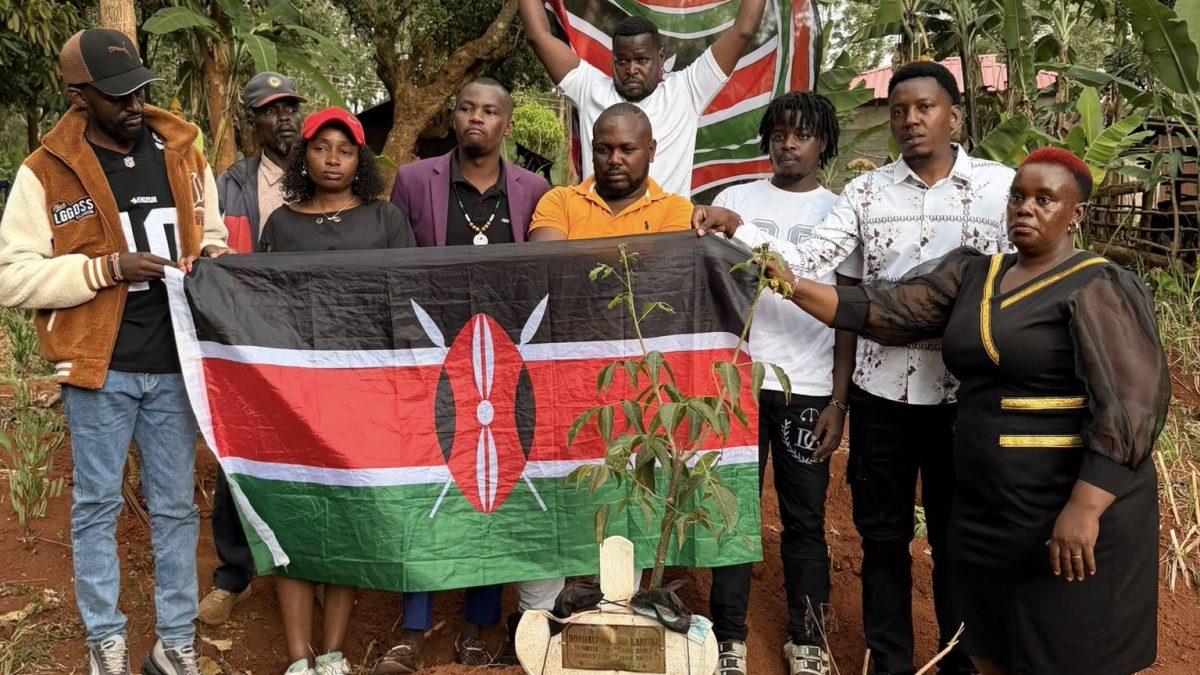
Before June 2025, 22-year-old Boniface Mwangi Kariuki was simply a street vendor selling masks to make a living. But on June 17, 2025, a shocking video changed everything.
Footage showed a police officer shooting Kariuki in the head at close range as he stood near a protest he was not participating in. The clip went viral within minutes, igniting national outrage.
Declared brain-dead and later dying on June 30, Kariuki’s story became a rallying cry for a generation demanding justice, accountability, and the end of police brutality. His name is now etched into Kenya’s protest history, symbolising innocence lost to excessive force.
Albert Ojwang — the teacher whose death sparked a movement

Albert Ojwang, a 31-year-old teacher and outspoken blogger, rose to national prominence under tragic circumstances.
Arrested in early June for defaming a senior police official, he died in custody days later.
Authorities claimed suicide – but an independent autopsy told a different story: severe head trauma, neck compression and soft tissue injuries, all pointing to violent assault.
Ojwang’s death became the flashpoint that triggered one of the country’s largest waves of protests in decades.
His online commentary, once followed by a niche audience, turned him into a posthumous symbol of state repression and the importance of free expression.
Bob Njagi and Nicholas Oyoo — the activists who rattled Museveni
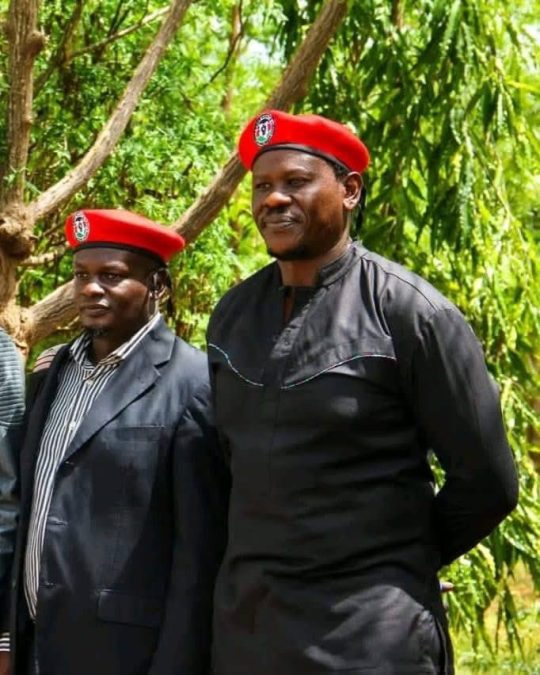
Few Kenyans expected to hear the names Bob Njagi and Nicholas Oyoo, but by November 2025, they had become transnational figures.
The two activists were detained in Uganda for 38 days, accused by President Yoweri Museveni of being ‘riot experts’ sent to incite unrest alongside opposition leader Bobi Wine.
After their dramatic handover to Kenyan authorities, they revealed harrowing details of inhumane treatment and torture in military custody.
Their ordeal dominated news cycles and reignited debate over East Africa’s human rights landscape, turning the pair into unexpected champions for regional justice and political freedoms.
Boyd Were – the Gen Z MP

Boyd Were entered the public spotlight under devastating circumstances following the assassination of his father, Charles Ong’ondo Were, on April 30, 2025.
The late Kasipul MP was shot multiple times while his vehicle stopped at a traffic light near the City Mortuary roundabout along Ngong Road in Nairobi.
The killing sparked immense public sympathy and outrage, particularly in the Kasipul area, leaving a significant void in the constituency’s leadership.
Boyd Were’s public profile grew rapidly in the wake of the tragedy, largely fueled by the memory and political legacy of his father.
Many constituents viewed him as the natural heir to Ong’ondo Were’s political mantle, positioning him to continue the work his father had started.
The public outcry and demands for justice over the assassination created a powerful wave of goodwill and recognition for the family name.
Boyd capitalised on this momentum, winning the Kasipul constituency seat in the November 27, 2025, by-election on an ODM ticket.
He secured a landslide victory, garnering 16,819 votes against his closest competitor, Philip Aroko, who managed 8,476 votes.
Notably, Aroko is the key person of interest in the murder of Boyd’s father, Charles Ong’ondo Were.
Police Constable Klinzy Masinde Baraza — the officer at the centre of outrage

Infamy is a form of fame, and in 2025, no officer drew more public ire than Constable Klinzy Masinde Baraza.
Widely identified as the policeman who fired the close-range shot that killed Boniface Kariuki, Baraza became the face of Kenya’s police brutality epidemic.
The viral video led to his arrest, indictment and impending murder charges.
For many Kenyans, Baraza represented a system in desperate need of accountability and reform.
Rose Njeri — the software developer who sparked a digital revolution

In a year defined by Gen Z activism, software developer Rose Njeri became an icon of digital resistance.
Her fame erupted after she was arrested under cybercrime laws for creating an anti–Finance Bill website and a digital petition tool that spread like wildfire.
Her detention galvanised young Kenyans, proving the government’s crackdown extended beyond the streets into cyberspace.
Njeri’s case underscored how technology had become a crucial battleground for political expression and how one coder could help power a national movement.
Ndiangui Kinyagia – the disappearance saga

Ndiangui Kinyagia became one of the most talked-about Kenyans of 2025 due to his central role in mobilising the Gen Z protests and his dramatic disappearance that captivated the country.
The tech entrepreneur went viral after posting a detailed protest ‘timetable’ on X, including a controversial march to the State House plan.
Days later, on June 21, 2025, he mysteriously vanished from his home in Kinoo, with witnesses claiming he was taken by men suspected to be plainclothes police.
His disappearance sparked a massive social media campaign under #FreeNdianguiKinyagia, with human rights groups filing a habeas corpus petition.
On July 3, 2025, Ndiangui resurfaced in court, claiming he had been in hiding.
The explanation triggered widespread scepticism, with many believing he had been abducted. The DCI dismissed the abduction narrative, calling it a “staged disappearance.”
Regardless, the incident instantly made Ndiangui a national figure and a symbol of the tensions between security agencies and digital activists.