Advertisement
First patients enrolled in record-breaking Ebola treatment trial in DRC
12th July, 2026 12:56 PM
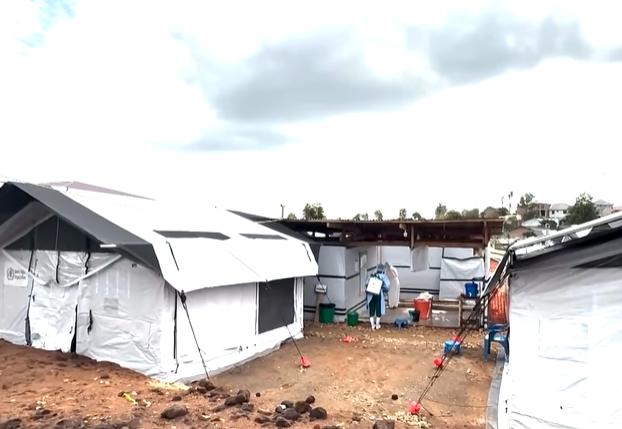
There is no approved drug to help the medical teams scrabbling to save lives in the Ebola outbreak in the Democratic Republic of the Congo – but there are hopes that could change within months as the first patients are enrolled in a treatment trial.
It is a record pace to set up and start this kind of research, scientists said, with patients enrolled just six weeks after the outbreak being declared a public health emergency of international concern by the World Health Organization (WHO) on 17 May.
Nevertheless, in Bunia, the capital of Ituri province, where the virus is raging, people are impatient.
“I hope these drug trials proceed quickly,” said Neema Haba, a mother of three and banana seller. “Financially, we are being driven to the brink by this outbreak and nothing is going right. We are struggling to provide for our children.”
As of 9 July, there had been 1,792 confirmed cases and 625 deaths caused by the Bundibugyo strain of the virus, for which there is no vaccine and no approved treatment. It is still “in the expansion phase”, according to the WHO.
The response is reliant on the basic techniques of identifying cases, isolating them for care and tracking and monitoring people they have been in contact with.
The latest figures show about 75% of known contacts are being traced, but low trust in authorities and a highly mobile population are hampering efforts. In addition, some frontline workers stopped work this week in protest at a lack of pay.
The bodies of Ebola victims are highly contagious, and must be safely buried by properly trained professional teams. Ovide Maliabo, a driver for one of the teams in Rwampara, a mining town in Ituri, said the work was dangerous in the face of community mistrust and he and his colleagues “see no point in risking our lives”.
“At one point, we narrowly escaped being lynched,” he said. “It’s a shame that we aren’t being financially supported.”
Bahati John, head of the team, said he had lost a tooth after being attacked by local people.
“Honestly, since we started working on 15 May, with all the insults we’ve had to put up with, we haven’t seen a single penny,” he said. “We are the breadwinners of our families, and our families are suffering.”
DRC officials said payments had been made but it is unclear whether activities have fully resumed. The closure of the local airport in Bunia was hampering the response, including by impeding the supply of banknotes, they said.
Hopes of turning the tide now rest with scientists searching for effective medicines.
The Partners treatment trial has opened with two drugs on its books – remdesivir, and MBP134. Patients will be randomly allocated to receive either drug, a combination of the two, or simply standard, supportive care.
Remdesivir is an antiviral made by pharma company Gilead Sciences, while MBP134 is a monoclonal antibody developed by Mapp Biopharmaceutical, containing two specially engineered immune proteins that recognise and neutralise the virus.
Both are given intravenously – MBP134 as a one-off infusion, and remdesivir as 10 days of intravenous therapy.
“These two drugs actually have been proven to work against the Bundibugyo virus in animal models,” said Prof Laurens Liesenborghs of the Institute of Tropical Medicine, Antwerp, who is working on the trial in Ituri.
“They showed great efficacy, but now we need to test it in humans. Basically, what we want to see is if they indeed can lower mortality.”
Bundibugyo typically has a lower death rate than the Zaire strain of Ebola, which has caused most previous outbreaks, but it still kills about one in three of those infected.