Advertisement
DCI denies offering Ksh20M reward for Farouk Kibet’s arrest
04th March, 2026 02:26 PM

The Directorate of Criminal Investigations (DCI) has denied announcing a price reward of Ksh20,000,000 for anyone who reveals Farouk Kibet’s whereabouts.
In a statement on X on Wednesday, March 4, 2026, the DCI flagged the circulating notice as fake and urged Kenyans to ignore it.
The agency said the document being shared online, claiming that Farouk Kibet was a wanted man over alleged criminal activities, did not originate from its offices.

Fake DCI notice
The fake statement, which bore the letterhead of the Directorate of Criminal Investigations, claimed that Kibet was wanted for questioning over accusations of organised criminal activities, including abductions, abuse of office and obstruction of justice.
It further claimed that the individual was evading law enforcement and could be moving between undisclosed locations within the country.
The notice also warned members of the public not to approach the alleged suspect, claiming he was armed and dangerous.
“A reward of 20,000,000 Kenyan Shillings is offered for credible information leading to his arrest and successful prosecution,” part of the fake notice read.
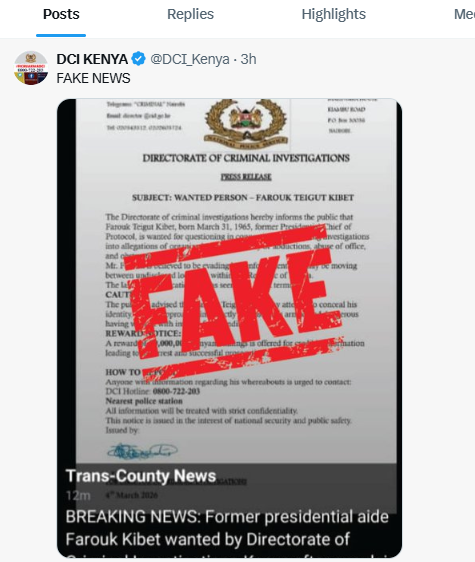
The statement also listed a hotline number and urged members of the public to report any information to security agencies.
DCI urges the public to ignore fake posts
However, the DCI clarified that the statement did not originate from the agency and asked the public to verify information before sharing it.
The investigative body warned that false documents bearing official logos can mislead the public and cause unnecessary panic.
The agency urged Kenyans to rely only on verified communication channels when seeking updates on criminal investigations or security matters.

Authorities also reminded social media users to exercise caution when interacting with content that appears to come from government institutions.
The DCI added that official notices and press statements are usually shared through its verified communication platforms and government channels.
The clarification comes amid increased circulation of edited documents and misleading posts online, which security agencies say can interfere with public trust and the work of law enforcement officers.