Advertisement
Why police welfare must be part of Kenya’s reform conversation
11th July, 2025 07:58 AM

As Kenya intensifies discussions around police reform, the conversation must evolve beyond disciplinary measures and oversight frameworks. At the heart of meaningful reform lies a more human concern: the welfare of police officers themselves.
Trans Nzoia Governor George Natembeya brought this issue to national attention in an interview on July 10, 2025, with a local TV station.
He questioned the stark imbalance in public sector pay, asking, “Why doesn’t police reform start with police welfare? Kwa nini gavana alipwe milioni moja na kuna Mkenya anaenda kushika doria usiku analipwa Ksh30,000?”
His message—though blunt—echoes a growing sentiment: without addressing the economic and social conditions of the police force, any reform effort will be incomplete.
Natembeya’s call is not just about salaries. It reflects a broader push for a holistic approach to welfare, covering adequate compensation, decent housing, access to healthcare, mental health support, and continuous training.
His comparison between the millions earned by top county officials and the modest earnings of frontline police officers draws attention to systemic inequalities that undermine both morale and professionalism.
Welfare affects discipline and public safety
These concerns are not new. During the 2022 presidential campaigns, opposition leader Raila Odinga decried the state of police housing, describing many officers’ residences as unfit for human dignity.
“We cannot expect our police to protect us when they are not protected from the elements,” he said. In 2020, former Interior CS Fred Matiang’i acknowledged that better pay and benefits were essential, stating, “A police officer who is well cared for is a police officer who will care for the citizens.”
Such statements underscore a recurring theme in Kenya’s political discourse: that the welfare of police officers is linked to public safety, discipline, and trust. When officers operate in difficult conditions, with low pay and little institutional support, the likelihood of misconduct—such as bribery, excessive force, or absenteeism—increases significantly.
This debate gains urgency in the context of ongoing police reforms. The Kenya National Task Force on Police Reforms, established to review systems and propose policy changes, has a broad mandate that includes welfare. However, Natembeya’s critique suggests that the welfare component remains underemphasised. Without centring this issue, the task force risks treating symptoms rather than the root causes of police dysfunction.
Value of mental health support
There is also growing empirical evidence to support the link between welfare and performance.
A 2024 study by Dennis Miano and colleagues, Disparities in Forensic Science Adoption for Crime Investigation in Kenya, found that officers with access to better working and living conditions were more likely to embrace modern investigative techniques.
This suggests that welfare is not merely a moral concern—it is a strategic imperative for building a capable, modern police service.
Internationally, police welfare is an essential component of reform efforts. In Canada and the UK, officers receive mental health support through structured counselling programs, peer debriefing after traumatic incidents, and confidential therapy services.
In the U.S., many police departments offer employee assistance programs to address stress, addiction, or post-traumatic stress disorder. These measures not only improve officer well-being but also contribute to a more restrained, empathetic style of policing.
In Kenya, such systems are virtually nonexistent. Officers working riot control, night shifts, or responding to violent crime rarely receive psychological support.
As a result, trauma builds up silently, often manifesting as aggression, withdrawal, or even suicide. Investing in mental health services is, therefore, not just about caring for officers—it is about preventing harm to the public and ensuring sound judgement in high-pressure situations.
Welfare reform a strategic priority
Recent statements from other leaders indicate a growing awareness of this gap. In 2023, Nairobi Governor Johnson Sakaja pledged to improve the welfare of county security personnel, acknowledging their critical role in urban safety.
“We must ensure that those who protect us are themselves protected,” he said. Several other governors have echoed similar sentiments, calling for better housing, healthcare, and education support for police families.
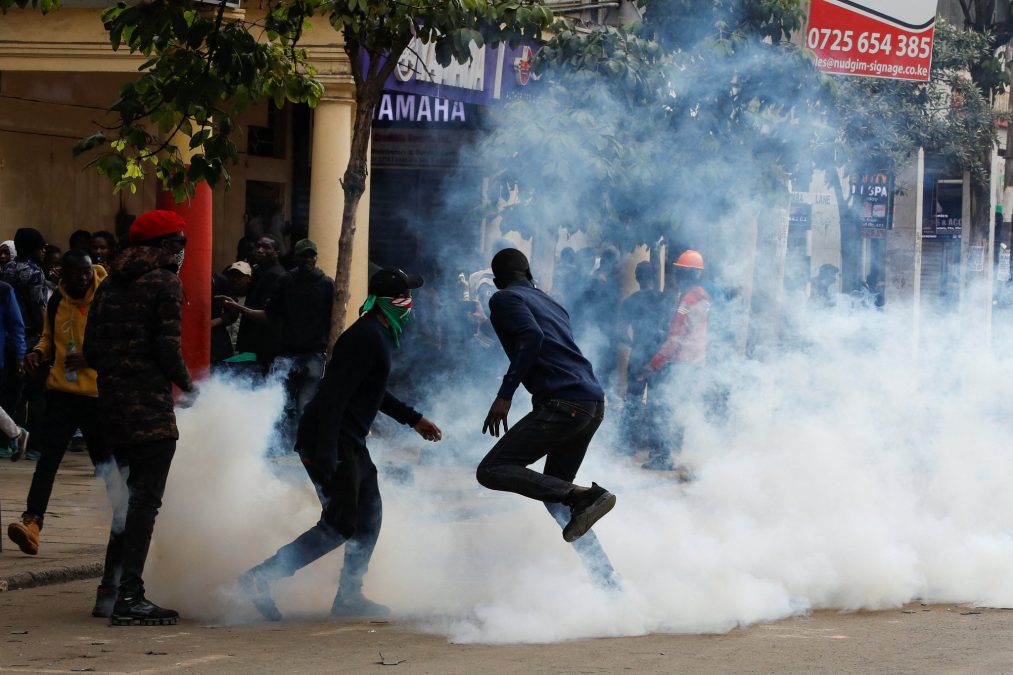
The timing of this debate is significant. Following weeks of youth-led protests, questions around police accountability and public trust are at the forefront of national dialogue.
The 2025 Police Reforms Working Group has condemned recent violence while urging reforms that balance enforcement with human rights. But without investing in the well-being of officers, reform risks becoming reactionary and unsustainable.
In conclusion, Natembeya’s remarks serve as a reminder that reform cannot succeed on policy alone. Real change requires investing in the dignity and capacity of those asked to implement the law. A police force that is underpaid, poorly housed, unsupported, and overworked cannot be expected to embody the principles of justice and professionalism.
Police welfare is not a side issue—it is the foundation upon which effective, humane, and trusted policing is built. If Kenya is serious about reform, then taking care of its officers must move from the margins to the center of the national agenda.