Advertisement
Vulturine guineafowl: 5 facts to know about Kenya’s monogamous bird and where to see them
28th September, 2026 08:00 PM
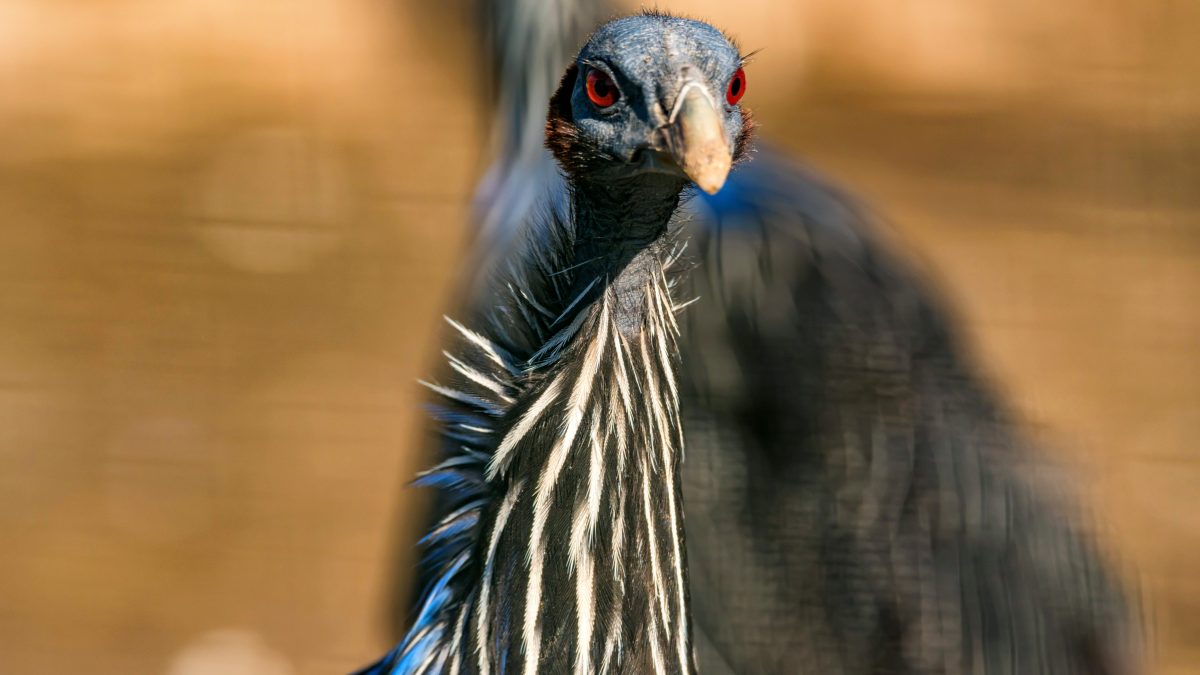
The Kenya Wildlife Service recently spotlighted one of Kenya’s most striking wild birds, the vulturine guineafowl.
Recognisable by its bare head and cobalt-blue feathers, this ground-dwelling bird possesses unusual habits and social structures that distinguish it from other wild fowls in East Africa.
Here are five key facts about the vulturine guineafowl and where to spot them across the country.
1. They stay strictly monogamous for life
Unlike many bird species that seek new partners every breeding season, vulturine guineafowls commit to lifelong relationships.
The Kenya Wildlife Service noted that “these birds are strictly monogamous; once a male and female pair up, they stay together for life”.
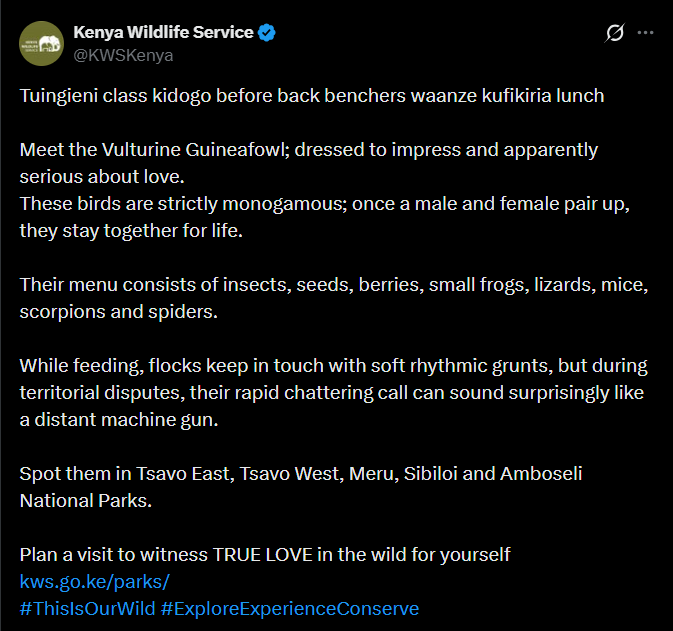
This permanent partnership allows breeding pairs to forage and navigate dry landscapes together year after year.
2. They live in complex primate-like societies
Scientific findings show these birds maintain intricate social networks beyond their individual pairings.
A study published in Current Biology on November 4, 2019, followed over 400 birds at Mpala Research Centre in Laikipia. Max Planck Institute researchers found that vulturine guineafowls form multi-level societies, a social arrangement previously associated only with large-brained mammals like baboons and elephants.
Lead researcher Danai Papageorgiou explained that “to our knowledge, this is the first time a social structure like this has been described for birds.”
Distinct groups keep stable memberships while sharing roosting grounds peacefully with other flocks.
3. They communicate via soft grunts and machine gun-like chatter
Communication plays a vital role in keeping flocks united across tall grasslands. While moving in search of food, flocks keep in touch with soft rhythmic grunts.
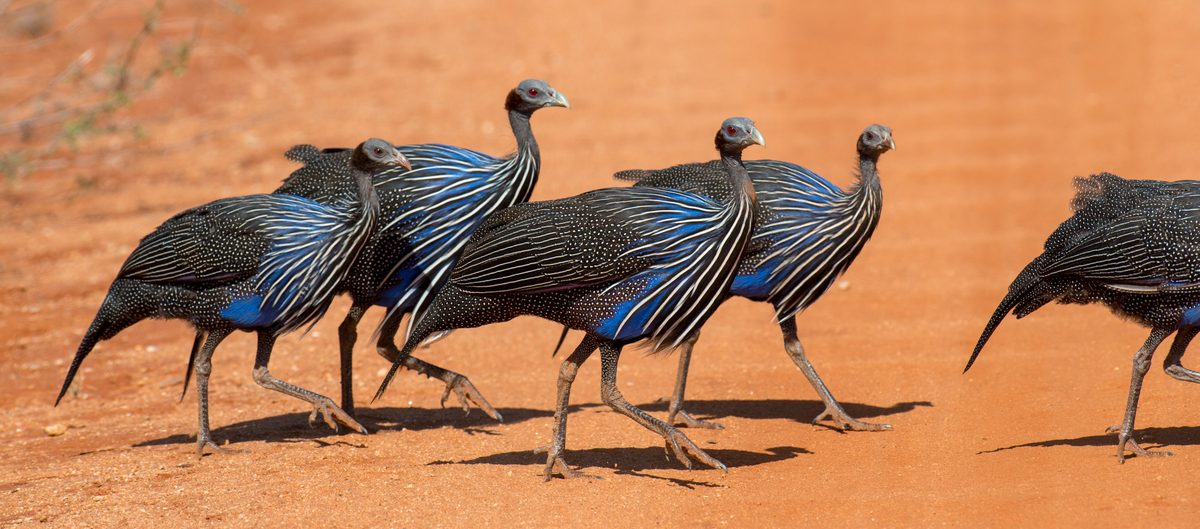
However, their tone changes dramatically during confrontations. The wildlife service noted that “during territorial disputes, their rapid chattering call can sound surprisingly like a distant machine gun”.
4. They feed on a wide menu of small prey and seeds
Vulturine guineafowls spend most of their time walking along the ground looking for meals, making them adaptable foragers in arid regions.
According to the Kenya Wildlife Service, “their menu consists of insects, seeds, berries, small frogs, lizards, mice, scorpions and spiders”.
5. Where to see them in Kenya’s national parks
These ground birds thrive in open savannahs and semi-arid bushlands across the country.
Wildlife enthusiasts looking to observe them in their natural habitats can visit several top reserves. The Kenya Wildlife Service recommends looking for them in Tsavo East, Tsavo West, Meru, Sibiloi and Amboseli National Parks.