Advertisement
Samburu chopper crash: 7 things passengers should never do during a helicopter flight
20th August, 2026 07:04 PM
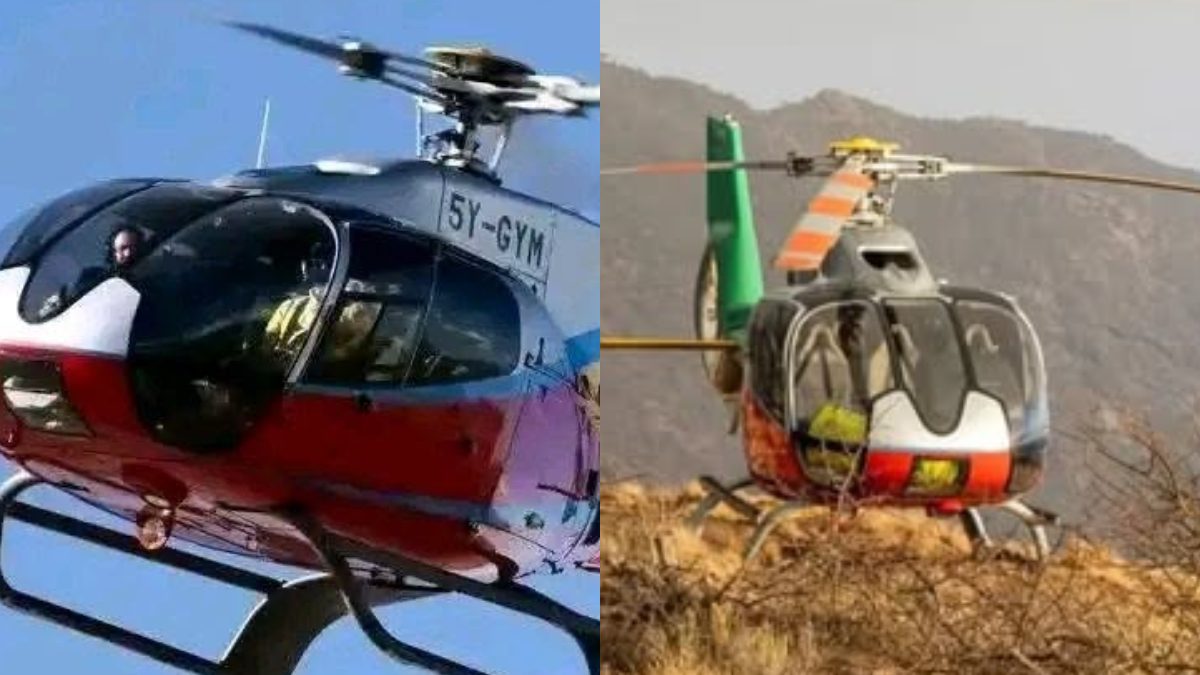
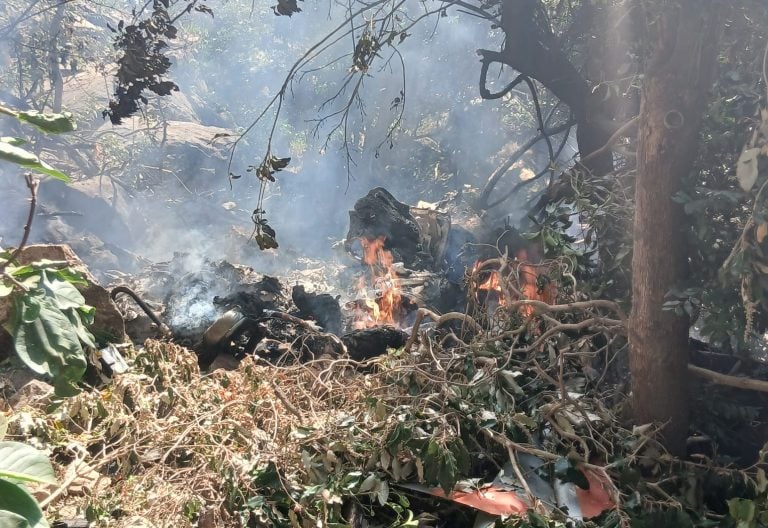
The devastating helicopter crash in Samburu has once again turned attention to the risks involved in flying in one of the most intimate forms of air travel.
The helicopter had been travelling from the Loisaba Conservancy towards the Ewaso Nyiro area when it went down at about 9.13 am. The cause of the crash remains under investigation.
But while investigators work to establish what happened, aviation-safety guidance offers an important reminder that passengers are not merely spectators once they climb aboard a helicopter.
There are simple behaviours they are expected to observe because, in the confined environment of a helicopter, an unsecured object, an incorrectly fastened seat belt or an ill-timed movement can create a serious hazard.
Here are seven things passengers should never do during a helicopter flight.
1. Never ignore the pilot’s or crew’s instructions
A helicopter passenger should never assume that a safety instruction is merely a formality.
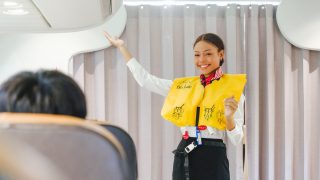
Before take-off, passengers should pay close attention to the briefing covering seat belts, exits, emergency equipment and what they should do in an emergency.
The Kenya Civil Aviation Authority requires passengers to be made familiar with the location and use of seat belts or harnesses, emergency exits and other emergency equipment.
The principle is simple: if the pilot or crew tells you to remain seated, secure an item, keep away from a particular area or wait before opening a door, do exactly that.
The helicopter is an aircraft in which the pilot needs to maintain control without unnecessary interference from passengers.
2. Never unfasten your seat belt simply because the flight feels calm
A smooth flight can create a false sense of security.
Passengers should not treat a period of calm flying as permission to release their restraints or move around the cabin unless the operator’s procedures and the pilot allow it.
Transport Canada advises helicopter passengers to keep their seat belts and shoulder restraints, where provided, secured while in flight and to remain in their seats unless given permission to move.
The reason is straightforward: conditions can change suddenly.
A sudden manoeuvre, turbulence or an unexpected landing can leave an unrestrained passenger without the protection that the restraint system is designed to provide.
3. Never move around the cabin unnecessarily
A helicopter is not a place for passengers to casually change seats, lean across other passengers or wander around while the aircraft is airborne.
Unless the flight has been specifically designed and briefed to allow passenger movement, remain in your assigned seat.
Canadian helicopter passenger guidance explicitly advises passengers to remain seated unless permission to move has been given.
This becomes particularly important in smaller helicopters, where passengers sit relatively close to the pilot and flight controls.
An unnecessary movement can also distract the pilot at precisely the moment concentration is required.
4. Never allow phones, cameras, clothing or bags to become loose
That camera hanging from your neck, an unsecured phone, a hat, scarf, backpack strap or another loose object may appear harmless.
Around a helicopter, it can become anything but harmless.
The FAA advises helicopter passengers to secure loose items, including cameras and their straps, and to ensure they cannot interfere with the pilot’s controls.
There is a particularly serious reason for this. Aviation-safety authorities have documented helicopter incidents in which loose objects have left the aircraft and struck rotor systems. New Zealand’s Civil Aviation Authority warns that such objects have, in some cases, resulted in a complete loss of helicopter control.
Passengers should therefore secure their belongings exactly as instructed before take-off and should never attempt to retrieve an item that has blown away while the helicopter is operating.
5. Never touch the controls or interfere with equipment
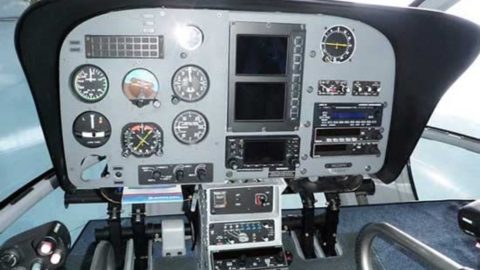
For a passenger sitting near the front of a helicopter, the cockpit controls can appear tantalisingly close.
They should nevertheless be treated as strictly off-limits unless the pilot has expressly instructed otherwise.
Airbus Helicopters has warned of incidents in which passengers or their devices interfered with flight controls, critical helicopter systems and even door locking mechanisms. Its safety guidance specifically calls for passengers and their belongings to be kept away from critical controls.
This also applies to phones, cameras, charging cables, bags and clothing.
The rule is simple: do not touch anything in the cockpit merely because it is within reach.
6. Never open, close or tamper with a helicopter door without permission
A helicopter door is not something a passenger should experiment with during a flight.
Passengers should follow the operator’s briefing on how and when doors are to be operated and should never attempt to open a door, adjust its locking mechanism or interfere with it without instruction.
Civil aviation safety authorities have investigated incidents involving helicopter doors opening during flight and have warned that clothing and equipment can also interfere with door latches.
The FAA similarly advises passengers to enter and exit helicopters only as briefed and to follow crew instructions.
This is particularly important during sightseeing flights where passengers may become excited by the scenery and attempt to reposition themselves for a better photograph.
The view is never worth compromising the aircraft’s safety procedures.
7. Never assume you can get out of a helicopter however you want
One of the most dangerous moments of a helicopter journey can be the period immediately after landing.
Passengers should not simply jump out, walk around the aircraft or head towards the rear because the helicopter appears to have landed safely.
The main and tail rotors can remain dangerous even when the aircraft appears stationary. The FAA warns passengers and ground personnel to avoid the rear of a helicopter because the tail rotor can be difficult to see while spinning.
The FAA’s passenger guidance also advises passengers to wait for marshalling personnel to open the doors, release restraints and guide them away from the helicopter.
Unless there is an emergency requiring immediate evacuation, passengers should therefore remain where they have been instructed to remain and wait for the pilot or ground crew to indicate when and how it is safe to leave.
Author
Steve Ireri
Steve is a senior writer with over four years of experience in digital journalism. His focus is on the showbiz and human interest stories. Emails: [email protected] , [email protected]
View all posts by Steve Ireri