Advertisement
The quiet art of dressing for your body type
01st May, 2026 09:14 AM
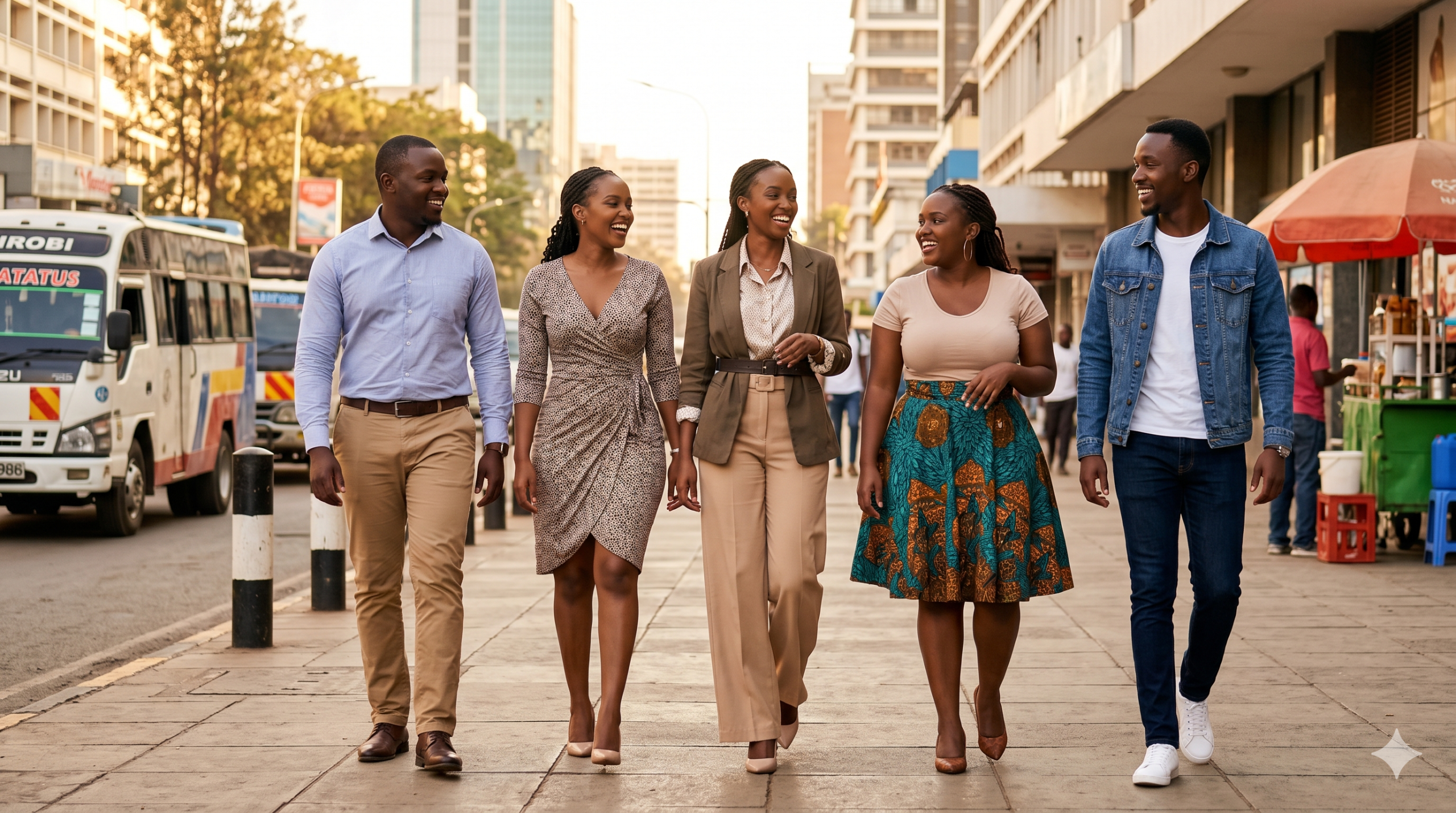
There is a version of fashion advice that has been doing the rounds for years. It comes with diagrams, strict categories, and a long list of things you should never wear. It is also, for the most part, exhausting and not very useful.
The truth is that dressing well has very little to do with fitting neatly into a category and everything to do with knowing what makes you feel comfortable and confident.
Researcher Arisa Jinnah puts it plainly in her 2025 paper The Psychological Influence of Fashion: “Fashion is not just about appearance; it is also a psychological tool, a second skin.” That framing matters. Dressing well is not about performing for other people. It is about how you move through your day, and how you feel when you do.
That said, a few practical pointers can go a long way, especially when you are standing in a mitumba (second-hand clothes) pile at Gikomba or scrolling through an online store, trying to decide fast.
Know your proportions, not your ‘type’
Body type charts (apple, pear, hourglass, rectangle) can be a useful starting point, but they are not the law.
What matters more is understanding your proportions: where your shoulders sit in relation to your hips, where your waist falls, and where you tend to carry weight.
If your shoulders are broader than your hips, clothes that add volume at the bottom (wide-leg trousers, A-line skirts, or flared jeans) can create a balanced look.
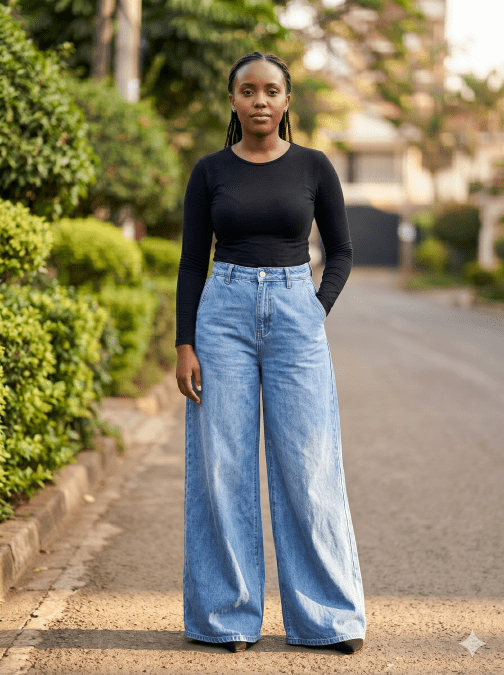
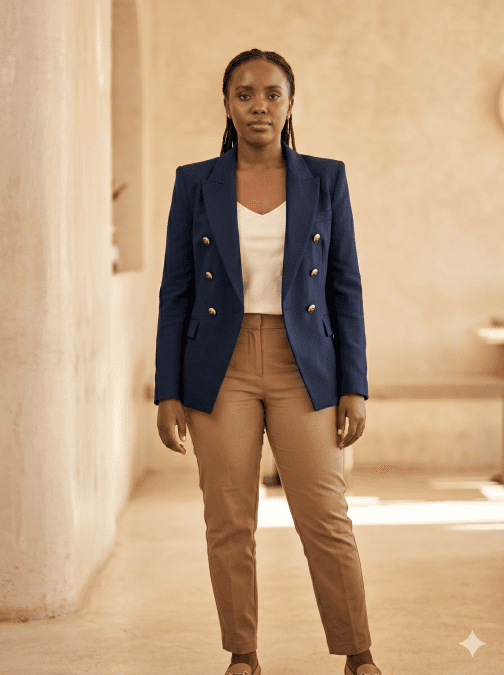
If your hips are wider than your shoulders, structured tops or blazers with defined shoulders work beautifully to even things out.
If you carry weight around the middle and prefer not to emphasise it, wrap dresses and V-neckline tops draw the eye upward and create a longer, cleaner line.
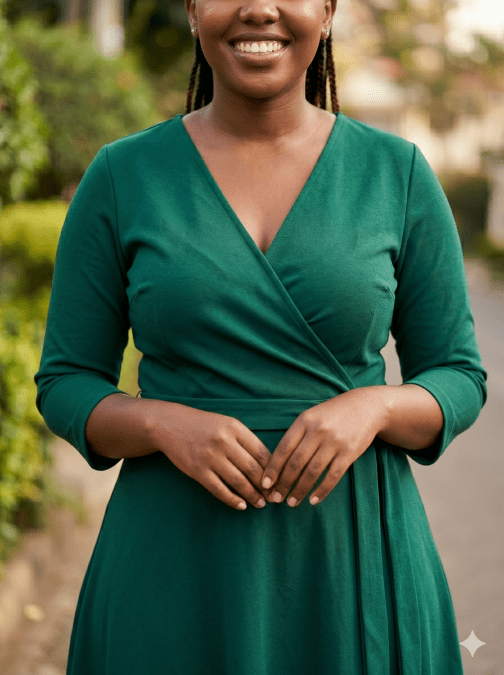
If you have a straighter frame and want to create the appearance of curves, belted outfits and two-tone colour combinations do the trick.
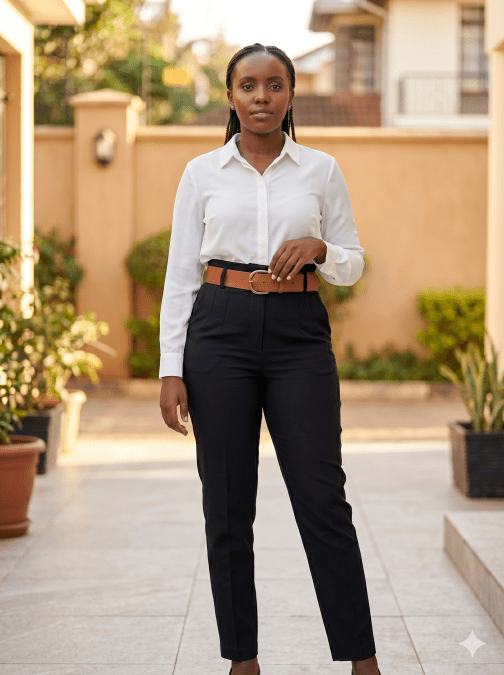
None of this is a rule. It is simply a tool.
Fit matters more than size
This cannot be said enough: the number on the label means nothing.
A size 14 in one brand fits completely differently from a size 14 in another, and neither might fit you perfectly off the rack.
What you are looking for is fit, not size. Clothes that pull across the back, gap at the waist, or bunch at the shoulders are not flattering on anyone, regardless of body type.
If something fits well in one area but not another, a quick visit to your local tailor can fix it, often for just Ksh 200 to Ksh 500.
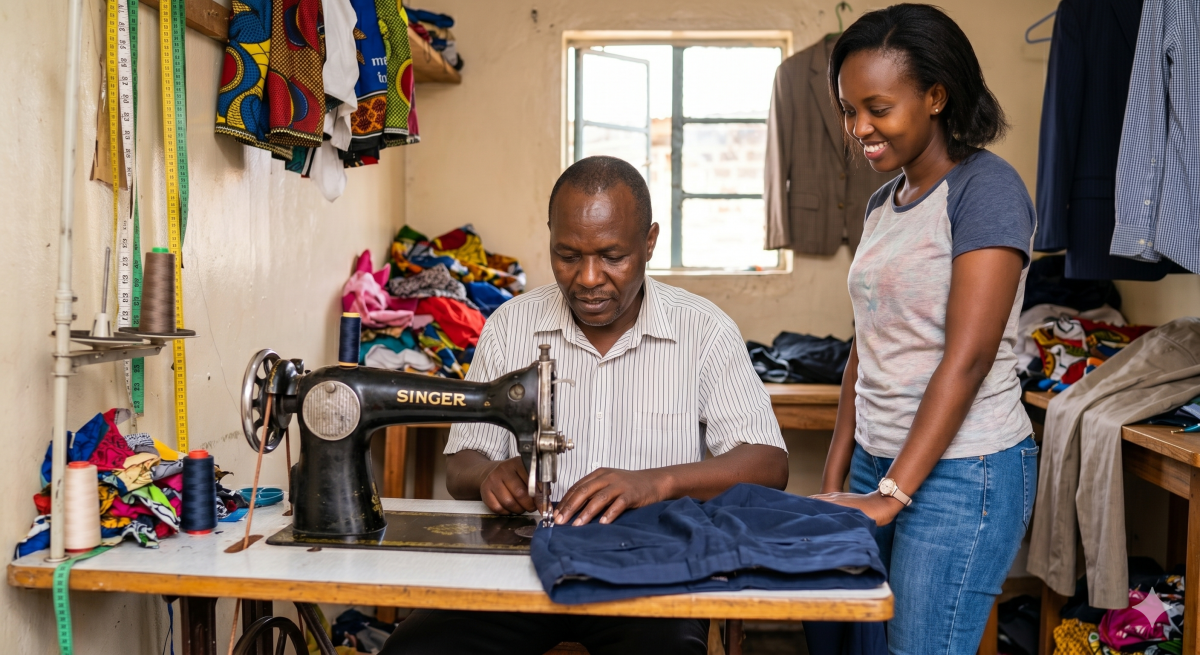
When shopping mitumba, take the time to try things on. A well-fitting secondhand blazer will always look sharper than a brand-new item that does not fit right.
A few pieces are genuinely forgiving and worth building your wardrobe around: a good pair of well-fitted trousers, a plain neutral tee, and a structured outer layer, a blazer, a denim jacket, or a leso worn as a wrap.
Dark colours on the bottom create a grounded, elongated look. Wearing one colour from head to toe is one of the easiest ways to look put-together without overthinking it.
Ultimately, as Jinnah’s research notes, “awareness of body type and knowing how to dress for your figure can limit internalised body shame, help with body positivity, and diminish clothing-related stress.”
The best outfit is always the one you feel good in. The goal is never to hide your body but to dress it in a way that feels true to you.