Why your car window stops working in the rain, and what to do about it
By Dan Kauna, July 10, 2026You are stuck in traffic, the rain is hammering the windscreen, and you press the button to roll up your window. Nothing happens. Or worse, it moves halfway, groans, and gives up.
If this has happened to you, you are not imagining things. Rain genuinely does make power windows more likely to fail, and there is a straightforward mechanical reason for it.
How power windows actually work
Every power window is driven by a small electric motor tucked inside the door, connected to a scissor-jack or cable mechanism that pulls the glass up and down a track. It is a simple system, but it lives in a hostile spot.
The door panel is packed with wiring, switches, and connectors, all sitting just behind a thin sheet of metal that takes the full brunt of Nairobi’s rainy season.
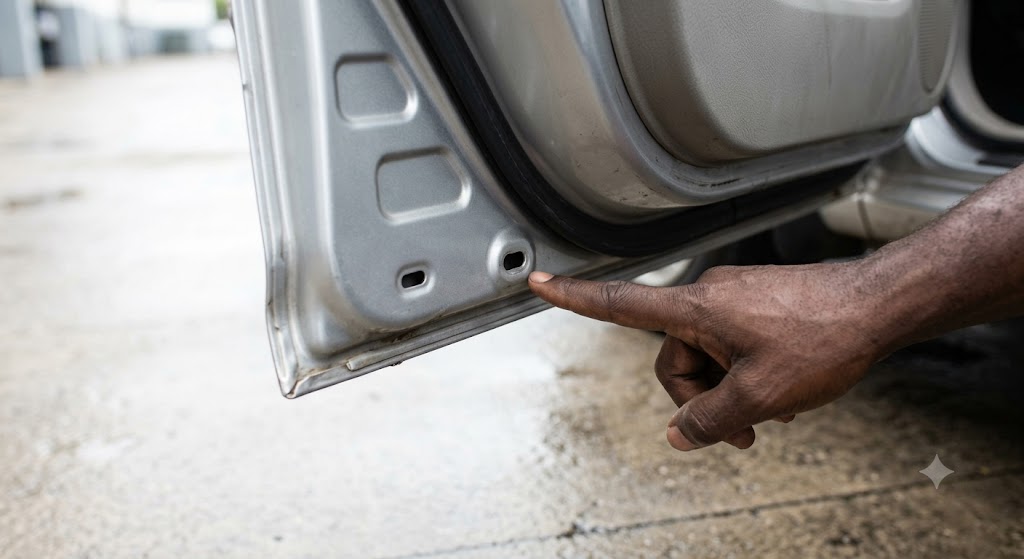
When water gets past the door seals, whether through worn weatherstripping, blocked drain holes, or a window left slightly open, it settles around these electrical connectors.
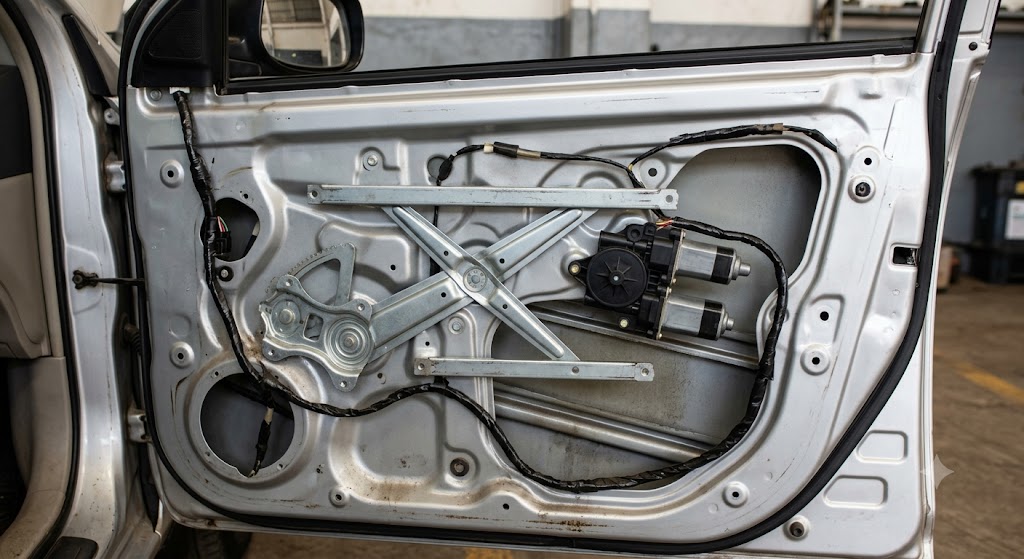
Over time, this moisture corrodes the contacts and the motor windings, weakening the connection and forcing the motor to work harder until it slows down, jams, or stops entirely.
This is not just garage folklore. A peer-reviewed IEEE study on connector degradation in road-tested vehicles found that the automotive environment is “characterized by large temperature changes, high humidity and corrosive atmospheres.”
The researchers also found clear signs of corrosion damage on connector terminals pulled from real vehicles after road exposure, which is essentially what is happening inside your door every time it rains.
What to do when it happens
If your window fails mid-roll during a downpour, do not keep pressing the switch. Repeated attempts can strip the motor’s gears or burn it out completely, turning a fixable fault into an expensive replacement.
Instead, note the position the window stopped at and switch off the ignition.
For a temporary fix until you can see a mechanic, a heavy-duty plastic bag taped firmly around the window frame with masking tape will keep water out overnight. It is not elegant, but it works.
Once the rain clears, get the door panel checked. A mechanic will look for water pooling inside, corroded connectors, or worn regulator channels.
If caught early, a clean and a bit of dielectric grease on the contacts can solve the problem for as little as Ksh 1,500 to Ksh 3,000. Left too long, a full motor and regulator replacement can run past Ksh 15,000, depending on your car’s make.
The simplest prevention is also the cheapest: check your door seals and drain holes every few months, especially before the rains set in. A five-minute inspection now can save you a stranded window, and a much bigger bill, later.