How fibre internet reaches your house – from undersea cable to your router
By Dan Kauna, September 14, 2026When you stream a video or send a message on your phone, data moves across thousands of kilometres in milliseconds.
Most internet traffic does not travel through satellites in the sky. Instead, it travels through thin glass strands buried under the ocean floor and laid deep beneath the soil.
International submarine cables rest on the seabed and touch land at the coast in Mombasa.
These cables carry data across oceans using pulses of laser light. As highlighted in a peer-reviewed infrastructure study on East African connectivity, “submarine cables are the backbone of international internet connectivity, carrying vast amounts of data across continents”.
From Mombasa to your neighbourhood
Once light signals reach the landing station in Mombasa, equipment boosts and cleans the signal for inland transport.
The data then travels through heavy-duty underground backbone fibre cables laid along major highways and railway lines across Kenya to reach primary data centres in Nairobi.
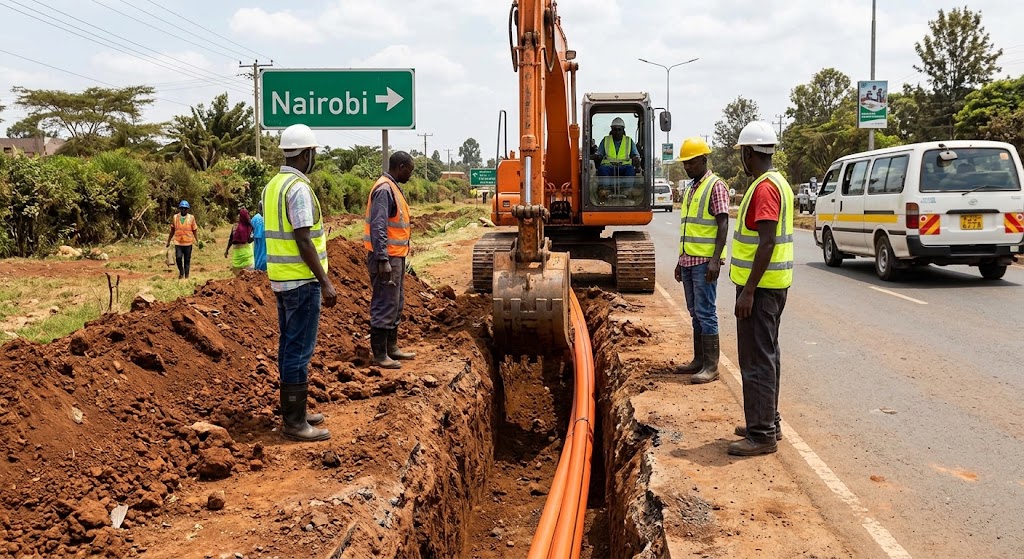
From these central facilities, internet service providers split and direct signals to localised neighbourhood cabinets.
From your local street cabinet, a thin drop cable runs straight to your house, either strung along utility poles or buried underground.
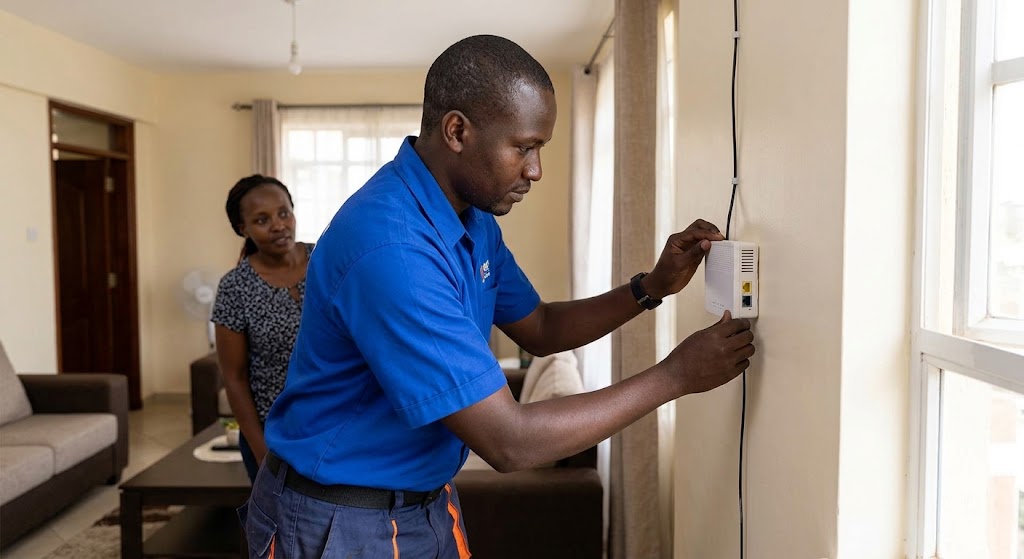
This final cable plugs into an Optical Network Terminal, a small box inside your home that converts light signals back into electrical data for your Wi-Fi router.
Why internet speed drops or outages happen
Major outages typically happen when construction machinery cuts underground fibre lines during road excavations, or when ship anchors snag subsea cables off the coast.
When a main cable breaks, internet traffic automatically reroutes through longer alternative paths, causing temporary delays.
Inside the home, slow speeds often start between your router and your device rather than on the main network. Wi-Fi signals weaken when passing through thick concrete walls or near appliances like microwave ovens.
Positioning your router in a central, elevated space or using a direct cable connection provides the fast, steady connection delivered from the coast.