Advertisement
Scents that make any home feel warm and welcoming
13th May, 2026 02:07 PM

Before a guest settles into a chair or notices the décor, their nose has already formed an impression.
Scent is the fastest route to the brain’s emotional centre, bypassing the rational filters that process everything we see and hear.
It is why a particular smell can transport you to childhood in seconds, and why the right fragrance can make a stranger feel at home before they have even sat down.
Why your home’s smell matters
A review by Oxford experimental psychologist Charles Spence, published in Frontiers in Psychology, found that the olfactory atmosphere of an indoor space exerts a “profound, if often unrecognised, influence over our mood and well-being.”
“There is growing evidence that consumer behaviour can be manipulated by the presence of pleasant ambient odours, while various aromatherapy scents are said to improve our mood and well-being,” the study reveals.
We spend the bulk of our lives indoors, which means the smells we build into our homes are quietly shaping how we, and everyone who walks through our door, feel every single day.
The science sits in the limbic system, the part of the brain that governs emotion and memory.
Smell is the only sense wired directly into it without passing through a relay first. That unfiltered connection is why scent can trigger comfort, warmth, and a sense of safety faster than almost any other cue.
Four scent families have consistently come out of research as the ones that make spaces feel genuinely welcoming.
Citrus (lemon, orange, mandarin) signals freshness and openness. A 2022 review in Springer’s Cognitive Research: Principles and Implications noted that scents in household products communicate that a home is “prepared to welcome guests,” with citrus being the scent most strongly associated with that message. Separate studies have also linked citrus scents to increased trust and generosity between people sharing a space.
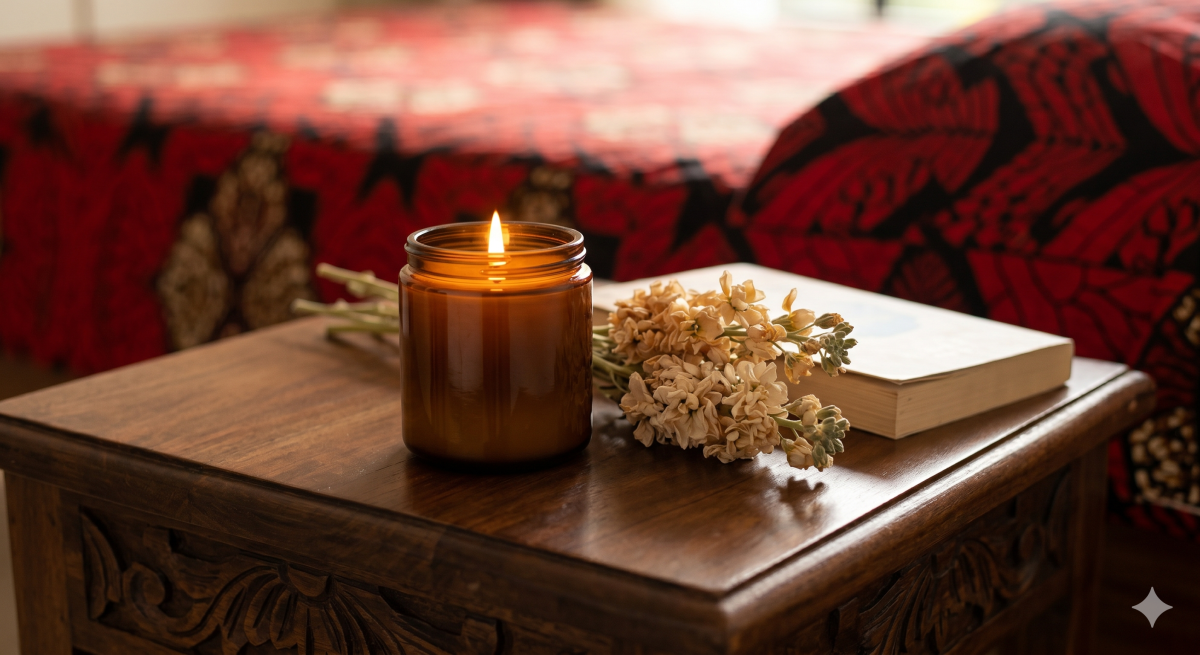
Vanilla is arguably the warmest fragrance you can introduce. It is universally tied to comfort, food, and positive memory – the smell of something good being made. Research has shown vanilla-scented environments lower markers of anxiety and stress, making it particularly effective in living rooms and entryways where you want people to relax immediately.
Light florals (lavender, jasmine, freesia) bring a softness that calms without overpowering. Lavender has the strongest evidence base for reducing perceived anxiety and works especially well in bedrooms and bathrooms.
Cedar and woody notes provide the grounding depth that makes a space feel solid and safe rather than clinical. A cedar base note anchors lighter top notes and creates the layered, dimensional smell of a home rather than a hotel lobby.
Affordable ways to build these scents into your home
You do not need expensive candles or a professional diffuser system to get this right.
Reed diffusers are low-maintenance and consistent. Place a citrus or floral blend near the entryway so the first impression is immediate the moment someone walks in.
Soy candles with vanilla or cedar notes work well in living spaces. Light them 20 to 30 minutes before guests arrive. The scent settles into the room rather than announcing itself on impact.

Essential oil diffusers give you flexibility and control. Two or three drops each of orange, lavender, and cedarwood covers the full welcome spectrum without the scents competing with each other.
Simmer pots (a small pot on low heat with orange peel, cinnamon, and cloves) are one of the most affordable options, and they make the kitchen smell lived-in and inviting in a way no synthetic spray can replicate.
Fresh flowers such as jasmine or freesia add a light, natural floral note that no bottled version quite matches.
The golden rule is subtlety. A welcome scent should be something guests sense rather than notice – present enough to make them feel at ease, never so strong that it becomes the story.