Tax reliefs most Kenyans are filing without claiming
By Dan Kauna, June 11, 2026June 30 is the deadline to file your 2025 income tax return.
For most employed Kenyans, the process feels like a formality. Download the P9 from your employer, upload it to iTax, and done.
But that routine filing leaves a lot of money on the table, and KRA will not remind you to collect it.
Here are the reliefs you likely qualify for, and what they are worth.
Insurance, pension and mortgage – the big three
If you pay premiums on a life, health, or education insurance policy, you are entitled to insurance relief worth 15 per cent of your total annual premiums, capped at Ksh60,000 per year.
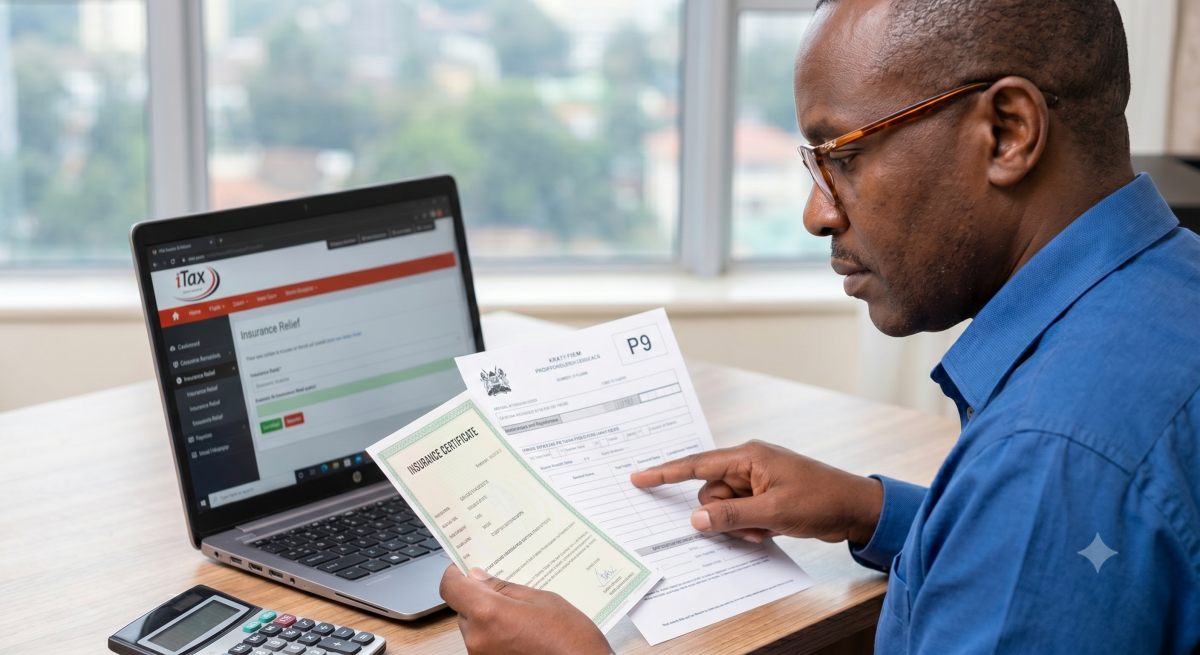
To claim it on iTax, declare the policy under Sheet A of the return form and upload your insurance certificate. The relief is applied directly against your tax payable, not just your taxable income.
If you contribute to a registered pension or provident fund beyond what your employer deducts, those personal top-up contributions are deductible up to Sh360,000 per year (Sh30,000 per month). Enter the figure under the pension contributions section on your return and attach your fund statement.
Homeowners servicing a mortgage from a bank, building society, or listed financial institution can deduct up to Sh360,000 in mortgage interest annually.
Following the Finance Act 2025, this now also covers interest on loans used to construct a residential home, not just purchase one. You’ll need a mortgage interest certificate from your lender – most banks issue these in January or February each year.

Research published by the Institute of Development Studies in 2024 found that many Kenyan taxpayers are unfamiliar with specific tax provisions available to them, noting that “many Kenyans are unaware of the specific tax obligations and reliefs that apply to their circumstances.”
That gap in awareness is precisely what translates into money left unclaimed every June.
Disability exemption – the most overlooked
If you hold a valid disability exemption certificate from KRA, your first Sh150,000 of monthly income is tax-exempt.

Applying takes a few steps: submit your application through the National Council for Persons with Disabilities (NCPWD) portal on eCitizen, attach a medical certificate from a registered doctor, and a letter from your employer.
KRA processes the application within 30 days and issues a certificate valid for five years. On your iTax return, enter the exemption certificate number where prompted.
What to have ready before you file
You will need your P9 form from your employer, a mortgage interest certificate if claiming mortgage relief, your insurance certificate for life, health, or education policies, and your KRA exemption certificate if you are a person with disability.
Keep all supporting documents for seven years – KRA can request them in an audit.
The filing deadline is June 30, 2026. Late filing attracts a penalty of Sh2,000 or 5 per cent of the tax due, whichever is higher.