Advertisement
How to create a meditation or prayer space in your flat
19th June, 2026 01:39 PM
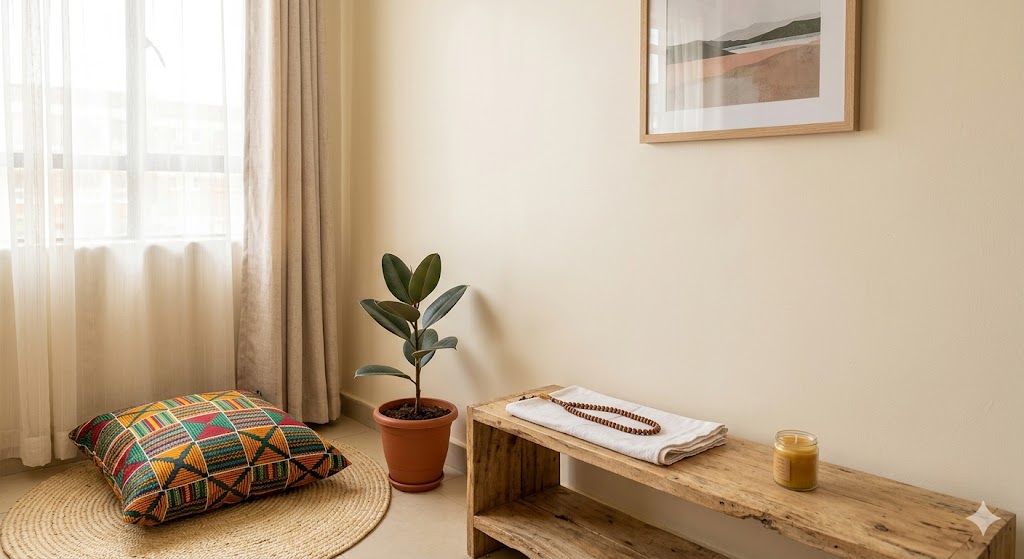
You don’t need a spare room, a whitewashed studio, or anything that costs a lot of money. What you need is a corner.
More people in Nairobi are building some form of intentional mental practice into their day, whether that is prayer, seated meditation, breathwork, or a few minutes of quiet reflection before the morning chaos begins.
The challenge is almost never motivation. It is finding a physical home for the habit. A place the mind associates with slowing down.
The good news is that a dedicated contemplative space can occupy as little as one square metre of floor or a single shelf. The better news is that the spot itself does the heavy lifting once you train your brain to recognise it.
The sensory signals that shift your mind into a different gear
The mind does not switch modes because you decide it will. It switches because of environmental cues – sensory signals that tell it what kind of attention is required in this space right now.
Think about how automatically your body relaxes when you walk into a church, a mosque, or a green space. That response is learned, not innate. The same mechanism works at home, and you can build it deliberately.
Sound is the most powerful lever. A 2024 study published in the journal Mindfulness by researchers at the University of Nottingham found that among nine physical factors affecting meditation quality, quietness ranked as “the most beneficial controllable element” and that natural sounds came a close third after the use of supportive tools.
This means that a space near a window with soft outdoor ambient sound, or one where you play low-volume nature audio, is measurably better for the practice than total silence forced in the wrong setting.
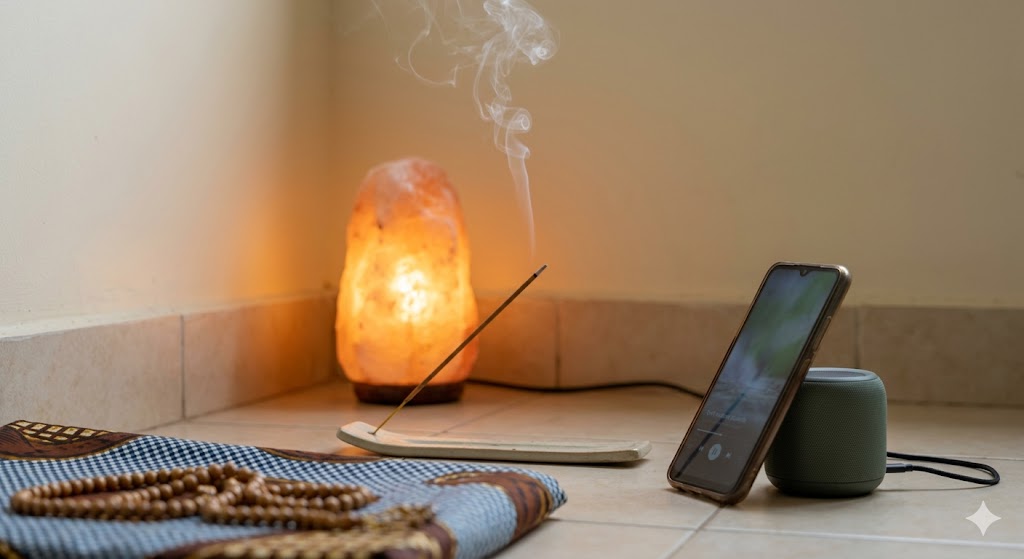
Scent is the second lever. Lighting a specific incense stick, essential oil blend, or scented candle only in this space and nowhere else in your home turns scent into a cue.
The olfactory system has a uniquely direct line to the brain’s memory and emotional centres, which is part of why frankincense has been used in prayer spaces across traditions for thousands of years.
Light matters too. Warm, dim lighting (a low lamp, a candle, or even a piece of fabric draped over an LED fixture) tells the nervous system something different from overhead fluorescents. It signals that this is not a work context.
Finally, a fixed orientation helps. Facing a specific direction (a wall, a window, east) gives your body a consistent postural anchor. Over time, sitting in that direction becomes the cue itself.
What to put there at every budget
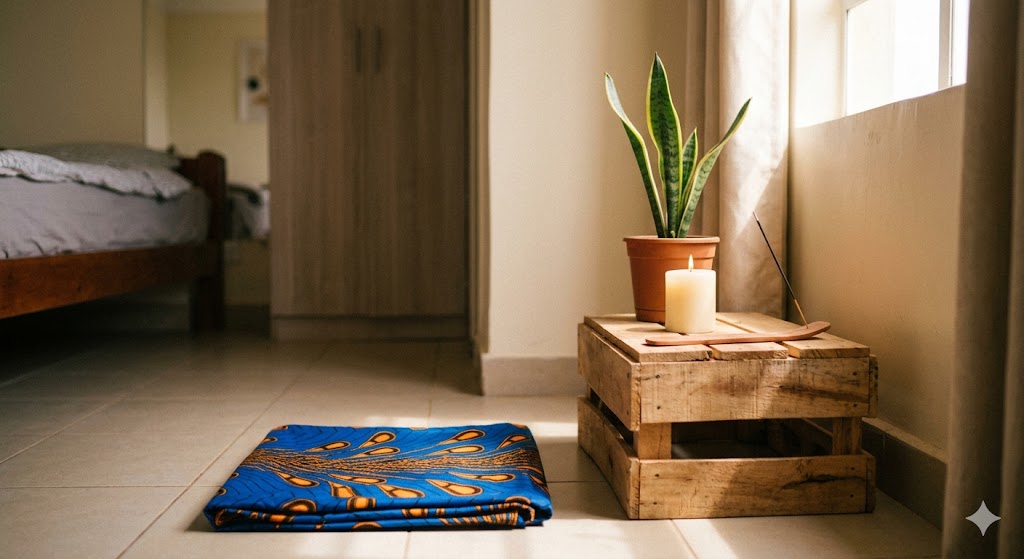
The floor is enough to start. A folded blanket or kitenge fabric square becomes a cushion. A small box at eye level becomes an altar or focal shelf. A phone propped upright plays a guided session or soft instrumental music. This is the Ksh 0 version, and it works.
At a modest spend (say Ksh 1,500 to 4,000) you add a meditation cushion, a small wooden shelf or repurposed crate, a candle or oil diffuser, and a plant.
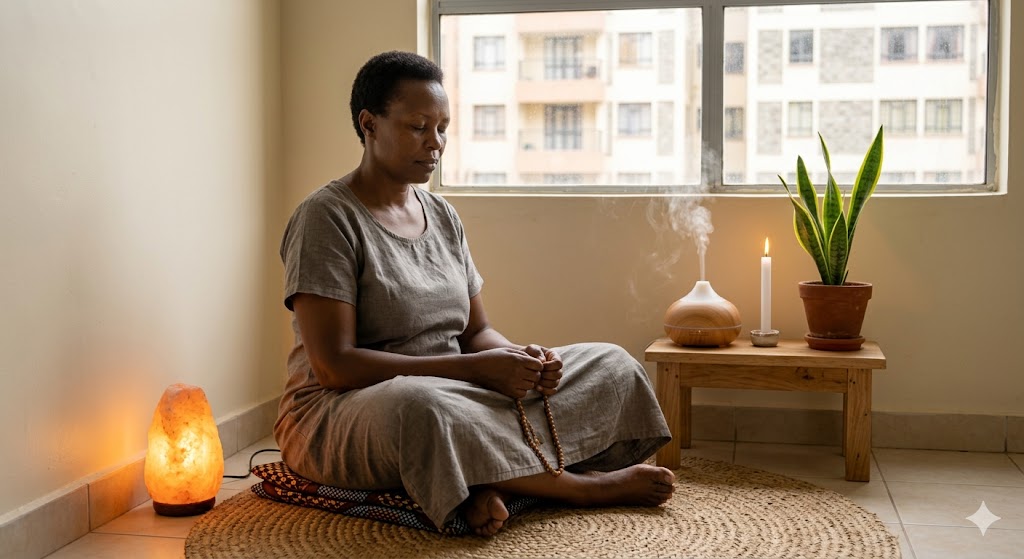
The plant matters more than it sounds: introducing a small natural element into the corner activates a measurable calming response and reinforces the separation of this space from the rest of your home.
At a higher investment, around Ksh8,000 upwards, you might add a proper prayer rug or meditation mat, a Himalayan salt lamp for ambient lighting, a small speaker for curated sound, and a dedicated set of prayer beads kept only here. Each of these elements adds a sensory layer that deepens the cue.
The one thing that beats all of it is returning to the same spot every day, even for five minutes, even when you do not feel like it. The research is consistent on this: a morning routine anchored to a fixed location builds the kind of reflexive habit that no amount of willpower can replicate. The place trains you as much as you train in it.