Advertisement
Emotional geography in homes: Why certain rooms feel safe and others don’t
12th June, 2026 02:49 PM

Every home has an emotional logic to it. The kitchen pulls you in – warmth, smell, the sound of something cooking on low heat.
The sitting room settles you.
But step into the study, or the bedroom of a teenager cramming before exams, and something shifts. The air feels different. Your shoulders climb slightly. You have just crossed an invisible border.
This is the emotional geography of your home, and psychologists have been mapping it for decades.
Rooms accumulate feeling the way walls accumulate dust – slowly, almost invisibly, through repetition. Every time you sat at that desk under pressure, every late night hunched over figures or reports, left a trace.
The brain is an association machine, and it is remarkably good at tying a physical space to the emotional state you experienced inside it. Walk back into that space and the emotional state returns before you have done anything at all.
A 2024 study published in the peer-reviewed journal Heliyon by researchers at Bond University, Australia, found that “the architectural design of space can deeply impact an individual’s mood, physiology, and mental health” and that even the geometry of a room, its curves or its hard angles, measurably changes heart rate and how positively or negatively a person feels.
Rooms are not neutral containers. They are emotional instruments.
Why the kitchen feels like home
In most households, the kitchen earns its warmth. It is the room where the most sensory richness concentrates – heat, aroma, the clatter of sufurias, the company of whoever came to help chop the onions.
It is where food was prepared for you when you were unwell, where mothers stood for hours, where news was exchanged quietly. The brain files all of this under safety.
The bedroom should theoretically be the most restorative room in the house. For many people, it is not.
If you scroll your phone in bed, argue in bed, lie awake anxious in bed, you teach your brain that the bedroom is not only for rest.
The association weakens. Sleep becomes harder, and the room that was supposed to recover you begins instead to hold your tension.
How to redesign the emotional map
The good news is that emotional association runs in both directions. You can build new ones deliberately.
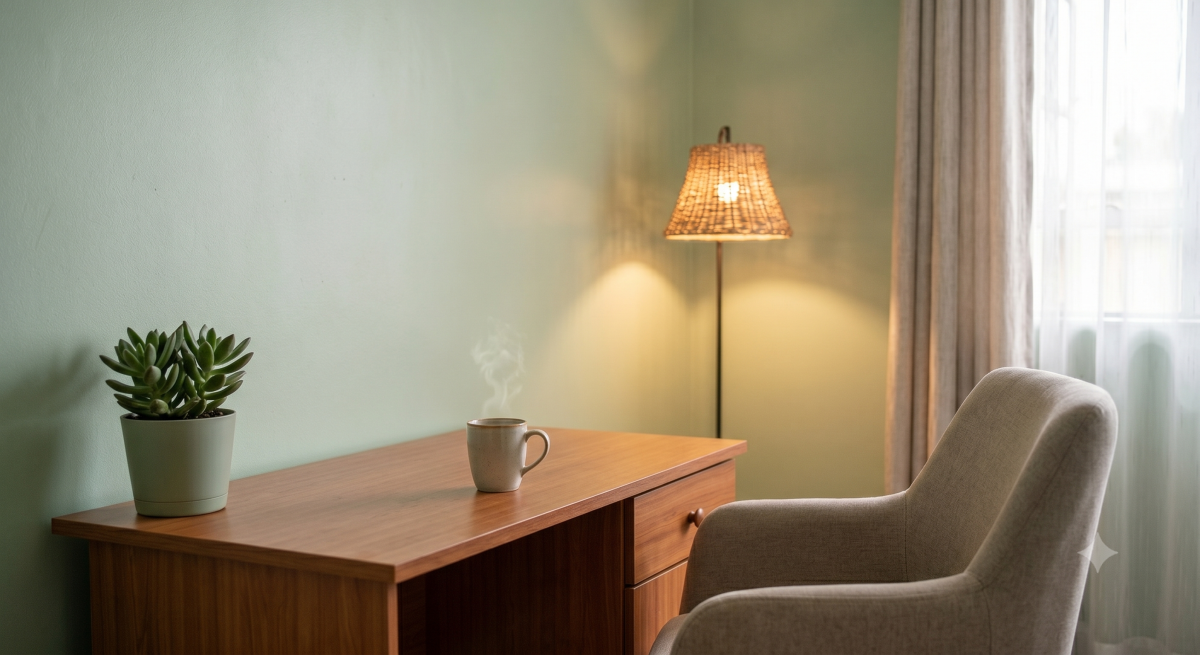
Start with the room that carries the most stress. A study corner crowded with unpaid bills, old exam papers, and a dying plant is not just untidy, it is also emotionally loaded.
Clearing it, repainting it a different colour, adding a scent you associate with calm, even moving the chair to face a different direction – all of these interrupt the old association and begin writing a new one. The brain needs repetition to anchor a new feeling, so consistency matters more than drama.
For the bedroom, the rule that sleep specialists return to again and again is simple: protect the association between bed and rest. That means keeping work, screens, and heavy conversations out of the sleeping space wherever possible.
And the kitchen, already doing its emotional work, lean into it. Eat there slowly sometimes, not just on the go. Let it remain the room that costs nothing to feel good in.
Your home is not just a place you live. It is a place your brain lives too, and it responds to exactly the kind of intentional care you would give any other relationship.