How the world’s best football stadiums are designed to maximise fan emotion
By Dan Kauna, June 11, 2026Think about the last time you walked into a great stadium. Before a single ball was kicked, something shifted. The noise hit differently. The colours pulled your focus. The seats curved towards the pitch in a way that made you feel like you were leaning in.
The world’s most celebrated football grounds are engineered to produce specific emotional states. Architects working on these projects obsess over sight lines, acoustic geometry, proximity and colour.
The result is that fans feel things more intensely, more collectively, and more memorably than they would anywhere else.
What the architecture is actually doing
Sight lines are the foundation. In stadiums like Dortmund’s Signal Iduna Park, the lower tiers are raked steeply so that the pitch feels close regardless of where you sit.
Proximity to action is directly tied to emotional investment – the further removed you feel, the easier it is to stay detached.
Acoustics do the rest. Bowl-shaped designs with cantilevered roofs trap crowd noise and bounce it back into the stands.

Arrowhead Stadium in Kansas City has broken decibel records partly because of the way its roof geometry amplifies and reflects sound.
Colour plays a quieter role. Red, used by Liverpool, Manchester United, Arsenal and Bayern Munich, is associated with heightened arousal and perceived dominance.
A 2022 study published in Frontiers in Neuroscience found that when people encountered spaces with coherent architectural narratives, their brains showed stronger emotional engagement and a measurable pull towards the space rather than away from it.
The researchers concluded that “a congruent narrative imparted the stadium approaching affective features” meaning the design made people want to move deeper in, not towards the exit.
What this means for the home you live in
You don’t need a 60,000-seat arena to apply these principles. You just need to understand what they are doing and scale them down.
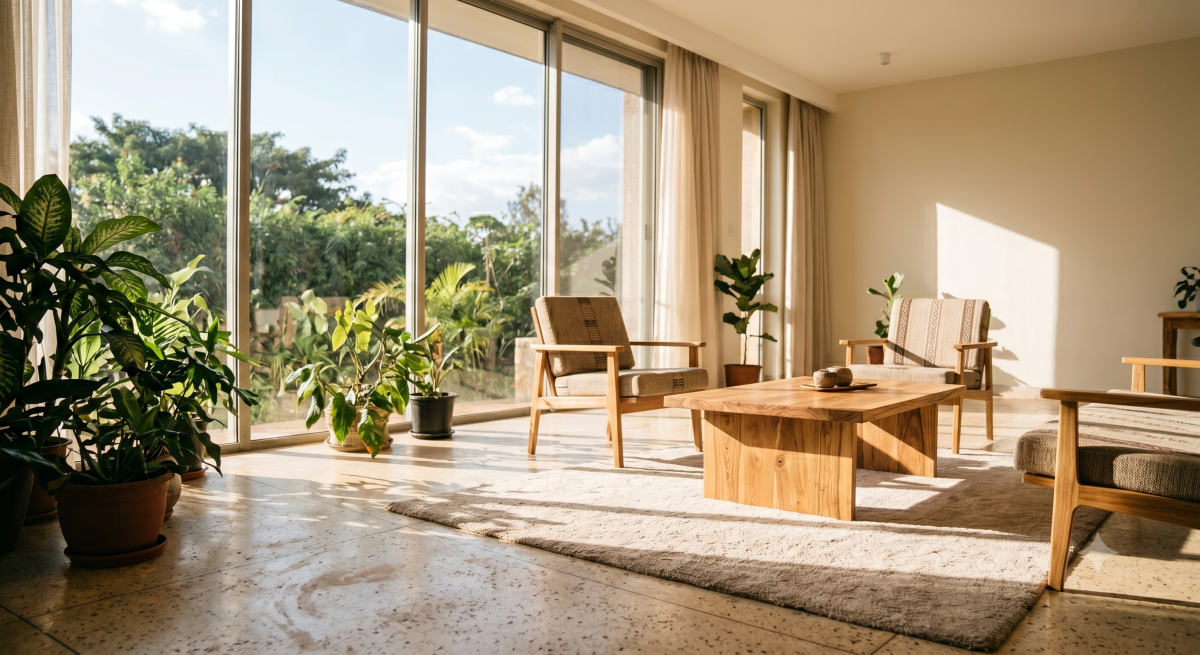
Sight lines at home mean arrangement. A sitting room where every seat faces outward, towards walls and corners, does the opposite of what a stadium does. Angling furniture towards a focal point, whether a window, a feature wall or an open kitchen, creates the same pull-in effect.
Acoustics translate to materials. Hard floors and bare walls bounce sound harshly. Soft furnishings, rugs, curtains and even bookshelves absorb and diffuse sound in ways that make a room feel calmer and more contained.
The acoustics of your home shape your mood in ways you rarely notice until they change.
Natural light may be the most powerful tool of all.
A 2022 study published in Building and Environment found that housing daylight design directly affects emotional wellbeing, and that “maximising the amount of light entering the home has a larger impact on emotional subjective wellbeing.”
Larger windows, sun-facing orientations and unobstructed outdoor sightlines all contribute measurably to how people feel inside their own houses.
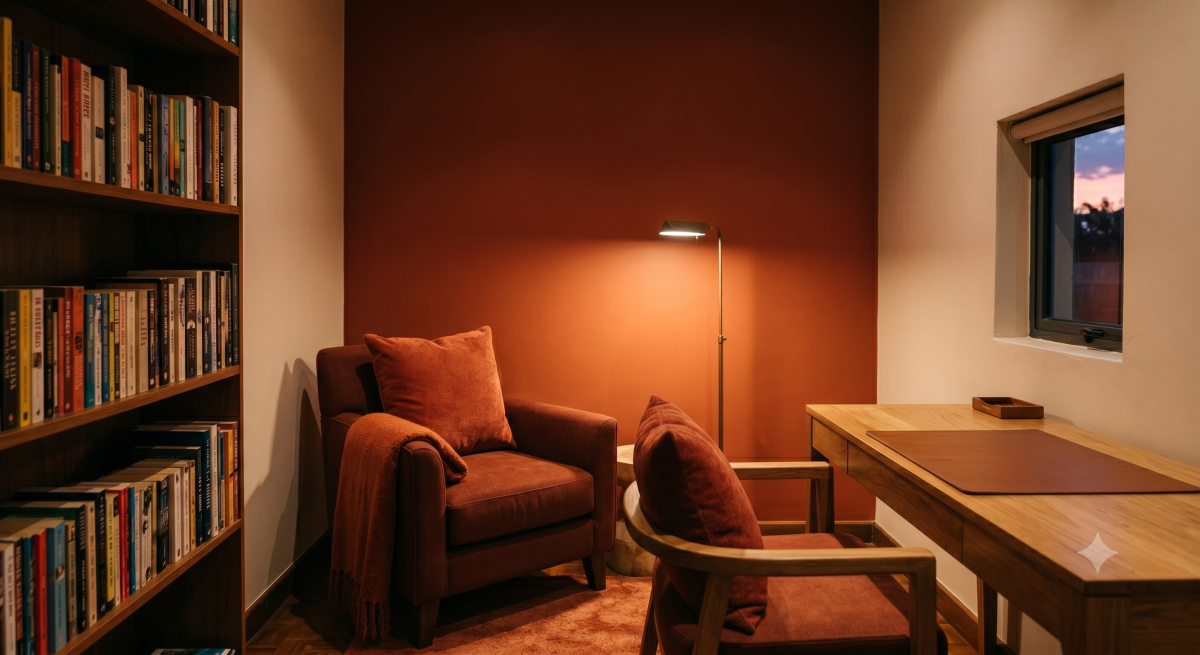
Colour at home works on the same principles as colour in stadiums, just at lower intensity. Warm tones in social spaces encourage connection. Cooler tones in bedrooms promote rest.
Great stadiums are built around a question: what do we want people to feel here? Most homes are built around storage, cost and convenience. The gap between those two starting points is where a lot of everyday unhappiness lives.