Advertisement
Avoid penalties: The legal process of connecting your home to solar
26th September, 2026 03:34 PM
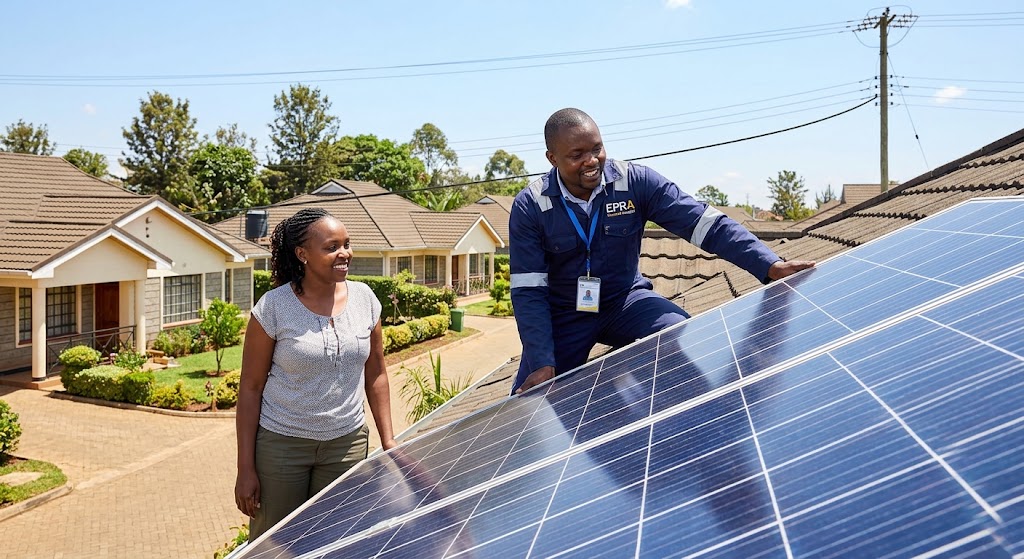
Kenya’s energy regulator has drawn a hard line on rooftop solar.
The Energy and Petroleum Regulatory Authority (EPRA) has formalised a surcharge for households and businesses that feed extra solar power into the Kenya Power grid without permission, reviving a rule many solar owners have quietly ignored.
If you are planning to install solar at home, or already have panels running, here is what the law actually requires before you connect to the grid.
What counts as illegal dumping
Under the amended tariff schedule, any electricity pushed into the Kenya Power network without prior approval or a signed net-metering agreement is treated as dumping.
That power gets billed at the standard base tariff, and Kenya Power can take further action if the surge damages its equipment.
The rule exists because solar and wind now make up a large share of the grid’s daytime supply. Kenya Power has said wind and solar suddenly dip or rise in production, which forces it to bring in other generators to keep the grid stable.
Unapproved solar connections make that balancing act harder and riskier for the network.
How to connect legally
The Energy (Net-Metering) Regulations, 2024 set out the process. Before you export any power, you need a signed net-metering agreement with Kenya Power.
Without one, Kenya Power can disconnect your system if it threatens the safety or stability of its network.
Your system size matters too. Domestic installations are capped at 4kW for single-phase supply and 10kW for three-phase supply.

Commercial and industrial customers face a higher ceiling of 1MW, tied to their maximum load over the previous 12 months.
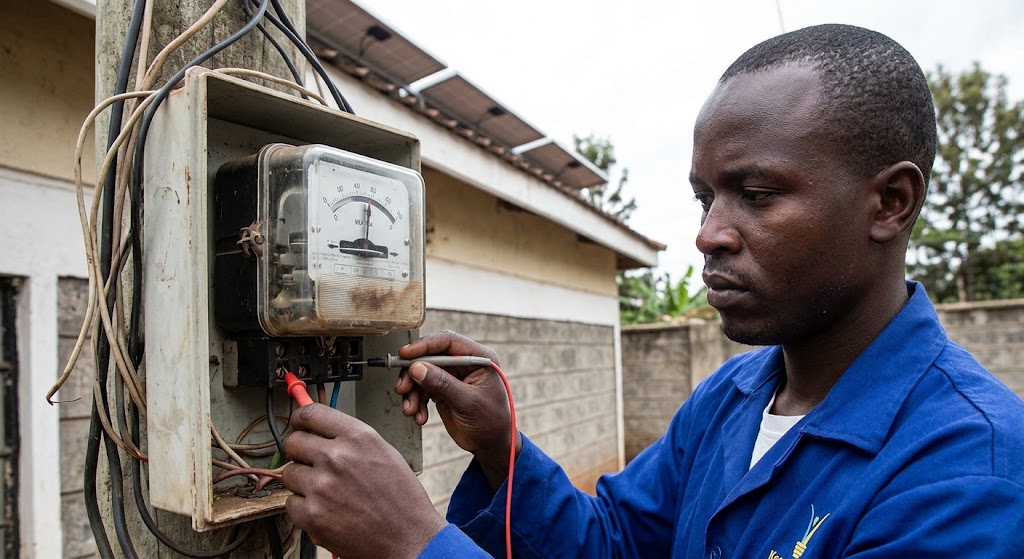
Your installer must be EPRA-licensed, and your system needs a bi-directional meter that measures power flowing in both directions.
Once approved, you earn a credit worth half of every unit you export, applied to your bill before taxes and other charges are added. You will not receive cash for the power you supply, only bill credits.
Getting the paperwork right protects your pocket and the grid. Confirm your net-metering agreement, use a licensed installer, and fit the correct meter before you connect. Skip any of that and the surcharge, not the savings, is what lands on your next bill.