Advertisement
Can you tell the difference between scabies, smallpox and chickenpox? Here is how to
14th August, 2026 11:30 AM

Skin diseases that cause rashes are often mistaken for one another, especially when they produce itching, blisters or visible spots. Scabies, smallpox and chickenpox are among the conditions that are frequently confused because they all affect the skin.
However, they are caused by different organisms, spread in different ways and require different forms of treatment.
Understanding these differences is important because a delay in diagnosis can lead to complications or unnecessary treatment. While one of these diseases has been completely eradicated, the other two continue to affect millions of people around the world.
Scabies
Scabies is not caused by a virus. It develops when microscopic mites burrow beneath the outer layer of the skin and lay eggs. According to the World Health Organization, scabies affects more than 200 million people worldwide at any given time.
The condition is mainly transmitted through prolonged skin-to-skin contact with an infected person. Although less common, sharing clothing, bedding and towels can also spread the infestation, particularly in severe cases.
The most common symptom of scabies is intense itching that becomes worse at night. A rash usually appears between the fingers, around the wrists, elbows, waist, buttocks and other skin folds. In some cases, tiny lines known as burrows become visible on the skin.
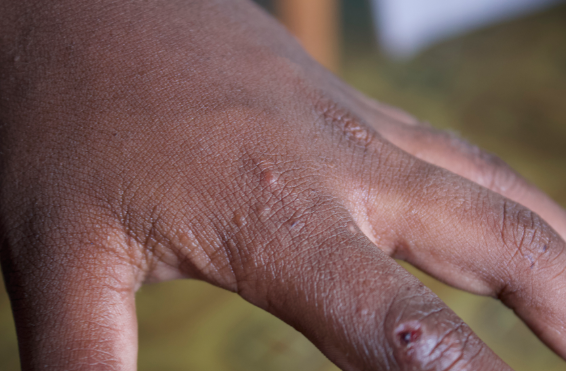
Because scratching damages the skin, some people develop secondary bacterial infections that can lead to open sores.
Treatment focuses on eliminating the mites. Prescription creams and lotions are commonly used, while oral medication may be recommended in more severe cases. Household members are often treated at the same time to prevent reinfection. Washing clothes, towels and bed linen in hot water is also an important part of controlling the spread of the disease.
According to the World Health Organization, treating scabies early is one of the most effective ways to prevent outbreaks in homes and crowded settings.
Smallpox
Smallpox was once one of the world’s most feared infectious diseases. It was caused by the variola virus and claimed millions of lives before global vaccination campaigns led to its eradication.
According to the World Health Organization, the last naturally occurring case of smallpox was recorded in 1977, and the disease was officially declared eradicated in 1980. This means that smallpox no longer occurs naturally anywhere in the world.
Before its eradication, the disease spread through close contact with infected individuals, respiratory droplets and, in some cases, contaminated clothing and bedding.
Smallpox usually began with a sudden fever, fatigue, severe back pain and general weakness. Two to three days later, a rash developed. The rash often started on the face and hands before spreading to other parts of the body.
Unlike chickenpox, the lesions caused by smallpox tended to develop at the same stage. They eventually filled with pus, formed scabs and often left permanent scars.
There is currently no routinely used treatment because the disease no longer exists in the general population. Historically, prevention through vaccination became the most effective tool in eliminating the virus.
The eradication of smallpox remains one of the greatest achievements in public health history.
Chickenpox
Chickenpox is a highly contagious viral infection caused by the varicella-zoster virus. Although it is commonly associated with childhood, it can affect people of any age.
The disease spreads easily through respiratory droplets released when an infected person coughs or sneezes. It can also spread through direct contact with fluid from the blisters.
One of the reasons chickenpox spreads rapidly is that an infected person can transmit the virus before the characteristic rash appears.
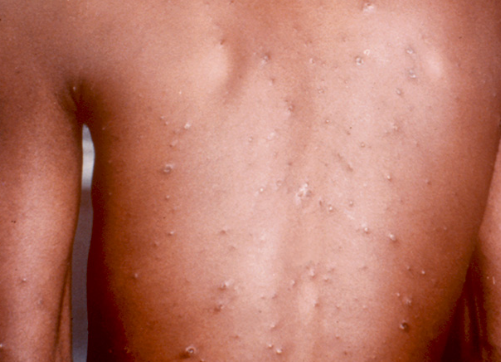
Symptoms usually begin with fever, tiredness, reduced appetite and a general feeling of illness. Within a few days, an itchy rash develops and gradually turns into fluid-filled blisters.
The rash often begins on the chest, face or scalp before spreading to the rest of the body. Unlike smallpox, chickenpox lesions usually appear in several stages at the same time, meaning some blisters may be new while others have already formed scabs.
Most cases improve without specialised treatment. Management often includes rest, adequate fluid intake and medication to relieve itching and fever. However, severe infections may require antiviral medication, especially in adults, pregnant women and people with weakened immune systems.
Vaccination remains the most effective way to prevent chickenpox and reduce serious complications associated with the disease.