Advertisement
Fuel price protests: What to do when teargas is fired
18th May, 2026 02:45 PM
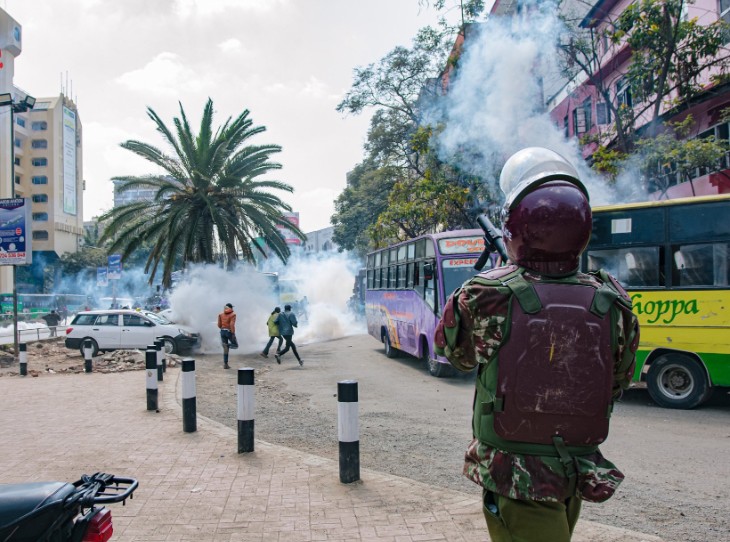
Kenya has recently seen protests linked to transport costs after a fuel price review by the Energy and Petroleum Regulatory Authority.
The increase announced on 14 May 2026 pushed petrol and diesel higher, leading to demonstrations in several towns (on Monday, May 18, 2026) as transport operators and commuters reacted to rising costs.
In some areas, police have used tear gas to disperse crowds during clashes and road disruptions.
Tear gas is a chemical irritant, not a gas in the normal sense. It contains fine particles that affect the body within seconds, especially the eyes, skin, and breathing system.
While it is usually non lethal, it can cause strong temporary injury and stress to the body.

What tear gas does
When tear gas enters the body, it mainly affects the mucous membranes.
These are the soft tissues found in the eyes, nose, mouth, and lungs.
The chemicals activate pain receptors in these areas, causing burning, tearing, coughing, and a strong urge to move away.
In the eyes, tear gas causes the cornea to become highly irritated. The tear glands react by producing excess tears to flush out the particles.
This is why vision becomes blurry and eyes may feel like they are burning or swelling.
Effects on breathing system
When inhaled, tear gas irritates the airways and bronchial tubes. This leads to coughing, chest tightness, and difficulty breathing.
In people with asthma or other lung conditions, symptoms can become stronger because the airways already react easily to irritants.
The body responds by increasing mucus production in an attempt to trap and remove the particles.
How the brain reacts
Tear gas does not directly damage brain cells, but it strongly stimulates the nervous system.
Pain signals from the eyes and airways are sent to the brain, triggering stress responses such as panic, fast breathing, and dizziness.
The brain also reacts by increasing alertness, which can make a person feel confused or overwhelmed in crowded protest situations.
Simple safety steps
If exposed, move away from the area as quickly as possible and try to face fresh air.
Do not rub your eyes because this spreads the chemical and worsens irritation. Instead, blink slowly and let tears flow naturally.
Wash your face and eyes with clean running water or saline. Remove contact lenses if you have them.
Take off clothing that may have absorbed the chemical and wash skin gently with soap.
Breathing slowly in fresh air helps the lungs recover.
People with asthma should use prescribed inhalers immediately if needed.
Go to a health facility if you experience ongoing chest pain, severe coughing, trouble breathing, or eye pain that does not reduce after washing.
As protests continue in some parts of the country, understanding how tear gas affects the body helps people respond calmly and reduce harm in crowded and unpredictable situations.