Advertisement
How IV drips have moved from hospitals to beauty clinics and wellness spas
15th June, 2026 10:05 AM
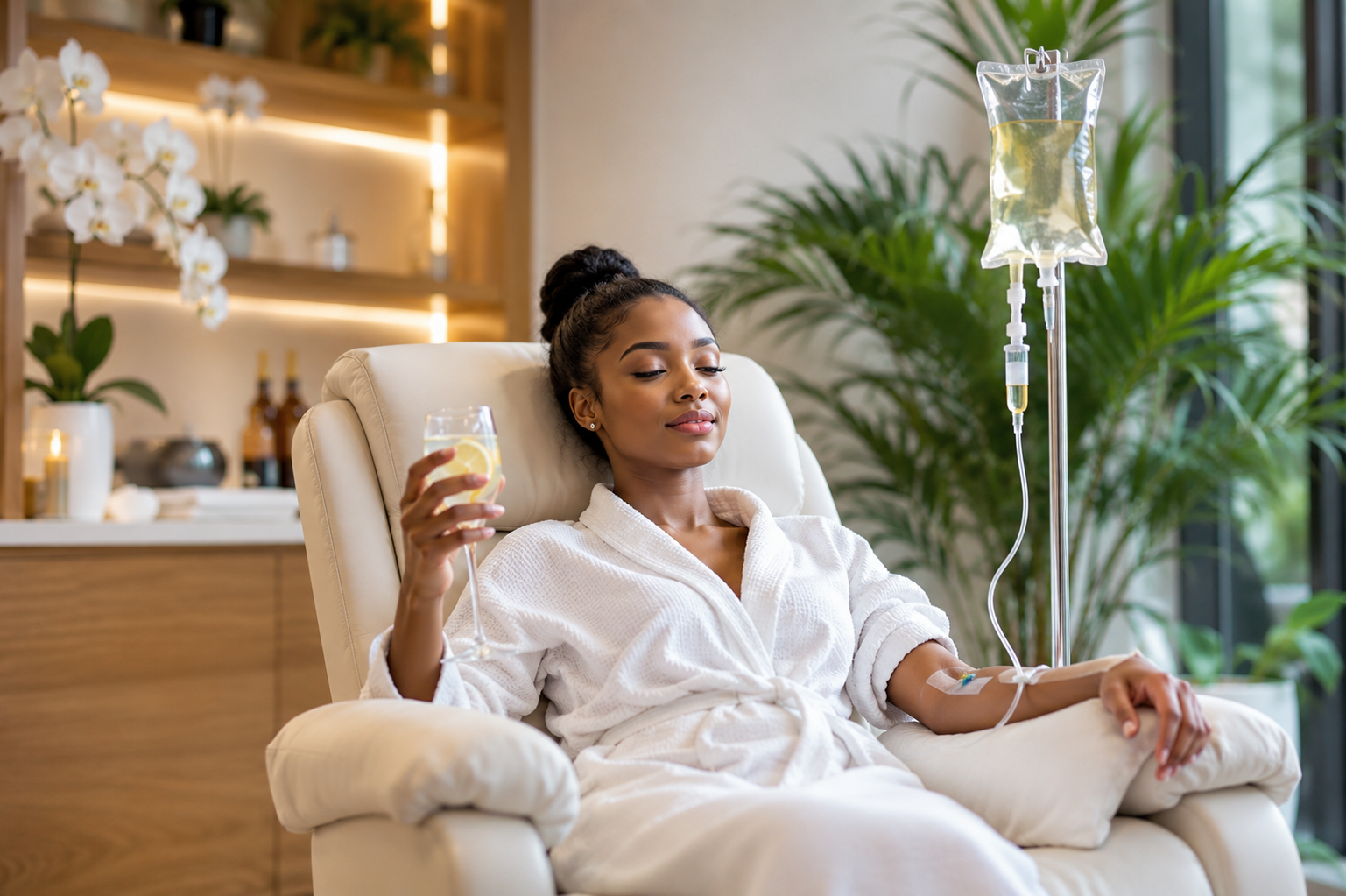
In Nairobi today, an IV drip is no longer automatically a signal that someone is down bad in a hospital bed. It might just as easily mean someone is on a self-care break, catching up on life while Vitamin C quietly flows through a line.
The same equipment that once belonged strictly to emergency wards and post-surgery recovery rooms has found a second life in wellness clinics that feel more like boutique lounges than medical spaces. Soft lighting replaces harsh hospital glare, background music replaces beeping monitors, and suddenly, the idea of sitting still with a drip is not about illness but about glow, energy, and looking fresh enough to survive Nairobi traffic and still smile about it. Somewhere between medicine and lifestyle, IV drips have reinvented their personality, and they are doing it very confidently.
Understand how IV drips shifted from medical treatment to lifestyle wellness
The first major shift happened when people began associating IV therapy not only with illness but also with recovery from fatigue, dehydration, and stress. In hospitals, intravenous fluids are used because they act fast and deliver nutrients directly into the bloodstream without relying on digestion. Over time, wellness clinics adopted this concept and rebranded it for healthy individuals who are not necessarily sick but feel drained by modern life.
In Nairobi’s busy work culture, where long commutes, tight deadlines, and social demands are part of daily living, the idea of a quick recovery session became appealing. Instead of waiting for the body to slowly absorb supplements, people started choosing a direct infusion approach, believing it offers faster results and more visible effects on energy and skin appearance.
Explore how wellness clinics and spas created a new beauty economy
The second shift came from the growth of wellness businesses that blend medical aesthetics with a luxury experience. Clinics that once focused strictly on injections, minor procedures, or dermatology care have expanded into spa-like environments with soft lighting, calming music, and comfortable lounge chairs. In these spaces, IV drips are no longer presented as medical procedures but as self-care rituals.
In Kenya, this has grown alongside an increasing appetite for premium beauty services. Clients are not only paying for the ingredients in the drip but also for the experience, privacy, and sense of exclusivity. The wellness economy has turned hydration and nutrient therapy into a lifestyle statement, where taking care of yourself is both a health choice and a social expression.
Recognise the influence of social media and the glow culture
Social media has played a powerful role in normalising IV drips as part of beauty routines. Influencers and lifestyle creators often share images of themselves receiving drips, usually framed as part of self-care days or pre-event preparation. The language around it is soft and appealing, with words like glow, refresh, reset, and detox becoming common.
In Kenya’s digital space, where beauty and lifestyle content perform strongly, these visuals create curiosity and aspiration. People begin to associate IV drips with looking well rested, camera-ready, and energetic. The result is a growing glow culture where wellness is not only about feeling good but also about looking visibly refreshed in photos and public life.
Balance the promises with what science generally suggests
Many clinics promote Vitamin C and collagen IV drips as solutions for brighter skin, improved hydration, and anti-ageing effects. Vitamin C is known to support collagen formation in the body, which is important for skin structure and healing. However, medical experts often explain that for generally healthy individuals, the body already regulates how much of these nutrients it uses.
Collagen taken directly through IV therapy does not automatically translate into direct skin improvement in a simple or guaranteed way. Some of the immediate glow people report may come from hydration, rest, or the placebo effect rather than permanent structural changes in the skin. This does not mean the drips have no effect, but it highlights the importance of understanding expectations versus medical reality.
Pay attention to safety, regulation, and informed choices
As IV drips move further into beauty spaces, safety becomes an important conversation. In medical settings, IV therapy is administered by trained professionals who assess patient history, allergies, and suitability before treatment. In wellness environments, standards can vary depending on the facility. Clients need to ensure that qualified medical personnel are involved and that sterile procedures are followed.
Not every tired feeling needs an IV drip, and not every beauty trend needs to become a routine. Understanding your body, asking questions, and choosing reputable clinics helps ensure that wellness does not turn into unnecessary risk. In the end, the most sustainable glow still comes from a combination of proper rest, balanced nutrition, hydration, and healthy habits rather than quick fixes alone.