Advertisement
10 quick steps to follow at home in case of a dog bite
19th August, 2025 01:59 PM

The World Health Organisation (WHO) recently issued a vital reminder on the importance of immediate wound care following dog bites, stressing that prompt action can prevent deadly rabies infections.
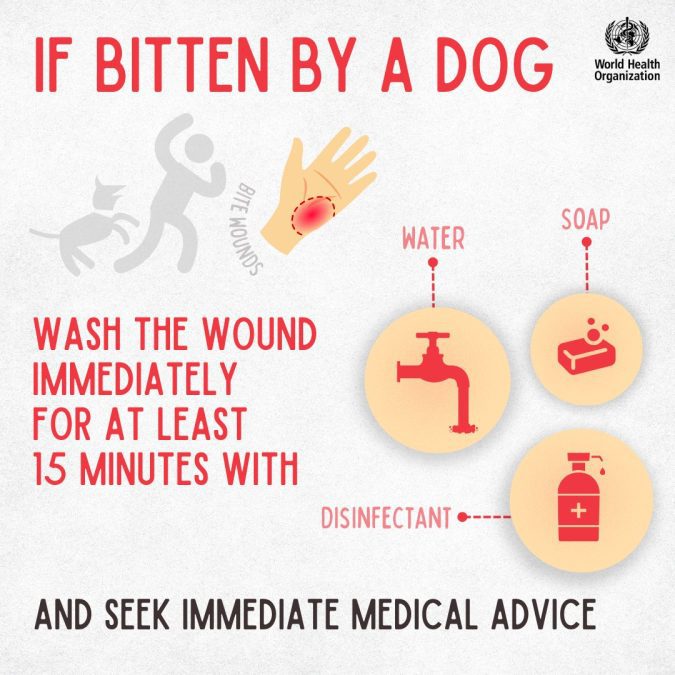
Following the WHO campaign against rabies reveals that all victims of dog bites need to wash the wound immediately if bitten by a dog.
WHO has advised people to always seek immediate medical advice. The wound must be immediately and thoroughly washed for at least 15 minutes with soap and water.
Then visit a clinic, as you may need rabies post-exposure vaccination.
Similarly, according to the WHO, this simple step significantly reduces the risk of rabies transmission, a disease that is almost always fatal once symptoms appear.
The first step is to immediately wash the wound with soap and running water for 15 minutes.
2. Apply pressure with a clean cloth to stop bleeding.
3. Apply an antiseptic to prevent infection.
4. Assess the dog’s vaccination and behaviour history.
5. Start rabies post-exposure prophylaxis immediately if risk is suspected.
6. Administer tetanus vaccine if not up to date.
7. Avoid closing wounds primarily unless low infection risk.
8. Use antibiotics for deep, puncture, or high-risk wounds.
9. Observe the dog for 10 days if possible.
10. Seek prompt medical attention for severe wounds or signs of infection.
Key facts about rabies by WHO
Rabies is a serious public health problem in over 150 countries and territories, mainly in Asia and Africa. It is a viral, zoonotic, neglected tropical disease that causes tens of thousands of deaths annually, with 40 per cent being children under 15.
Dog bites and scratches cause 99 per cent of the human rabies cases and can be prevented through dog vaccination and bite prevention.
Once the virus infects the central nervous system and clinical symptoms appear, rabies is fatal in 100 per cent of cases.
However, rabies deaths are preventable with prompt post-exposure prophylaxis (PEP) by stopping the virus from reaching the central nervous system. PEP consists of thorough wound washing, administration of a course of human rabies vaccine and, when indicated, rabies immunoglobulins (RIG).
If a person is bitten or scratched by a potentially rabid animal, they should immediately and always seek PEP care.
WHO and its global partners aim to end human deaths from dog-mediated rabies through a comprehensive One Health approach promoting mass dog vaccination, ensuring access to PEP, health worker training, improved surveillance, and bite prevention through community awareness.