‘We are breaking barriers’ – Willis Raburu says as ‘Niko Kadi’ movement gains momentum
By Valerian Khakayi, March 22, 2026The energy was electric at Masinde Muliro University of Science and Technology as media personality Willis Raburu was among those who led a vibrant event for the youth-driven ‘Niko Kadi’ movement that was held on Saturday night, March 21, 2026.
Students and young people from across Kakamega County turned out in large numbers, eager to be part of a movement aimed at empowering the next generation of voters.
Taking to his official Instagram account, Raburu shared a video snippet which showed young people vibing at the event and emphasised the importance of youth participation in civic life.
He further acknowledged the overwhelming turnout and energy from the students.
“Sherehe ya #TukoKadi hapa Masinde University imeshika! We are breaking barriers and creating a move! KAKAMEGA, you are too good to us!”Raburu wrote.
Held after a daytime voter registration drive at the institution, the gathering featured sessions aimed at engaging and inspiring the youth to take up their civic responsibilities.

Niko Kadi challenge
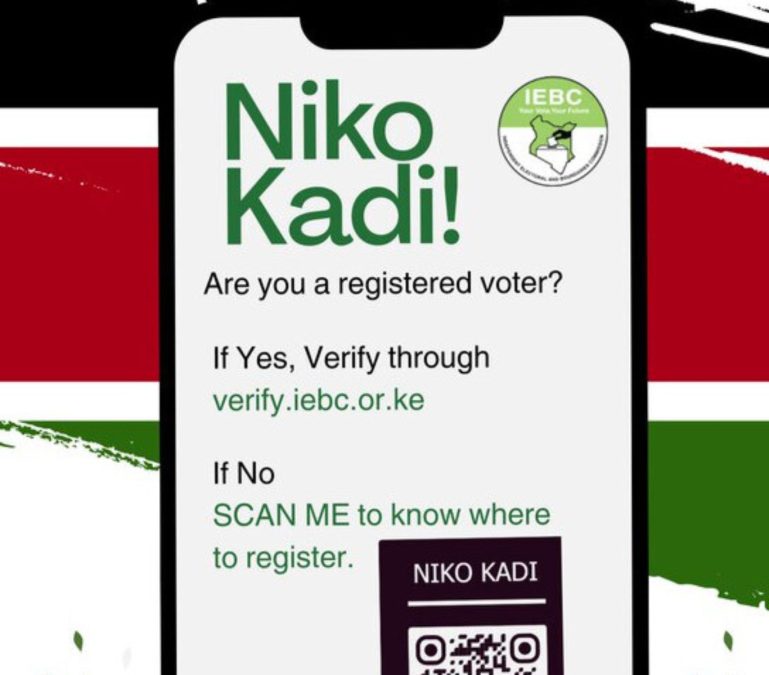
The Niko Kadi Challenge, a youth-led movement, has taken centre stage online, with young people rallying each other to register as voters and take ownership of their future.
If you have spent any time online recently, on TikTok, X, Instagram, or even WhatsApp, you have probably come across the phrase ‘Niko kadi.’
The challenge led by photojournalist Allans Ademba has moved numbers, winning the hearts of dozens of Kenyans of all walks of life after successfully mobilising hundreds of first-time Gen Z voters to register as voters.
Ademba, who has been running the #TukoKadi online campaign, a digital mobilisation programme aimed at registering en masse for the 2027 General Elections, on Tuesday, March 17, 2026, chaperoned hundreds of Kasarani residents to register as voters at the IEBC centre, within the D.O’s offices in Kasarani sub-county.
Across various digital spaces in Kenya, Niko Kadi is used as shorthand for being ready or prepared, and increasingly, for being registered to vote.
Instead of an official directive (‘Go register’), the message becomes social and personal: ‘Niko kadi je, wewe uko?’ (‘I’m on the card, are you?’).