Doctor behind Tileh Pacbro’s hair transplant explains why some hair loss patients aren’t candidates
By Steve Ireri, March 13, 2026Dr Peter Asugo, the specialist behind dancer and fitness trainer Tileh Pacbro’s hair transplant, has explained why some people experiencing hair loss may not automatically qualify for the procedure.
Speaking in an exclusive interview with K24 Digital on Friday, March 13, 2026, Asugo said hair transplantation goes beyond simply implanting hair follicles, noting that proper diagnosis and patient suitability are critical before any procedure is performed.
According to the hair restoration specialist, many patients focus on restoring their hairline without understanding that hair loss can be caused by numerous underlying medical conditions that must first be addressed.
“You have to look at a patient with care and not take it lightly. If someone is always wearing a cap or a wig, there is usually a deeper issue related to self-esteem because hair loss comes with its own struggles,” he said.
Asugo said doctors must carefully assess patients who frequently cover their heads with caps or wigs, noting that hair loss often affects a person’s self-esteem and confidence.
He explained that the goal of hair restoration is not only to regrow hair but also to help patients regain confidence.
“Before the process, you have to think about whether this person will be able to walk without the cap or wig after the procedure. Will they have the freedom to walk without hiding their scalp?” he said.
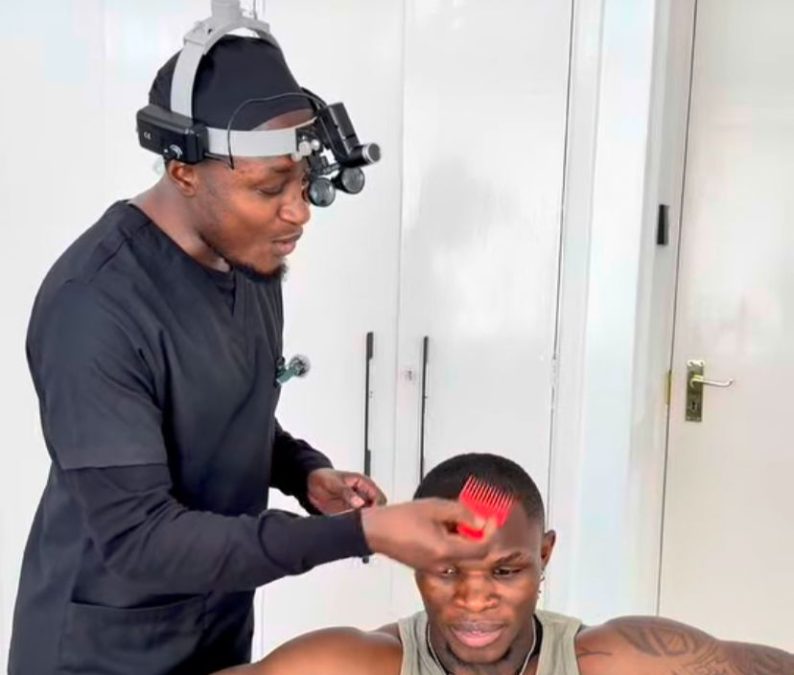
The specialist noted that after a successful procedure, a patient should be able to comfortably walk without hiding their scalp under a cap or wig.
“Hair restoration is also about confidence. A patient should be able to wake up in the morning, look in the mirror and comb their hair without feeling the need to hide their scalp,” he explained.
Qualifications
However, Asugo emphasised that not everyone with a receding hairline or bald patches qualifies for a transplant.
He said a detailed consultation is necessary to determine the root cause of hair loss, adding that there are more than 30 to 40 different conditions that can lead to hair loss.
“That is why it becomes important to determine who the right candidate for a hair transplant is. Sometimes someone may have a receding hairline but still not qualify for the procedure. This is because we first need to diagnose the cause of the hair loss. That is why consultation is always necessary before a hair transplant,” he explained.
Among the factors doctors investigate during diagnosis are inflammatory scalp conditions, autoimmune diseases, vitamin deficiencies and stress, all of which can contribute to hair loss.
In some cases, Asugo said hair loss may be linked to scarring conditions that affect the scalp itself, which may make transplantation difficult or impossible.
He added that some patients first require medical treatment to stabilise the scalp before any hair restoration procedures can be considered.
“Hair loss can have many causes. We usually look at whether it is caused by an inflammatory condition of the scalp, an autoimmune disease, a vitamin deficiency or even stress. Stress alone can cause someone to develop patches of hair loss. In fact, there are more than 30 to 40 different causes of hair loss, and some are scarring while others are non-scarring conditions,” Asugo stated.
Such treatments, Asugo said, may include medication such as antibiotics or steroids to manage infections or inflammation affecting the scalp.
Once the underlying condition is treated, doctors may introduce stimulation therapies aimed at strengthening the remaining hair.
These therapies can include procedures such as platelet-rich plasma (PRP) treatment, which helps stimulate hair growth and improve the health of existing hair follicles.
After the scalp condition has stabilised and the patient is deemed suitable, a hair transplant may then be considered.
“For some patients, we first treat the scalp using medical therapy such as antibiotics or steroids to control the inflammation or infection. After that, we may introduce stimulation therapies to help the remaining hair grow, including treatments like PRP. Only after the scalp has stabilised and the patient is confirmed to be a suitable candidate can we then consider a hair transplant,” Asugo said.

Another key factor, Asugo noted, is the availability of sufficient donor hair, since follicles must be harvested from one part of the scalp and transplanted to areas experiencing hair loss.
Without adequate donor hair, he said, a transplant may not be feasible.
He likened the process to planting seeds in a garden, explaining that doctors must first understand why hair loss occurred before attempting to restore it.
“If seeds fail to grow in a garden, you first need to understand why. Was there a parasite, a wildfire or another issue affecting the soil? The same principle applies to hair restoration,” he explained.