Police only respect a particular skin colour: Boniface Mwangi criticises conduct of Kenyan cops
By Katemarthason Okudo, June 10, 2026Kenyan activist Boniface Mwangi has raised strong concerns over police conduct and ongoing developments affecting Nairobi National Park, following the arrest of former Chief Justice David Maraga and other activists during protests on Monday, June 8, 2026.
Mwangi shared his remarks on an Instagram post on Wednesday, June 10, 2026, reflecting on what he described as unequal treatment by law enforcement and the broader implications of recent plans to excise 76 acres from the protected park.
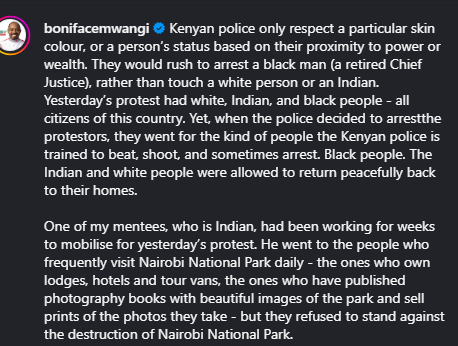
According to him, the way police handled the protest raised serious questions about fairness and equality before the law. “Kenyan police only respect a particular skin colour, or a person’s status based on their proximity to power or wealth. They would rush to arrest a black man (a retired Chief Justice), rather than touch a white person or an Indian,” he wrote.

He further noted that the protest brought together people of different races and backgrounds, but said police action appeared selective when arrests were made.
“Yesterday’s protest had white, Indian, and black people and all citizens of this country. Yet, when the police decided to arrest the protestors, they went for the kind of people the Kenyan police are trained to beat, shoot, and sometimes arrest. Black people. The Indian and white people were allowed to return peacefully to their homes,” he stated.
Mwangi also pointed to efforts he said had been made to mobilise support from different communities, including individuals who frequently engage with Nairobi National Park through tourism and conservation-related activities.
“One of my mentees, who is Indian, had been working for weeks to mobilise for yesterday’s protest. He went to the people who frequently visit Nairobi National Park daily,” Boniface stated.
In his statement, he questioned what he described as a lack of public resistance to developments affecting the park, despite its importance to Kenya’s wildlife heritage.
Mwangi also raised concerns about long-term environmental pressure on Nairobi National Park, citing infrastructure projects and urban expansion around its borders.
He referenced past developments and ongoing encroachment, arguing that such activities continue to threaten the park’s ecosystem and wildlife corridors connecting areas like Kitengela, Athi River and Rongai.
He further criticised plans linked to the proposed developments, including a state-of-the-art orphanage within the park, saying such facilities risk shifting focus from wildlife rehabilitation to commercial tourism.
“They want to take away healthy, pristine, and wild land to put up buildings and enclosures to hold wild animals for people to come and gape at,” he added.

Kenya currently allocates a significant portion of land to conservation areas, with estimates placing protected parks and conservancies at roughly 11% to 16% of the country’s total land area.
The debate over the future of Nairobi National Park continues to draw public attention, as conservationists, activists and government stakeholders remain divided over development plans and environmental preservation.