Advertisement
Why illegal gold mining is overtaking cocaine as drug of choice for traffickers
24th November, 2025 08:22 AM
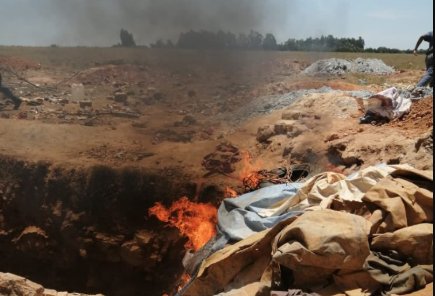
The Trump administration’s drone strikes against boats bringing illicit drugs to the US come amid an explosion in the amount of cocaine being produced in Colombia and Peru.
But there is a new and lethal factor that is turbo-charging production, especially in Peru: the relationship between coca cultivation and illicit gold mining.
Also Watch: Mining ministry shuts illegal mining centres
It is a toxic combination that is enriching criminal gangs and corrupt officials, as the price of gold touches new highs on world markets. And it’s taking root in other states – including Ecuador, Brazil, and Venezuela.
In July 2025, Peru’s then foreign minister, Elmer Schialer, said the illegal gold economy in Peru was seven times bigger than the cocaine trade.
Colombia has traditionally been the epicenter of coca cultivation in South America. But cocaine production has spiked in Peru, where more than 800 tons were produced last year, according to the US State Department.

Coca cultivation has spread from remote mountainous areas into Peru’s lowlands, a huge stretch of land adjoining Brazil and Colombia, where new variants thrive.
The region of Ucayali has seen the greatest increase in coca cultivation, as well as clandestine airstrips and drug exit routes, according to a recent Amazon Watch report by Ricardo Soberon, a former director of Devida, the official Peruvian agency tackling illegal drug flows.
Also Watch: Government Launches Crackdown on Illegal Mining to Curb Revenue Loss
Research by investigative group Mongabay in 2024 identified 128 clandestine airstrips cut into the jungle across six Peruvian regions, some surrounded by coca plantations.
The COVID-19 pandemic triggered an exponential spread of illegal gold mining and coca production, said Dan Collyns, a writer on organised crime in the Amazon region.

The police were enforcing a strict lockdown, giving free rein to organized crime groups to expand their territorial control, particularly in remote areas.
And the lockdown meant that many Peruvians, more than 70 per cent of whom work in the informal economy, were forced to find alternative incomes, often in illegal occupations, Collyns said.
Traditionally, according to Collins, Peruvian producers have worked with mostly Mexican cartels to ship the processed drug from Peru’s Pacific coast.
Several US strikes that have targeted vessels allegedly carrying drugs have been in the Pacific, but the vast majority of Peru’s cocaine is destined for Europe, according to a former Peruvian interior minister, Ruben Vargas.
Narco-mineria
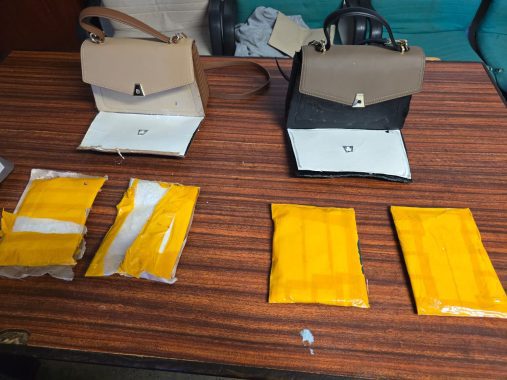
The nexus of coca cultivation and illicit gold mining is offering a swifter route to riches for criminal enterprises across the Amazon region – from Peru and Ecuador to Colombia and Venezuela. It’s known as narco-mineria, according to Collins.
The advantage is simple.
Cocaine is illegal from cultivation to its sale on the streets. Much of Peru’s gold is illicitly mined, but when refined is indistinguishable from legitimate metal, its origin untraceable.
“Criminal organizations have found that illegal gold mining is a safer and more lucrative asset in which they can invest money from drug trafficking, and, in turn, launder the assets more easily,” according to Collyns, author of the forthcoming “Blood Gold: The Shocking True Story of the Amazon Gold Rush.”
Gangs use “the same smuggling routes, logistics, precursor supplies like diesel, and use their territorial control to exploit whatever resources are available: gold, coca, timber,” he added.
Along Peru’s Amazon border with Colombia, dissidents from the Colombian rebel group FARC control production and distribution. Along Peru’s longer border with Brazil, “Comando Vermelho (Red Command), one of Brazil’s most powerful crime groups, has established itself,” according to Collyns.