Advertisement
More women than men think the country is headed in the wrong direction – Infotrak
25th September, 2025 03:11 PM

More women than men believe Kenya is on the wrong track, according to the latest Infotrak Research survey.
The survey released on Thursday, September 25, 2024, shows deepening public dissatisfaction with the country’s direction.
Also Watch: Majority of Kenyans Expect Opposition Unity Ahead of 2027 – TIFA
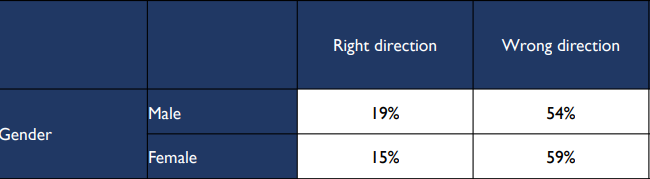
The poll indicates that 57 per cent of Kenyans overall feel the nation is headed in the wrong direction. Notably, 59 per cent of women share this view compared to 54 per cent of men.
Researchers attribute the difference to the economic and social burdens disproportionately affecting women, who often shoulder family and household responsibilities.
The study highlights that public sentiment is largely driven by economic distress, particularly the high cost of living and unemployment.
These challenges have overshadowed any perceived successes in peace or government programmes, with Kenyans citing economic hardship as the most pressing concern.
High cost of living
The cost of living emerged as the dominant issue, with 79 per cent of respondents saying it is higher than a year ago. Seven out of ten Kenyans rated the current cost of living as “High” or “Very High”.
For many households, rising food prices, fuel costs, and healthcare expenses have eroded purchasing power, making daily survival increasingly difficult.
Infotrak’s findings show the top five priority concerns for citizens are all tied to economic hardship and social welfare. These include the cost of living, unemployment, challenges linked to the Social Health Insurance Fund (SHIF/SHA), rampant corruption, and the rising cost of education.
Among respondents, 69 per cent specifically pointed to the high cost of living as their biggest frustration, while 28 per cent cited unemployment. Corruption was raised by 16 per cent, equal to those who expressed dissatisfaction with the rollout of SHIF/SHA.
Education costs and poor governance also ranked highly, alongside poverty, extrajudicial killings, and poor infrastructure.
Analysts say the data reflect a population increasingly worried about its financial security. While men and women both agree that economic distress is the country’s central problem, the slightly higher concern among women reflects the weight of family responsibilities and household management.
The report shows the growing urgency for policymakers to address economic pressures facing ordinary Kenyans. Without tangible improvements in living standards, public dissatisfaction is likely to intensify, cutting across gender, age, and region.