Advertisement
KUPPET urges MPs to boost education funding amid Treasury budget constraints
03rd August, 2025 10:30 PM
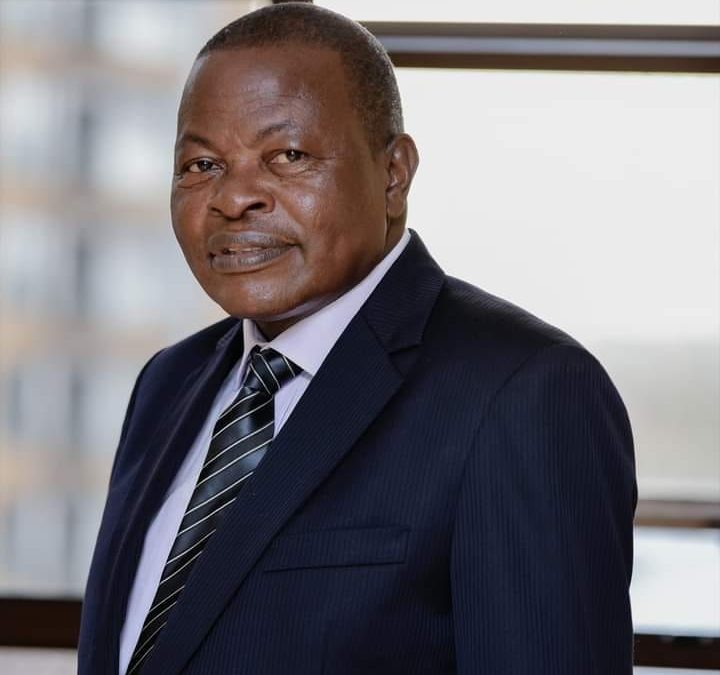
The Kenya Union of Post-Primary Education Teachers (KUPPET) has called on the National Assembly to allocate enough funds to sustain the current capitation rate of Ksh22,244 per secondary school learner, warning that the education sector is facing a major crisis.
Speaking to the press on Sunday, August 3, 2025, KUPPET Secretary General Akello Misori said the sector is grappling with mounting challenges, primarily due to underfunding. He stressed the need for swift action from both the National Treasury and Parliament to prevent further disruptions in learning institutions across the country.
Misori emphasised that the full disbursement of the 2025 academic year’s capitation is crucial for schools to meet their financial obligations before the start of the term. He noted that delays in the release of funds have left many schools struggling to operate efficiently, with some institutions facing difficulties in paying non-teaching staff, purchasing essential supplies, and maintaining basic infrastructure.
“The CS for Finance should immediately release the entire capitation for the academic year 2025, so that schools can address pressing financial obligations ahead of the term,” Misori said.
In addition to funding concerns, KUPPET also raised alarm over the severe shortage of teachers in public schools. The union called on the government to fulfil its pledge to employ an additional 20,000 teachers, a commitment made by the President during this year’s Labour Day celebrations. Misori said that according to data from the Teachers Service Commission (TSC), the country currently has a teacher deficit of approximately 160,000, an issue he said continues to undermine the quality of education and overburden existing teaching staff.
“The government should immediately provide a budget for the employment of 20,000 teachers that the President promised the country during this year’s Labour Day. Data from the TSC indicates that Kenya has a teacher deficit of 160,000,” Misori added.
Budget constraints
KUPPET’s demands come in the wake of recent revelations by Treasury Cabinet Secretary John Mbadi, who admitted that the government is no longer able to fully fund free education in public schools due to budget constraints.
Appearing before the National Assembly Committee on Education on Thursday, July 24, 2025, Mbadi stated that the government is struggling to meet the Ksh22,000 capitation requirement per student in secondary schools, only managing to provide about Ksh16,600.
“If you look at the total budget for the year and divide it by the number of total students, you will see that instead of Ksh22,000, we are funding about Ksh16,000. And so we release 50%, 30%, then 20%. As to whether it is enough, it is not,” he explained.
Mbadi, while speaking during a thanksgiving ceremony at God Oloo Secondary School in Suba South, Homa Bay County, on July 25, defended the government’s efforts to support free education and clarified that the initiative for free secondary schooling began under former President Uhuru Kenyatta.
“For the ten years Mwai Kibaki was President, he never attempted to start or introduce free secondary education,” Mbadi stated.
Adding;
“I hear people say that Kibaki was able to teach or have our children learn for free; it is not true. He made sure that our children went to school for free in primary school. For secondary school, it is President Uhuru Kenyatta who started this initiative. At first, it was a subsidised secondary school. Then later, he announced that it should be a free secondary school day.”
According to Mbadi, the current policy provides for Ksh22,000 capitation for each student in senior secondary schools, Ksh15,000 for junior secondary, and Ksh1,400 for primary school learners. However, the government has consistently failed to fully meet these targets.
“Since the introduction of free day secondary school, the government has not been able to allocate every student Ksh22,000. The government has always had debts for schools. That is why you hear principals saying they have not received full capitation,” he said.
Mbadi also pointed a finger at MPs, blaming them for further cuts in the education budget.
“I was wondering, when MPs were asking me why I’ve not released Ksh22,000 per student. I asked them, Where do I get that money? It is them who passed the budget,” he stated.
“The latest budget, even the capitation we had put, Parliament reduced it further. So, once a budget has been allocated, where do I get money to pay the full Ksh22,000?”
He admitted that although the government has made full payments for Term One and Term Two this year, the actual amount per student only adds up to about Ksh17,000.
As a possible solution, Mbadi proposed redirecting bursary funds from the National Government Constituency Development Fund (NG-CDF) to help cover the capitation deficit. He suggested that the 40% of NG-CDF earmarked for bursaries, roughly Ksh21 billion, could be used to bridge the Ksh5,000 gap per student.
“If that money was channelled to fill the capitation gap nationally, schools would have full fees without forcing individual students to chase bursaries from MPs,” he said.