Advertisement
Environment CS urges faster disbursement for locally led climate action
07th August, 2025 07:20 PM

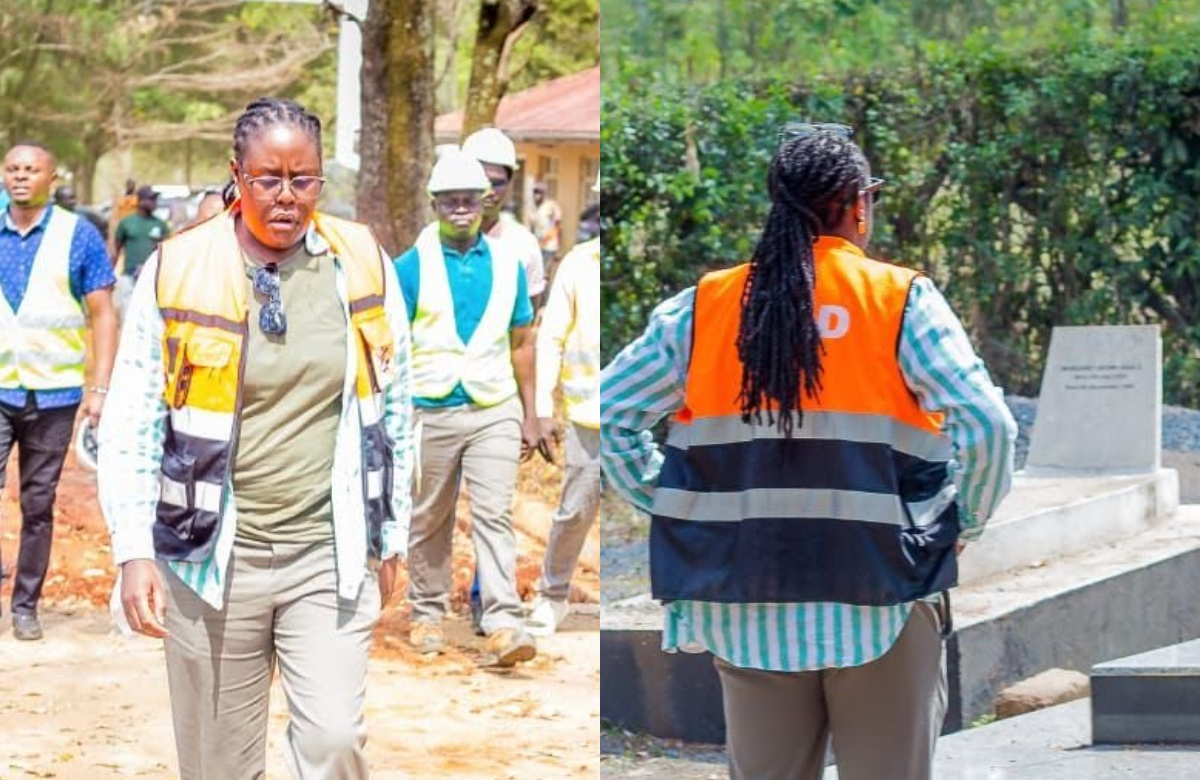
Environment Cabinet Secretary Deborah Mlongo Barasa has called for the expedited disbursement of funds under the Financing Locally-Led Climate Action (FLLoCA) programme to accelerate the implementation of Kenya’s climate goals.
Speaking during a meeting with the FLLoCA team led by Peter Odhengo on Thursday, August 7, 2025, CS Barasa commended the programme for its significant impact, including the creation of over 57,000 jobs, many of which have benefited persons with disabilities, and support to counties through the establishment of Climate Change Units.
The CS also lauded the programme’s alignment with Kenya’s Nationally Determined Contributions (NDCs) and the Paris Agreement, underscoring its role in advancing Kenya’s climate resilience agenda.
However, she emphasised the need for faster disbursements, enhanced coordination, and greater visibility of FLLoCA initiatives, particularly during key national events like Mazingira Day.
“I called for faster disbursements, stronger coordination, and more visibility for FLLoCA, especially during Mazingira Day,” she stated.
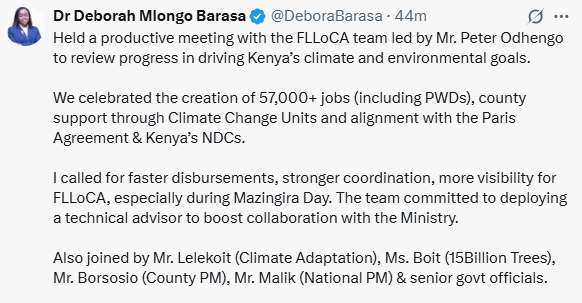
The FLLoCA team has also committed to deploying a technical advisor to strengthen collaboration with the Ministry and improve programme delivery.
Taxonomy framework
This comes a few months after the Central Bank of Kenya (CBK) finalised a taxonomy and a climate risk disclosure framework as part of a suite of green finance tools for the banking sector to promote more sustainable investments and encourage the shift to a low-carbon economy.
“The general public and other stakeholders will benefit from increased transparency, fostering accountability within the financial sector and encouraging businesses to adopt more sustainable practices,” the CBK said in a public notice on April 9, 2025.
The taxonomy and the risk framework are an outcome of the CBK’s partnership with the European Investment Bank.
Seventeen out of the 20 countries most threatened by climate change are located in Africa, according to the Economic and Social Council of the United Nations.
“Kenya is among the most vulnerable countries in the world to the impact of climate change,” the taxonomy states.
“Unlocking sustainable finance and stimulating the allocation of capital to support a climate-resilient economy will be critical.
“For the financial sector to effectively contribute to implementing the climate change agenda, there is a need for a common understanding of what constitutes green finance as well as a standardised disclosure and reporting framework.”
Climate change is expected to hit agriculture, water, energy and tourism in Kenya, denting economic output by more than 7 per cent by 2050 if the country does not take action.