Advertisement
Delhi leads in India’s toxic air amid festivities
23rd October, 2025 12:25 PM
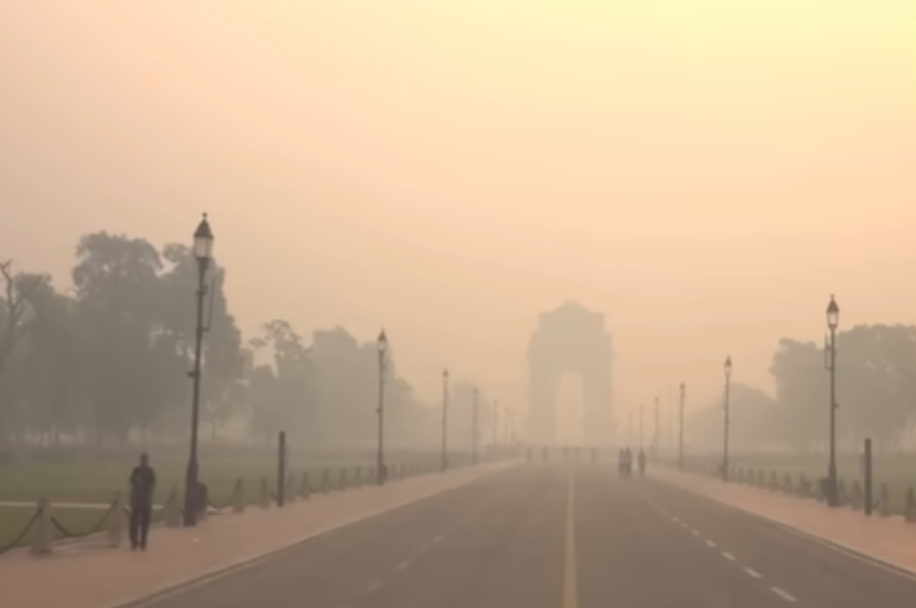
Every year, like clockwork, Delhi chokes.
A thick, toxic haze settles over the city – stinging eyes, burning throats and sending air quality monitors into panic mode.
For the past few days, the air in Delhi and its neighbouring satellite cities has hovered between the “poor” and “very poor” categories.
It worsened sharply after Diwali, one of India’s biggest festivals, as fireworks lit up the night sky and filled the air with smoke. Headlines reported that it was the worst post-Diwali air quality the city had experienced in the past four years.
With that, the city once again found itself confronting its annual, predictable – yet avoidable – crisis: air pollution.
There isn’t a single factor to blame for the toxic air.
It’s a combination of events – firecrackers, vehicular emissions and the burning of crop residue in the agrarian states of Punjab, Haryana and Uttar Pradesh – that leads to the same outcome every year. And as it coincides with the start of winter, colder temperatures and low wind speeds trap pollutants close to the ground.
This year too, the same factors are believed to be at play – although there are contradictory reports about what contributed how much to the toxic air this year.
Indian media reports, citing a climate research firm, say there has been a 77% decline in stubble-burning incidents this year because of the devastating floods that destroyed much of the region’s crops earlier. It blames firecrackers as being the main cause for Delhi’s poor air during the festive period.
But official data from Punjab tells a different story, PTI news agency reported. According to the regional pollution control board, stubble-burning incidents in the state have gone up three times in the past 10 days, with more than 350 cases reported – up from just 116 recorded until 11 October.
In the past few years, authorities have launched targeted campaigns to highlight the harmful impact of stubble burning and to promote the use of machinery as an alternative.
These efforts have shown some results on the ground. For instance, farm fires in Punjab fell to 10,909 cases last year as against 36,663 in 2023. But despite the decline, it continues for a simple reason: affordability. It remains the cheapest way to clear fields.
And while successive governments have spoken about providing machinery and financial incentives to discourage crop burning, very little has changed on the ground.
The other major contributor to Delhi’s pollution in this season is firecrackers.
Just days before the Diwali festival, India’s top court relaxed a five-year ban on selling and bursting of crackers in Delhi and surrounding areas. It permitted the use of less-polluting “green crackers” for six hours over two days during the festival. Experts criticised the order, saying “green crackers” are only 20-to-30% less polluting and still release harmful particles that degrade air quality.
Also, the reality on the ground was far from what the court mandated and the restrictions were openly flouted.
In many parts of the capital, fireworks started early in the morning and continued well past midnight. And not all of them were “green crackers” either. In the run-up to Diwali, BBC reporters saw more polluting crackers also being sold openly in shops.