Advertisement
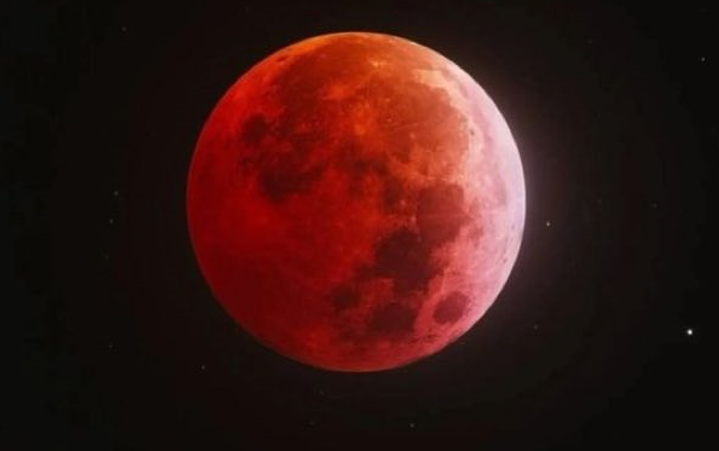
Blood moon to be visible in Kenya from 6:25 pm on Sunday
06th September, 2025 08:25 PM

Many sky-gazers around the world will get the chance to see a dazzling celestial display this weekend — a total lunar eclipse that could cause the moon to take on a deep reddish hue.
The lunar eclipse will be visible Sunday for those in Europe, Africa, Asia and Australia, according to NASA.
The lunar eclipse will be visible in Kenya on the night of September 7–8, 2025, and it will be fully visible across the country.
In Nairobi, the penumbral phase will begin at approximately 6:25 pm, the total eclipse—when the Moon fully enters Earth’s shadow—will start around 8:30 pm, the greatest eclipse will occur at about 9:11 pm, and the entire event will last for about 5 hours and 29 minutes.
As the sun, moon, and Earth line up in their orbits, the moon will be cast into a crescent-shaped shadow before being fully blocked from the sun by Earth.
At that point, some light from the sun will make it around the edges of Earth. Blue light will be scattered by air molecules, while the remaining wavelengths will reflect off the moon, making it appear to glow red what is known as a blood moon.
For those in North and South America who will not be able to view the eclipse, there will still be opportunities to observe a bright full moon this weekend, otherwise known as the corn moon.
Here’s what experts recommend for the best viewing of the full moon and the total lunar eclipse.
September’s full moon, nicknamed the corn moon, as it aligns with the season for harvesting corn, according to The Old Farmer’s Almanack, will peak around the same time as the lunar eclipse. But full moons appear round to the naked eye one day before and after their peak, so sky-gazers can observe the full moon all weekend and into Monday, Petro said.
For best viewing of the full moon and the total lunar eclipse, Petro recommends going outside and finding a spot away from bright lights, as they could hinder visibility of the natural satellite as it goes through all stages of the eclipse.
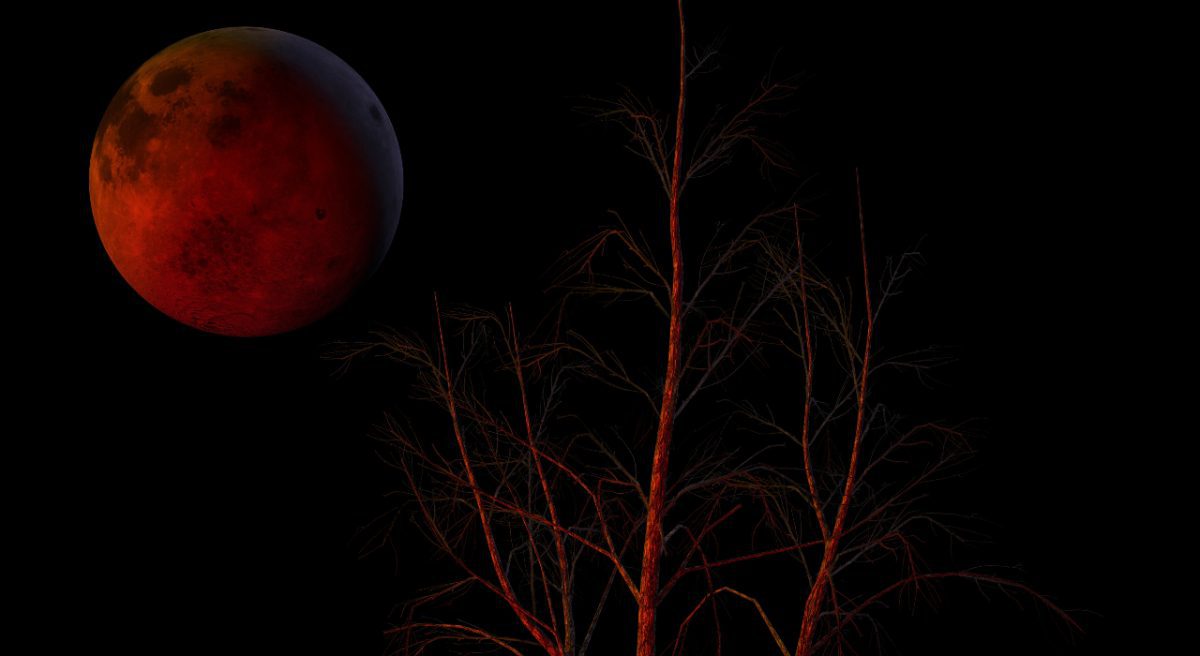
The moon turns red once it is completely blocked by Earth’s shadow, illuminated by red-orange light from the sunsets and sunrises on the Earth, Petro said.
Occasionally, directly before and following totality, the moon can appear to have a blue and purple band of light upon it. This phenomenon is caused by sunlight passing through the Earth’s ozone layer in the upper atmosphere, Russell said.
While full moons occur every 29 days, lunar eclipses typically only happen about twice a year when the sun, moon and Earth align. For those who may be feeling left out, the next total lunar eclipse is set to take place on March 3 and will be visible in parts of North and South America, Petro said.
“I’m always happy to see the full Moon, whether there is an eclipse or not,” Russell said. “The Moon formed in the very earliest times of the Earth’s history, and the Earth and Moon have been through a lot together. You can see the evidence of that with the naked eye, looking up to see all the craters on the Moon that have been formed over 4.5 billion years of history.”
The next three full moons will be supermoons, full moons that occur when the moon is closest to Earth in its orbit, making it appear larger and brighter than regular full moons.