Japan fans captivate World Cup with stadium cleanup exercise
By Luke Oluoch, June 15, 2026The Japanese fans at the 2026 World Cup have once again captured global hearts by engaging in the post-match cleanup exercise that has become synonymous with their fanbase at major tournaments.
In Japan, Atarimae, loosely translated as “doing the obvious”, is a way of life that defines a society brought up with a rare form of discipline. For the Asian nation’s supporters, this practice is not a matter of choice; it is a deeply ingrained culture and tradition.
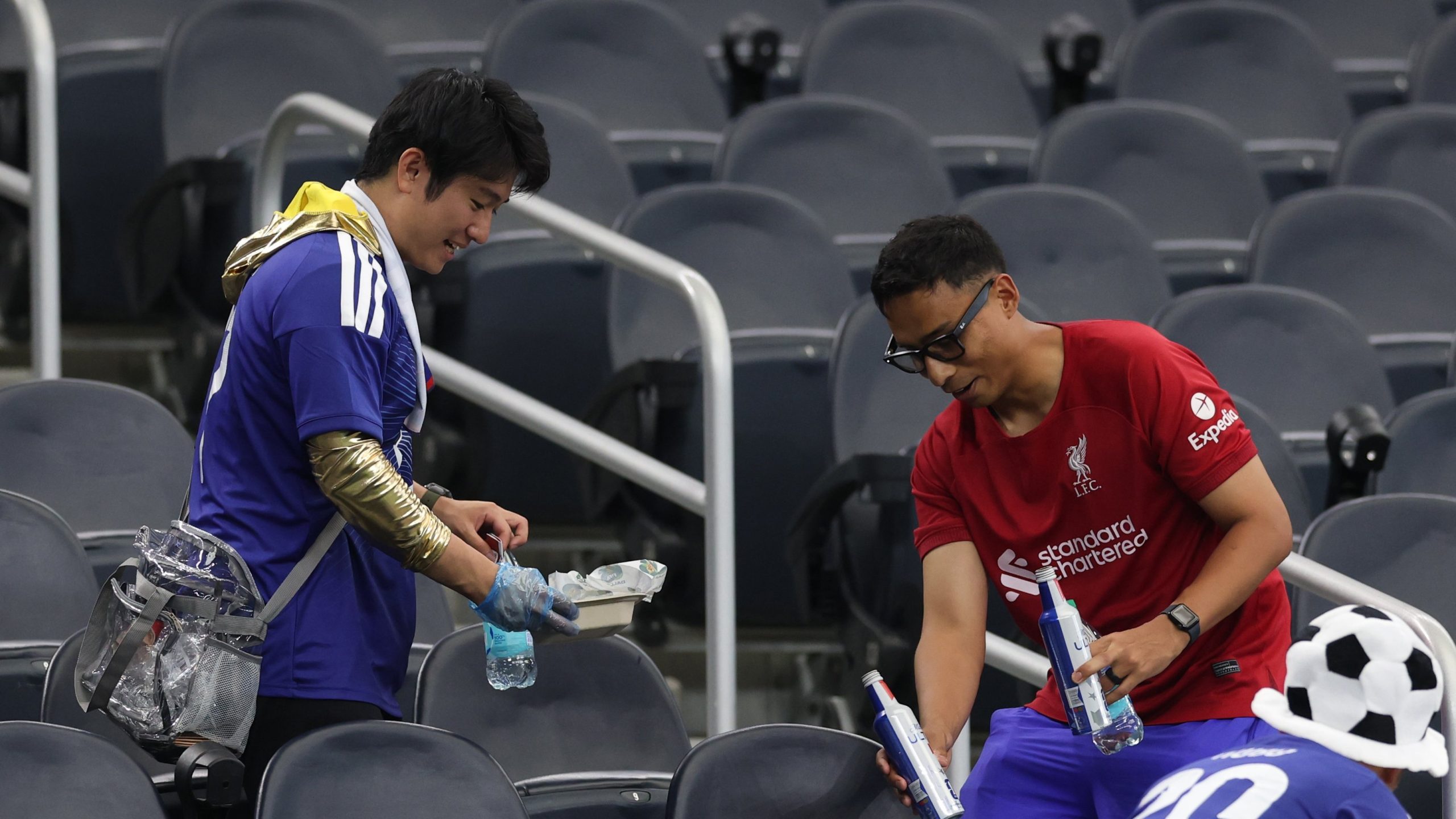
Following their dramatic 2-2 draw against the Netherlands on Sunday, June 14, 2026, beautiful scenes emerged of supporters clad in Samurai Blue moving through rows of the Dallas stadium stands.
Japanese leaves Dallas stadium pristine
They made rounds picking up plastic bottles, food wrappers, and debris, proving once more that their commitment stands regardless of the outcome of the game.
This practice is deeply rooted in Japanese upbringing, driven by two cultural concepts: Gomi-hiroi (trash picking) and a resolve to leave a place better than it was found.
From elementary through high school, Japanese students do not rely on janitors. Instead, a daily portion of the school schedule called Soji is dedicated to students cleaning their own classrooms, hallways, and restrooms. This education ingrains a social responsibility to ensure that those using the space next to or facilities are not burdened by your presence.
Japan’s World Cup traditions
The outside world first experienced this civic etiquette during France ’98, which marked Japan’s first-ever World Cup appearance. Despite losing all three group matches and crashing out early,
French organisers and international media were stunned to find the Japanese spectator bays completely spotless.
Proving that good habits die hard, their resolve was put to the ultimate test during the 2018 World Cup in Russia.
Setting a trend?
After Japan surrendered a historic 2-0 lead to Belgium, losing 3-2 to a devastating 94th-minute winner from Nacer Chadli, heartbroken and tearful fans still stayed behind in the Rostov Arena for over an hour to clean their section.
The national team players and staff similarly left their locker room clean, scrubbed the floor, and cleaned the benches.
The tradition was reinforced yet again at the 2022 edition in Qatar.
Today, this heartwarming sporting etiquette is gaining global traction, with other fans in major sporting events seen mimicking the trend set by the Japanese.