Asamoah Gyan opens up on 2010 World Cup heartbreak that shaped his remarkable career
By Joel Masibo, August 2, 2026Former Ghana captain Asamoah Gyan has reflected on the defining moment of his football journey, admitting that the penalty he failed to convert against Uruguay at the 2010 FIFA World Cup nearly drove him away from the sport before ultimately becoming the foundation of his legacy.
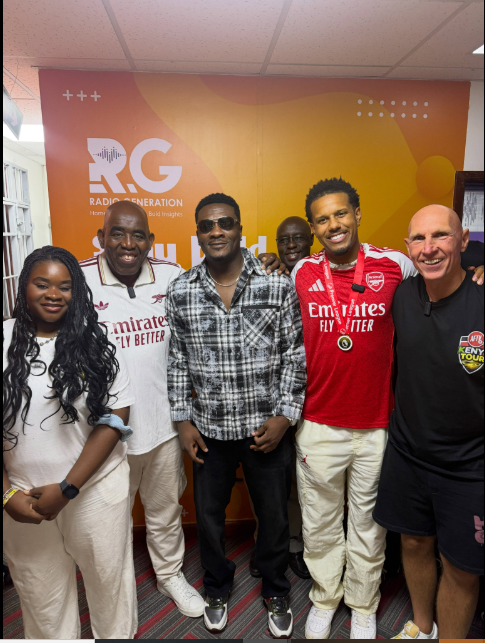
Speaking during an interview on a local Sports Garage programme on Saturday, August 1, 2026, the iconic striker described 2010 as the most memorable yet emotionally draining year of his career.
“For me, 2010 was my best year in my career,” Gyan, who is in Kenya for a series of grassroots football development program said.
“Everything was working. I was injury-free. My history with going to tournaments was that I always went with half fitness because of injuries, but that particular tournament, I was fit. I was scoring goals.”
The former Black Stars skipper explained that, unlike previous international competitions where injuries had limited him, he arrived in South Africa in peak physical condition. His impressive displays quickly established him among the tournament’s standout performers as Ghana progressed to the quarter-finals.
Away from football, he said life was equally rewarding.
“I was doing music, and the music became a hit song. Everything was working for me that year,” he said.
“Starting the tournament, I was scoring goals. After three games, I was among the top three players in the world, alongside Messi. Being ranked like that was an amazing feeling.”
By that stage, Gyan had already scored from the penalty spot against Serbia and Australia before netting the dramatic extra-time winner against the United States that booked Ghana’s place in the last eight. As the only remaining African side in the competition, expectations from across the continent rested heavily on his shoulders.
Defining moment
The defining moment came on July 2, 2010, during Ghana’s quarter-final clash with Uruguay at Soccer City in Johannesburg. With the score tied at 1-1 in the closing seconds of extra time, Luis Suárez blocked a goal-bound header with his hand on the goal line and was sent off.
Gyan stepped up knowing that converting the resulting penalty would send Ghana into the World Cup semi-finals for the first time in African football history. Instead, his effort struck the crossbar before Uruguay eventually triumphed in the penalty shootout.
Looking back on the incident, Gyan admitted the emotional burden was immense.
“I felt very, very disappointed. I felt like I had let Africa down, my country down, my everything down,” he said.
However, as the years passed, his perspective changed.
“But in the second thought, it was a blessing in disguise because sometimes I move to different countries where people don’t even like football, but that particular moment was huge. Everybody saw it.”
He explained that although many people initially recognised him because of the missed penalty, they later appreciated the achievements he accomplished throughout his career.
“People would say, ‘Oh, that’s the guy that missed the penalty.’ Then they would also say, ‘He is a good player. It’s a mistake.'”
“I had a lot of opportunities because people wanted to see me. So I always say it came with both sides. Although Africa was upset and everybody was disappointed, in another way it became a blessing in disguise.”
Handling pressure
Gyan believes handling such moments is part of the responsibility that comes with being one of football’s biggest stars. He noted that reaching the top also means accepting that failures will receive just as much attention as successes.
“When you are up there, you have to be ready for anything that comes with it,” he said.
“If anything happens, everybody talks about the person at the top. That was the position I put myself in, so mentally I had to be ready for whatever came with it.”
Despite eventually moving forward, the former Sunderland forward acknowledged how close he came to calling time on his career.
“Honestly, it really hit me. I nearly ended my career at that time.”
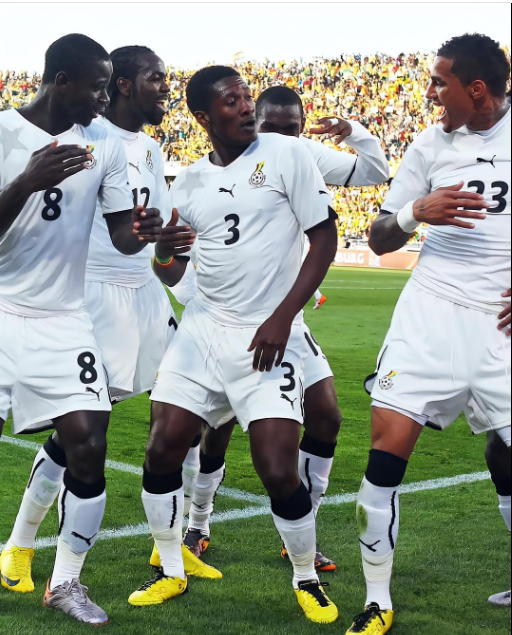
Fortunately for him, Ghana’s penalty shootout offered an immediate opportunity to respond. Tasked with taking the opening spot-kick, Gyan found the back of the net.
“After I missed the penalty, we went to the shootout and I was the first person to take it. I scored.”
“That penalty redeemed my career because mentally I was finished. That goal gave me something back.”
Sixteen years after one of football’s most unforgettable moments, Gyan hopes young players understand the importance of accepting both the rewards and challenges that come with success.
“My advice is that when you put yourself in that position, there are consequences. You have to be ready for the consequences,” he said.
“If you know you are not ready for those consequences, then step aside.”
Although the missed penalty remains one of the most heartbreaking moments in World Cup history for African football, Gyan believes it ultimately became more than a painful memory. Instead, it transformed into a powerful lesson in resilience, helping define a career remembered not only for goals and achievements, but also for the courage to overcome one of the game’s greatest disappointments.