Nyayo Stadium canopy: Kenyans weigh in on proposed upgrade
By Joel Masibo, August 29, 2026As Kenya races against time to deliver world-class facilities for a memorable and successful 2027 Africa Cup of Nations alongside Uganda and Tanzania, Kenyan citizens have weighed in on the proposed upgrade of Nyayo National Stadium ahead of the continental extravaganza.
The 18,000-capacity facility has already undergone several improvements, including work on its floodlights, VVIP areas and tartan track.
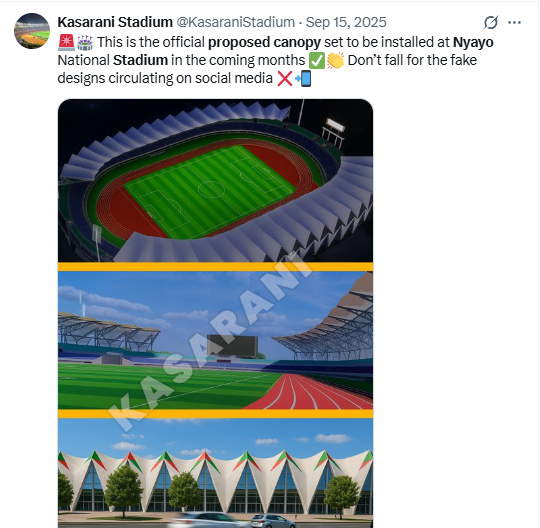
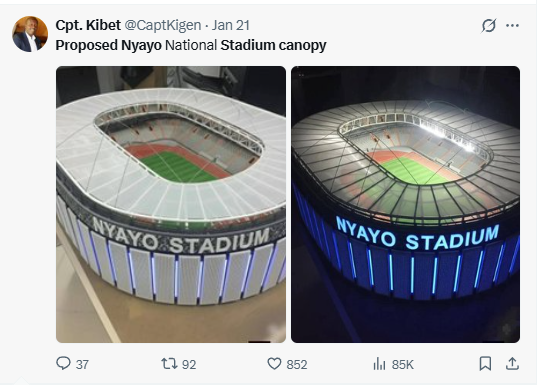
The proposed canopy is intended to take the stadium’s transformation further by providing spectators with greater protection from Nairobi’s sun and heavy rainfall.
President William Ruto announced the canopy project during the Jamhuri Day celebrations at Nyayo Stadium on December 12, 2025, saying work would begin in January 2026.
The project was presented as part of the government’s wider programme to modernise sports infrastructure, following similar work at Kasarani.
The government subsequently included the Nyayo canopy and other stadium works in a broader Ksh26.4 billion sports infrastructure programme announced in June 2026.
The funding is intended to support the completion and upgrading of sports facilities around the country, including venues connected to Kenya’s AFCON preparations.
Deputy President Kithure Kindiki also reaffirmed the plan in July while inspecting the nearly completed Raila Odinga International Stadium, saying Nyayo would receive a canopy as part of the government’s nationwide stadium modernisation programme.
Importantly, Nyayo is currently regarded primarily as a training venue for AFCON 2027 rather than one of Kenya’s principal match venues. Sports CS Salim Mvurya told the Senate earlier this year that Raila Odinga International Stadium and Kasarani would host tournament matches, while Nyayo, Ulinzi and Police SACCO would serve as training grounds.
That makes the canopy more of a long-term facility enhancement than a central condition for Nyayo to host AFCON matches.
Following the development, Kenyans have shared their proposals below:

Raila Odinga Stadium carries Kenya’s biggest responsibility
While the Nyayo project demonstrates the government’s broader infrastructure ambitions, much of Kenya’s AFCON spotlight is firmly fixed on the Raila Odinga International Stadium at Talanta Sports City.
The 60,000-seater facility is being developed as one of Kenya’s principal tournament venues and is expected to play a central role in the country’s hosting plans. Government officials have repeatedly stressed that the stadium is being built to meet CAF’s international standards.
Progress has accelerated significantly in recent months.
In June, the Ministry of Sports reported that the stadium was about 91 per cent complete, with the major structural works substantially finished and remaining tasks concentrated on areas such as electrical installations, finishing works and supporting facilities.
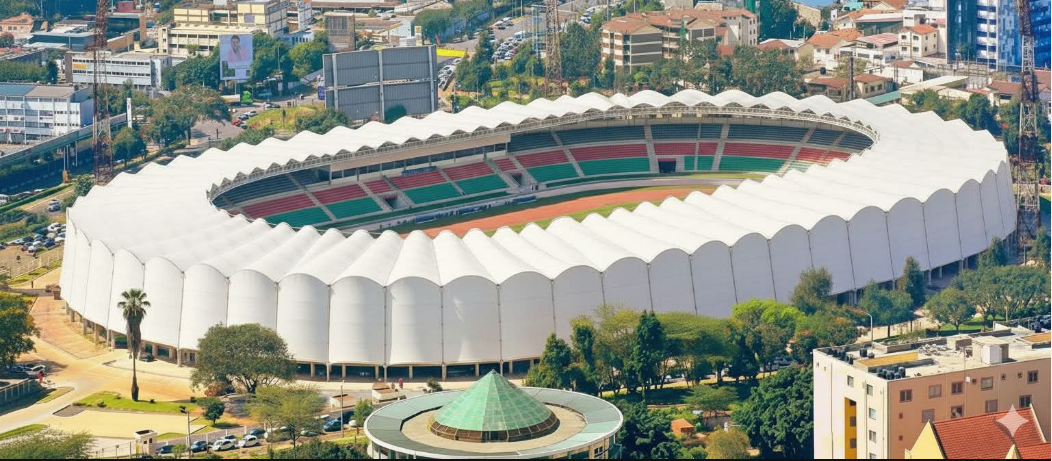
By August, the reported completion level had risen to approximately 94 per cent, with the main pitch ready and the project entering its final stages. Sports CS Salim Mvurya said the government was targeting November for the facility to become operational, with test matches potentially taking place before the end of the year.
The stadium is also expected to provide modern facilities for spectators, players and the media, including 52 skyboxes and dedicated media infrastructure.
The government has nevertheless had to adjust completion expectations. Earlier plans had targeted a July handover, but the latest government position places operational readiness in November, leaving a much shorter window for testing and ironing out any shortcomings before AFCON arrives.
CAF inspection comes at a decisive moment
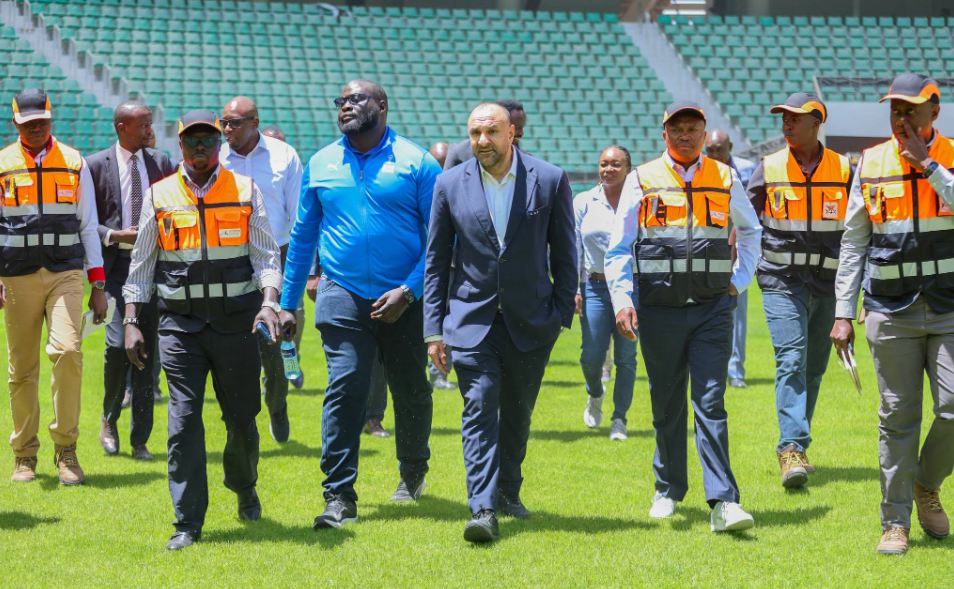
The latest inspection therefore gives CAF an opportunity to assess not only how much work has been completed, but whether the facilities can ultimately meet the standards required for one of Africa’s biggest sporting events.
The pressure is heightened by the fact that Kenya has previously faced concerns over the pace of its preparations. CAF’s earlier assessments identified areas requiring attention, prompting the government to commit to addressing the recommendations.
The Raila Odinga International Stadium’s progress offers Kenya some encouragement. The venue has moved from being a major construction project to one in which the remaining work is increasingly focused on finishing, systems installation and operational readiness.
But completion of the physical structure will not by itself guarantee tournament readiness. Kenya will also need to ensure that training grounds, transport arrangements, security, media facilities, power supply and other supporting infrastructure are capable of handling the demands of an AFCON tournament.
Recent works at Talanta Sports City have included perimeter fencing and the construction of a dedicated power substation, demonstrating that attention has shifted beyond the stadium’s main structure to the infrastructure needed to operate the complex.
Race against time
The CAF delegation’s arrival in Nairobi has consequently brought Kenya’s preparations into sharper focus.
With less than a year before the tournament, the country is simultaneously completing its new flagship stadium, refurbishing existing venues and upgrading training facilities.
Nyayo’s proposed canopy may not determine whether Kenya can host an AFCON match, but it illustrates the government’s ambition to leave behind facilities that meet higher standards even beyond the tournament.
The more immediate test, however, will be whether the Raila Odinga International Stadium and the rest of Kenya’s tournament infrastructure can move from construction and refurbishment to fully operational venues in time.
With CAF officials now on the ground, Kenya’s preparations are no longer being judged solely by government completion figures. The country’s infrastructure programme is entering the stage where delivery, testing and compliance will matter as much as construction progress.