Kelvin Kiarie wins gold at African Skating Championships in Egypt
By Joel Masibo, May 3, 2026Kenya’s skating sensation Kelvin Kiarie struck gold at the African Skating Championships in Cairo, Egypt, on Sunday morning, May 3, 2026, amid lack of government sponsorship, perhaps due to the absence of a functional skating federation in the country.
The latest victory in Cairo comes weeks after Kiarie mounted the winners’ podium in Benin as the Kenyan national anthem echoed across an almost deserted venue, marking his individual skateboarding gold triumph at the April 2026 International Skating Challenge held in Cotonou, Benin.
Lonely champion
Kiarie’s achievements often come without the presence of ministry representatives, official flag escorts, or sponsorship backing.
Even as the Ministry of Youth, Creative Economy and Sports set aside Ksh13.5 billion for the Sports, Arts and Social Development Fund in the 2025/26 budget, Kiarie financed his own trip to Benin, a reality many athletes in so-called “lifestyle” disciplines continue to face.
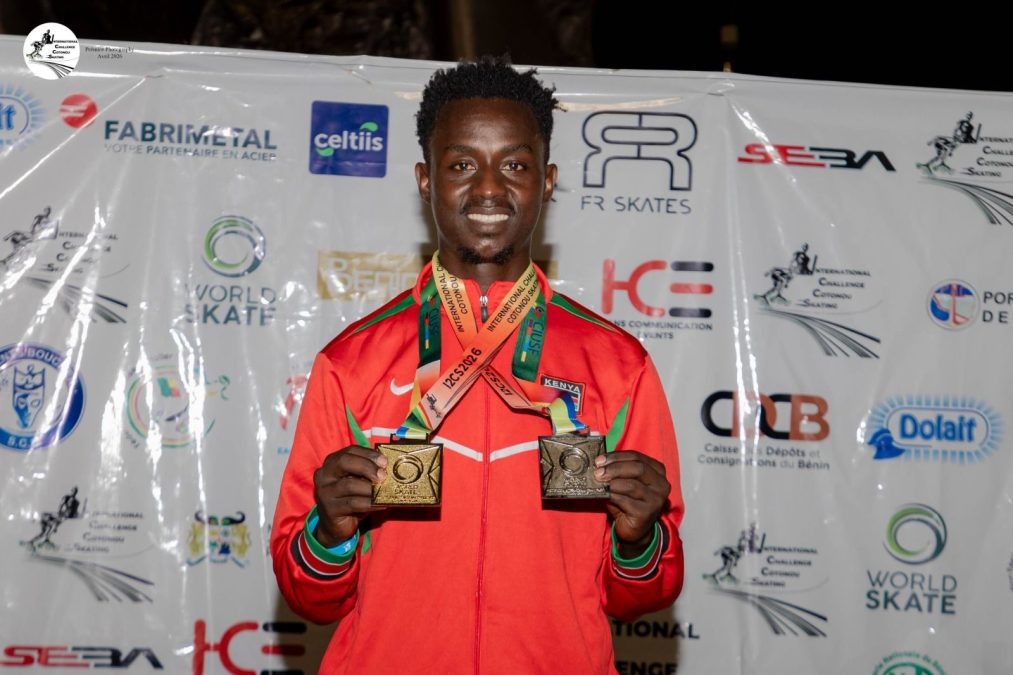
His success sparked intense public debate nationwide, shining a spotlight on the neglect of athletes outside mainstream sports in Kenya. More than a personal milestone, Kiarie’s win exposed a sporting framework that heavily favours traditional medal-rich events while sidelining a vast pool of emerging creative talent.
Every aspect of his participation has been privately arranged. With no strong national federation to cover travel costs, logistics, or even basic insurance for international competition, Kiarie depended on his savings and occasional support from fellow skaters.
Once in Benin, he delivered a stunning performance, effortlessly maneuvering through routines, showcasing exceptional skill, and outperforming experienced competitors, all without government backing or online fanfare.
Ndolo voices concerns
Kiarie’s case is also similar to fencing star Alexandra Ndolo, who recently criticised the country’s sports structures after a frustrating early exit from the 2026 Budapest Grand Prix, revealing the stark challenges she faces competing at the highest level without adequate support.
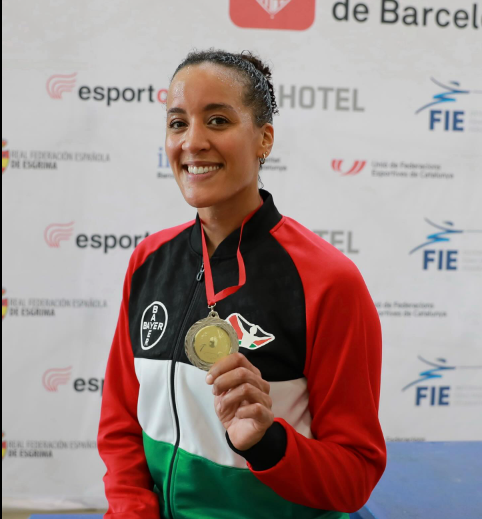
In an emotional statement shared on her social media platforms on Saturday, March 28, 2026, the world’s top-20-ranked épée fencer disclosed that her struggles are not simply about performance, but a reflection of deeper systemic issues.
“Out in the first round of the main draw. Not a single athlete at this competition came without a coach,” Ndolo wrote, highlighting the disparity between her situation and that of her competitors.
She pointed out that even the highest-ranked athletes at the event were accompanied by both coaches and physiotherapists, while she was forced to navigate the competition alone.
Despite her elite status in global fencing, Ndolo expressed frustration at having to compete under conditions she described as “amateur.” She revealed that budgetary constraints have limited her to covering only her own travel and accommodation, leaving no room to bring along essential technical support staff.
“I am amongst the top 20 in the world, yet I’m forced to compete like an amateur,” she lamented. “While my opponent today had the expertise of her coach to consult in the minute break, I had no one, yet again.”
Ndolo’s frustrations
Ndolo further exposed the financial realities behind her struggles, noting that she does not receive allowances, partial funding, or reimbursements from local sports authorities. According to her, the only consistent support comes from a monthly stipend provided through the International Olympic Committee (IOC), amounting to 1000 euros.
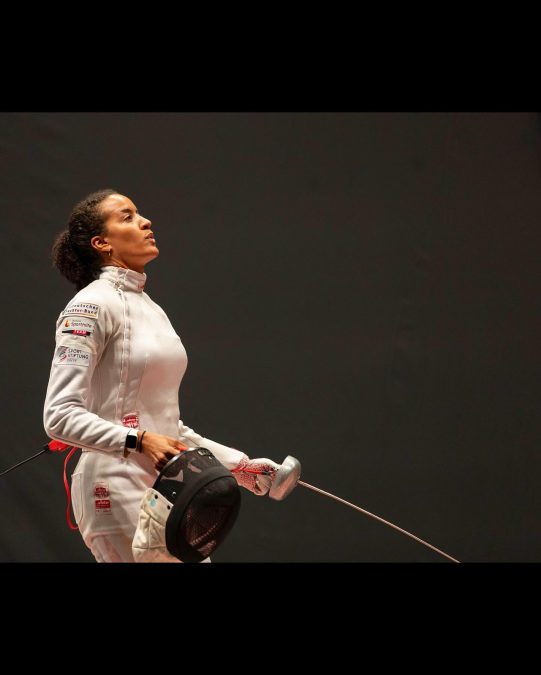
However, the German-born athlete questioned the adequacy of this support, especially when managed through the National Olympic Committee of Kenya (NOCK). “You tell me if this is enough to fly two people out to any competition,” she posed, underlining the financial impossibility of assembling even a minimal support team.
“Representing a rotten federation that withholds not some, but all of their assets,” she stated, in a strong indictment of the Kenya Fencing Federation. She further accused the wider system of complicity, alleging that instead of addressing such issues, officials are rewarded with influential positions.
Ndolo referenced the controversial elevation of her federation’s president to a senior role within NOCK, describing it as evidence of a system that fails to hold leaders accountable.
Meanwhile, Kelvin Kiarie and Alexandra Ndolo isolations paint a troubling picture of governance gaps and a lack of inclusivity in Kenyan sport.