Eliud Kipchoge reflects on his difficult early life in Nandi before breaking into global stardom
By Joel Masibo, March 12, 2026World marathon legend Eliud Kipchoge has opened up about the difficult circumstances that shaped his early life in a Nandi village, revealing how perseverance, sacrifice, and his mother’s determination played a crucial role in shaping one of the greatest long-distance runners in history.
Speaking about his upbringing in a local forum recently, the 41-year-old Olympic champion recalled growing up in a modest household where his mother single-handedly raised the family and instilled values that later guided him through life and sport.
Early life
“I was raised by a single mother. We are a small family of four, and I’m the lastborn. The Kalenjins do not respect anyone raised by a woman; they do not even think of giving them leadership, and they say it openly. That is our culture,” Kipchoge said.
Despite the societal challenges associated with the Kalenjin culture he described, Kipchoge credits his mother’s resilience and sacrifice for ensuring he never lacked basic needs, including education.
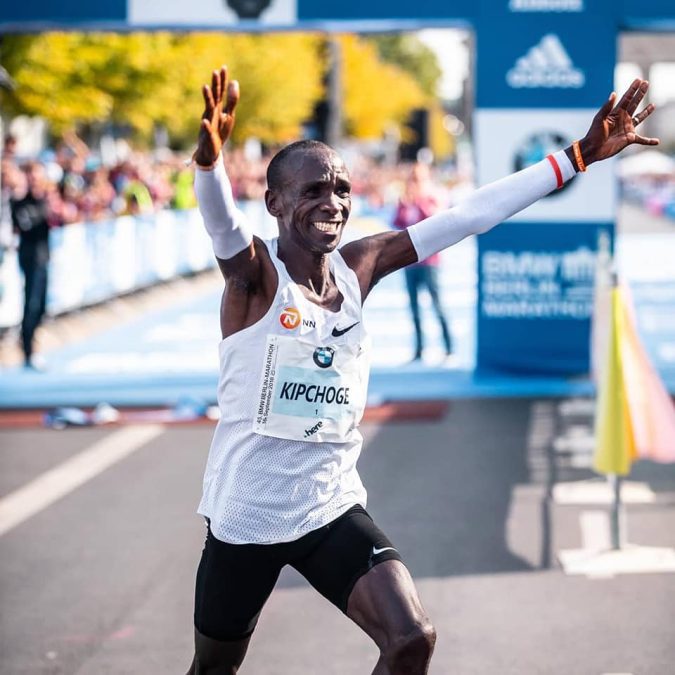
“My mother was a nursery school teacher; she earned peanuts, but when I was in school, my mother retired. I am happy that I did not lack school fees; our mother fed us with money from alcohol, but luckily, she did not drink. When chang’aa was ready, she could test it by pouring it into the fire, and you could see the flame, but nevertheless, I am here to start,” he added.
Village struggles
Before his rise to global athletics fame, Kipchoge’s life revolved around simple village jobs. He revealed that one of his earliest sources of income came from delivering milk using a bicycle, a job that helped him finance his first running gear.
“Before venturing into sports, I was employed for six months, got a bike and supplied milk in the village. I was paid Ksh1 per litre, but I was happy because I used to get free breakfast. I saved the money and bought items for running, and I started running like any other boy.”
His turning point came in the early 2000s when he began competing in local athletics competitions. Although he initially missed out on a major jackpot, Kipchoge believes that setback ultimately shaped his future.
“One day in 2002, there was a six-series championship; I won five and lost one, losing a jackpot of Ksh 1 million. But that was a blessing; maybe if I got a million, I would not be here. The following year, I ventured into the same series, and I won a jackpot of Ksh300,000. The boy who was raised by his mother started receiving respect from the community.”
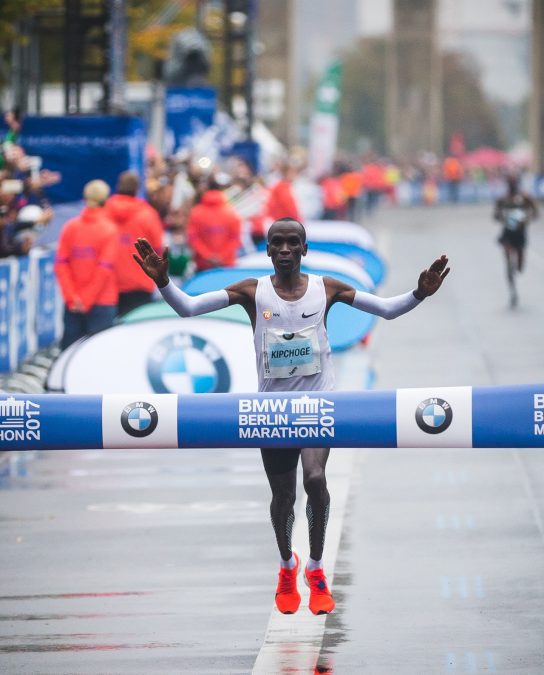
The breakthrough soon followed on the international stage. Kipchoge recalls how his first global outing marked the beginning of a remarkable career that would later see him dominate long-distance running and rewrite marathon history.
Global appearance
Kipchoge claimed his first individual world championship title in 2003 by winning the junior race at the World Cross Country Championships.
“In 2003, I went for my first outing, and I won a gold medal in cross-country. I came back three months after the cross country, and I won a world title.”
Kipchoge is the 2016 and 2020 Olympic marathon champion and was the world record holder in the marathon from 2018 to 2023, until that record was broken by the late Kelvin Kiptum at the 2023 Chicago Marathon. Kipchoge has run 4 of the 10 fastest marathons in history.
On Saturday, October 12, 2019, Kipchoge ran the marathon distance for the Ineos 1:59 Challenge in Vienna, achieving a time of 1:59:40.2, becoming the first person in recorded history to do a sub-two-hour marathon, although the run did not count as a new marathon record.
From a young boy delivering milk in the village to becoming one of the most celebrated athletes in the world, Kipchoge’s story remains a powerful testament to resilience, humility, and the transformative power of determination.