Advertisement
From nightclubs to restaurants: How Nairobi CBD lost its after-dark pulse
21st August, 2026 04:42 PM
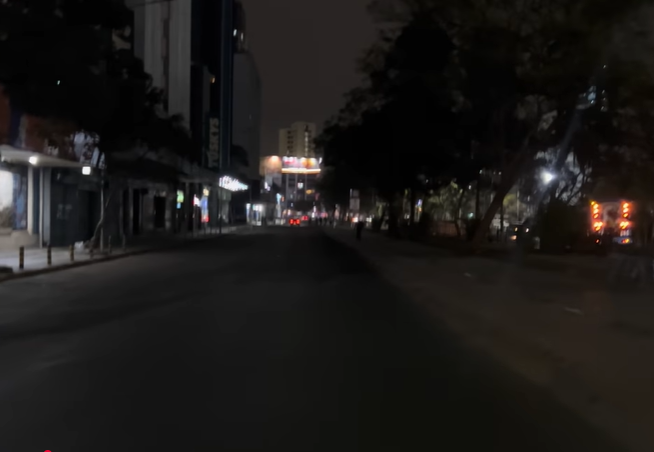
There was a time when Nairobi did not need much convincing to stay awake, because Friday evening in the Central Business District (CBD) meant something different from the working week, with Kimathi Street, Moi Avenue, Koinange Street and the streets around them slowly changing character as offices emptied, traffic thickened and the lights of bars and nightclubs began to glow.
The city had a rhythm after dark, and you did not have to travel to Westlands, Kilimani or an estate on the edge of town to find it, because you could finish work, walk a few metres and find a place to eat, drink, dance and lose track of time.
Today, that Nairobi feels increasingly like an old photograph, especially when you walk through parts of the CBD at around 10 pm and notice the difference between the city people remember and the city that now exists. Many businesses have pulled down their shutters, restaurants are clearing the last tables, coffee shops are switching off their lights, and the streets become strangely quiet for a capital city that is supposed to be awake.
There are still clubs operating in Nairobi, and some of them are doing very well, but the problem is that the centre of the city no longer has the concentration of late night entertainment venues that once made it a destination in its own right, which means that the story is not simply about restaurants becoming popular but about an entire nightlife ecosystem moving, shrinking and, in some parts of Nairobi, disappearing.
Nairobi once had clubs almost everywhere in the CBD
The scale of the change becomes clearer when one looks at the names that once populated the city centre, because a 2021 publication of Nairobi’s old nightlife listed clubs including Hollywood, Brilliant, Vision, Hornbill, Hunters, Polos, Ibiza, Wallet, Heartz, Verandah, Zeep, Betty’s, Psys, Zigzag, Porter House, Wine Bar and Steps, Florida 2000 and Mad House. The report noted that Kimathi Street and Lane alone once had about 12 nightclubs.
These were not obscure little drinking dens hidden behind an unmarked door, because they were part of the geography of Nairobi and formed a recognisable network of places where people knew they could go when the working day ended and the night began.
Florida 2000, popularly known as F2, stood next to Kenya Cinema on Moi Avenue and became associated with reggae sessions and freestyle battles before eventually closing in 2015.
New Florida, or Mad House, on Koinange Street was another landmark that became associated with late-night entertainment, while Tacos, which later became I-Club, was another familiar name on Kimathi Street. Club Bettyz, Secrets Lounge, Club Envy, Club Sylk and many others also disappeared or changed identities.
The CBD was, in many ways, Nairobi’s original nightlife district, and then the restaurants came.
Where clubs disappeared, restaurants appeared
The transformation is not a matter of imagination, because there are documented examples of former nightlife spaces becoming restaurants or other commercial premises.
Club Fahrenheit on Kimathi Street, which had itself replaced Silk, eventually gave way to restaurant businesses, while the site of Club Tacos and later Gravity became Pronto Restaurant. I-Club’s former space became Pepino’s Pizza, Club Sound on Kaunda Street became City Classic restaurant, while Club Psys was replaced by Dream Bean coffee shop. Gravity was also replaced by Café Pronto.
Simmers, another famous CBD social spot, disappeared, while Florida, Zeep and New Florida were among the other old establishments that fell away through demolition, redevelopment or closure.
Another publication reported in 2020 that in the previous decade the CBD had increasingly given way to restaurants, banking halls and business stalls as the old partying hubs lost their appeal, with Kimathi Street already having more than 10 restaurants competing for customers at the time.
There is something almost comical about the transformation, because a street that once needed several nightclubs to accommodate Nairobi’s appetite for music and alcohol can now have restaurants, coffee shops and eateries sitting almost shoulder to shoulder, all competing for the same lunch crowd.
Nairobi did not stop eating; it simply became much better at doing it before bedtime.
The 10 pm problem is real
One of the biggest differences between a restaurant and a nightclub is not the menu but the clock, because restaurants are generally built around meals while nightclubs are built around the night, and that distinction matters when considering why some parts of Nairobi now feel unusually quiet after dark.
Restaurants can be full at 7 pm, remain busy at 9 pm and still have customers at 10 pm, but by that point the mood often begins to change as staff start clearing tables, the last orders are discussed, kitchen doors become quieter, and customers begin checking their phones for transport. By 11 pm, the evening is effectively over for many establishments.
A nightclub, by contrast, is only getting started at that hour, which is why replacing a nightclub with a restaurant changes much more than the type of business operating in a particular building.
Under Nairobi’s Alcoholic Drinks Control and Licensing Act, a restaurant alcoholic drink licence permits sales from 5 pm to 11 pm on weekdays and from 2 pm to 11 pm on weekends and public holidays, with closure permitted no more than one hour beyond the authorised selling time. A proprietary club, including a nightclub, has a much later licensing window, from 7 pm to 3 am.
That difference helps explain the strange feeling that now hangs over parts of the CBD, because when a city replaces a nightclub with a restaurant, it does not simply replace one business with another but can remove several hours of economic and social activity from the night.
The CBD did not simply lose clubs. It lost a habit
This is perhaps the most important part of the story, because people do not create nightlife merely because there is a building with a bar inside it. Nightlife grows when several businesses operate around one another and people develop the habit of going out, meaning that a club brings customers, customers create demand for taxis, taxis bring drivers, drivers need fuel, food and parking, while musicians, DJs, security guards, photographers, promoters, waiters, bartenders and vendors all benefit from the same movement of people.
Even the small food seller outside the club can make money from people who have spent several hours dancing and suddenly discover that a smokie or chips masala is the most important thing in the world.
Once the clubs disappear, that chain becomes weaker, and the CBD therefore loses more than loud music because it also loses the economic activity that happens between midnight and 3 am.
COVID did not start the decline, but it accelerated it
It would be unfair to blame restaurants alone, because Nairobi’s nightlife was already under pressure before COVID-19, as rising rents, competition from newer entertainment districts, security concerns, changing consumer habits, regulation, and the migration of customers towards residential areas were already hurting CBD clubs.
The pandemic, however, delivered a brutal blow, because night curfews and restrictions on bars and entertainment venues effectively switched off the nightlife economy. The Standard reported in 2024 that more than 30 per cent of bars and restaurants operating before the pandemic had shut down, citing the Pubs, Entertainment and Restaurants Association of Kenya. The same report noted that several iconic Nairobi entertainment establishments, including Florida 2000, Mojos, B-Club and Kiza, folded during the wider period of disruption.
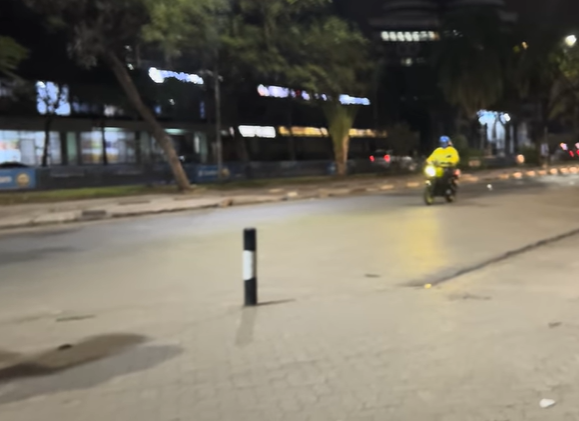
Mojos is particularly symbolic because the Banda Street club was demolished in 2021 after it had already struggled to resume operations following COVID restrictions, having been one of the last major nightlife names around that part of the CBD following the closure of Tribeka next door.
The pandemic also changed where Nairobians wanted to drink, because instead of travelling into the CBD, people increasingly preferred establishments closer to home. Estate nightlife expanded, and new entertainment districts developed in Westlands, Kilimani, along Ngong Road and in other parts of the city.
The nightlife did not disappear completely; it moved.
Restaurants won because they fit the new Nairobi
There is also a business reason for the restaurant boom, because restaurants appeal to a much broader customer base and can serve office workers at lunchtime, families in the evening, couples on dates, people holding meetings and customers ordering takeaway. A nightclub depends much more heavily on discretionary spending and late-night socialising.
A 2020 report noted that club operators were struggling with high CBD rents, parking problems, regulation and the growing preference among customers to drink closer to where they lived. It also observed that investors were increasingly concentrating on restaurants and eateries aimed at the working population.
For a landlord, a restaurant can therefore look like a safer tenant, while for an investor a restaurant can potentially make money throughout the day. For a customer who has work at 8 am the following morning, a restaurant can also be much more attractive than a nightclub where the night only becomes interesting when the next working day is beginning to threaten.
The problem is that a city made entirely of sensible businesses can become remarkably boring after dark.
Nairobi has also become afraid of its own noise
There is another complication because nightlife cannot exist without sound, yet Nairobi’s entertainment industry has repeatedly collided with residents and authorities over noise.
In 2025, Nairobi authorities again moved against entertainment establishments over noise complaints, with a list of venues facing closure, and the dispute was not limited to traditional clubs because bars, lounges, eateries and other entertainment businesses were caught in the same regulatory battle.
The complaints are legitimate because nobody wants to live next to a club where the bass makes the windows vibrate until 3 am, but Nairobi has never really solved the bigger question of where exactly nightlife should happen.
If clubs are pushed out of residential areas because residents deserve peace, that is reasonable, but if clubs disappear from the CBD because the city centre is expected to be quiet by night, that creates another problem because a capital city needs somewhere for adults to go after dinner.
The strange rise of the restaurant that wants to be a club
Nairobi’s answer has increasingly been the hybrid establishment, where the restaurant becomes a lounge, the lounge becomes a bar, the bar brings in a DJ, and the music becomes louder at 10 pm as the restaurant tables are pushed aside, leaving everyone to pretend they came for dinner.
This model has become common because it tries to satisfy both worlds, giving investors the daytime restaurant business while allowing some nightlife in the evening.
Some establishments are even deliberately designed around the transition. In Westlands, for example, Alloy Lounge advertises separate restaurant, lounge and club operations, with its club running from 10 pm to 4 am.
That is a useful illustration of what Nairobi’s nightlife market now looks like, because it is not necessarily dead but increasingly concentrated in venues specifically designed to operate late.
The problem is that the CBD has far fewer of these spaces than it once did.
And this is why 10 pm feels so quiet
The strangest thing about Nairobi’s changing nightlife is not that people no longer want to go out, because they clearly do, but that the city has become geographically fragmented.
The CBD may be quiet while Westlands is busy, an estate may be buzzing while Kimathi Street is almost empty, and a rooftop somewhere may be packed while an entire stretch of the old entertainment district has gone dark.
Nairobi’s nightlife has therefore become less of a citywide experience and more of a collection of pockets, and that matters because a strong nightlife district feeds on density. People want to know that if one place is boring, another one is five minutes away, while restaurants, bars, clubs, live music, street food, taxis and people moving around all contribute to the sense that the district itself is alive.
When everything closes early, the streets lose that energy, and once the streets become quiet, people become less willing to come out, creating a vicious circle in which fewer people go out because there are fewer places to go, and fewer businesses stay open because fewer people are coming out.
Nairobi County itself knows something has been lost
This is not only a complaint from nostalgic Nairobians who remember Florida, Tribeka and Mojos, because Nairobi County officials have acknowledged the problem.
In August 2025, Nairobi County Chief Officer Geoffrey Mosiria called for entertainment businesses to return to the CBD, arguing that the absence of clubs had made the city centre less vibrant and had contributed to entertainment moving into residential areas.
In January 2026, Mosiria again lamented the decline of CBD nightlife, saying that most nightclubs were no longer operating in the city centre. He also criticised establishments operating under bar and restaurant licences while functioning as nightclubs beyond their authorised hours.
That is an important distinction because Nairobi cannot revive nightlife simply by telling restaurants to behave like clubs.
A restaurant licence and a nightclub licence are not the same thing, and the county’s own law provides different operating hours for the two categories.
If Nairobi wants a serious night economy, it needs properly licensed places designed and regulated for it.
So, did restaurants kill Nairobi nightlife?
Not entirely, because that would be too easy and would ignore the landlords, developers, regulators, security concerns, COVID-19, changing consumer behaviour, rising costs, competition from estates and the rise of new nightlife districts.
But restaurants have undoubtedly occupied much of the physical and commercial space once associated with nightlife in the CBD.
The evidence is visible in the names, with Fahrenheit becoming a restaurant space, Gravity becoming Café Pronto, I-Club’s old home becoming Pepino’s Pizza, and other former clubs disappearing beneath redevelopment, becoming coffee shops, eateries or other businesses.
The result is a city centre that can feel surprisingly sleepy at the very hour when Nairobi should be beginning its second shift.
There is nothing wrong with a good restaurant, because Nairobians love food and the city’s restaurant scene has become one of its strongest features, but a restaurant cannot completely replace a nightclub because dinner is not dancing, a cappuccino is not a DJ set and closing the kitchen at 10 pm does not create nightlife simply because someone has put a speaker in the corner.
Nairobi does not necessarily need the old days back, because some of those clubs had serious problems and the city has every right to demand safety, responsible alcohol sales, proper licensing and reasonable noise levels.
What it needs is a functioning night economy that has somewhere legitimate to exist, because a capital city that is full of people at 2 pm and strangely quiet at 10 pm is not necessarily a safer, calmer or more modern city.
Sometimes it is simply a city that has forgotten what to do after dinner.