Advertisement
Enrique admits PSG deserved Champions League victory after difficult campaign
31st May, 2026 08:32 AM
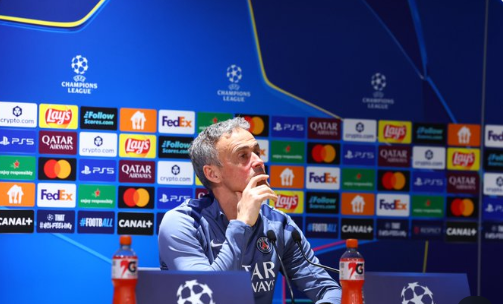
Defending champions Paris Saint-Germain made history as they won the 2026 UEFA Champions League, beating Arsenal 4-3 in the final on Saturday, May 30, 2026 in Budapest. Despite an inconsistent start to their European campaign, Luis Enrique’s men have transformed into one of the continent’s most formidable teams, winning the championship two times on the bounce.
Following the win at the Puskas Arena, PSG boss Luis Enrique admitted that his men deserved to win the Champions League after experiencing a difficult camapign.
”We suffered a lot, we played against strong teams in Europe and we deserved to win this trophy.” Enrique said.

Difficult beginning, strong recovery
PSG’s journey to the final was far from straightforward. Under the competition’s revamped league format, the French giants managed four victories, two draws, and two losses, leaving them in 11th place and forcing them into an additional playoff round instead of securing automatic qualification for the Round of 16.
A frustrating draw against Newcastle United highlighted the team’s early struggles, as their possession-based style often failed to translate into consistent results. Questions emerged regarding the squad’s balance and ability to compete with Europe’s elite.
However, everything changed once the knockout stages began. PSG increased the intensity of their pressing game, sharpened their midfield structure, and became significantly more effective in attack. Tactical adjustments by coach Luis Enrique helped the team find greater consistency and confidence.
Dominant knockout campaign
The turnaround began with a playoff clash against AS Monaco. PSG survived a thrilling encounter, advancing 5-4 on aggregate in a tie filled with attacking football and dramatic momentum swings.
They then dismantled Chelsea FC in the Round of 16. A commanding first-leg display gave PSG a huge advantage before they comfortably sealed qualification with a convincing away performance, progressing by an overwhelming 8-2 aggregate score.
The quarter-finals brought a stern test against Liverpool FC. PSG produced two disciplined performances, shutting down Liverpool’s renowned pressing game and winning both matches 2-0 to advance 4-0 overall.
Their toughest challenge came in the semi-finals against Bayern Munich. The tie remained finely balanced throughout, but PSG eventually edged the German champions 6-5 on aggregate. A crucial draw in Munich secured their place in the final.
Key figures behind PSG’s success
Several players have been instrumental in PSG’s run to Budapest.
Khvicha Kvaratskhelia has been one of the team’s standout performers, regularly troubling defenders with his pace, movement, and creativity.
Alongside him, Ousmane Dembélé has provided unpredictability and attacking flair, while Désiré Doué has impressed with his maturity and technical quality in midfield.

The supporting cast has also been vital. Achraf Hakimi has offered constant attacking support from defence, while Vitinha and Fabián Ruiz have provided composure and stability in the middle of the park.
Luis Enrique’s blueprint
PSG’s success has been built around a clear footballing philosophy. Luis Enrique has emphasised ball control, intelligent movement, and coordinated pressing.
The French side frequently dominates possession, patiently building attacks before accelerating in dangerous areas. Without the ball, their forwards work tirelessly to disrupt opponents and force mistakes high up the pitch.
Another notable feature of Enrique’s approach has been his adaptability. PSG have often managed first-leg matches carefully before increasing their attacking aggression when opportunities emerged later in the ties.