Advertisement
Willis Otieno: High cost of living is the result of waste and corruption
15th January, 2026 05:17 PM
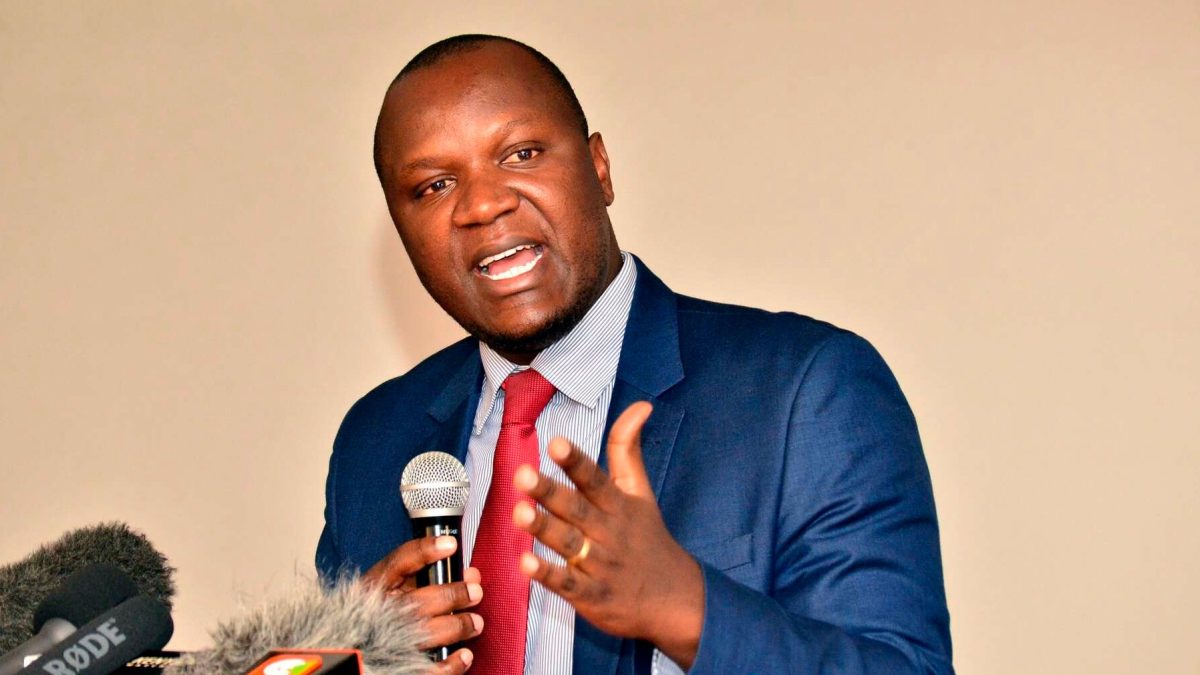
Lawyer Willis Otieno has dismissed claims that the economic hardships facing citizens are unavoidable or accidental.
In a statement on Thursday, January 15, 2026, Otieno argued that the high cost of living is the direct outcome of poor governance decisions, systemic waste, and entrenched corruption, rather than external forces beyond control.
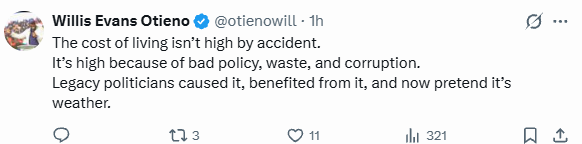
“The cost of living isn’t high by accident. It’s high because of bad policy, waste, and corruption,” Otieno stated.
He placed the blame squarely on what he described as legacy politicians, accusing them of creating the very systems that have burdened ordinary Kenyans, benefiting from them, and now distancing themselves from the consequences.
“Legacy politicians caused it, benefited from it, and now pretend it’s weather,” he added.
A growing number of Kenyans are linking the country’s rising levels of corruption and unethical behaviour to the high cost of living.
This is according to the National Ethics and Corruption Survey 2024 released by the Ethics and Anti-Corruption Commission (EACC) on Tuesday, August 5, 2025.
The survey shows that 67.6 per cent of respondents believe corruption and unethical conduct are high, an increase from 57.3 per cent in the 2023 survey.
Respondents cited the high cost of living as the main reason for the high level of unethical conduct and corruption, followed by rampant corruption in poor public service delivery, bad governance and increased reporting of corruption cases.
“High cost of living, 17.9 percent rampant corruption in public offices, 15.8 percent, poor service delivery in public service 11.8 percent, bad governance 11.2 per cent and more corruption incidents being reported, 11.1 percent were the main reasons for rating the level of unethical conduct and corruption as high,” read the survey.

Among those who felt corruption and unethical practices had increased, 22 per cent directly linked it to the high cost of living, while 12.7 per cent pointed to the rise in reports of unethical conduct, and 12.6percent cited the growing demand for bribes in service delivery. Another 10.8 percent blamed the lack of action against corrupt officials.