Advertisement
Pain at the pump as EPRA raises Petrol and Diesel prices by Ksh16.65 and Ksh46.29 respectively
14th May, 2026 08:29 PM
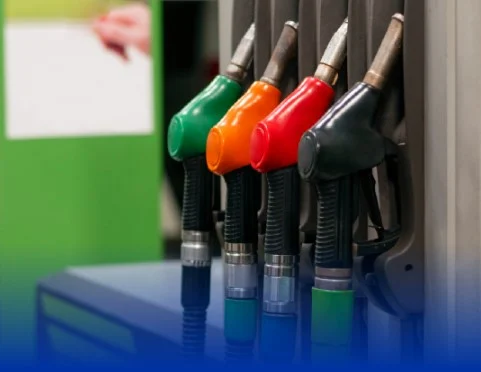
Kenyan motorists are set to dig deeper into their pockets after the Energy and Petroleum Regulatory Authority (EPRA) announced a sharp increase in fuel prices, pushing the cost of transport and goods even higher amid mounting pressure on household budgets.
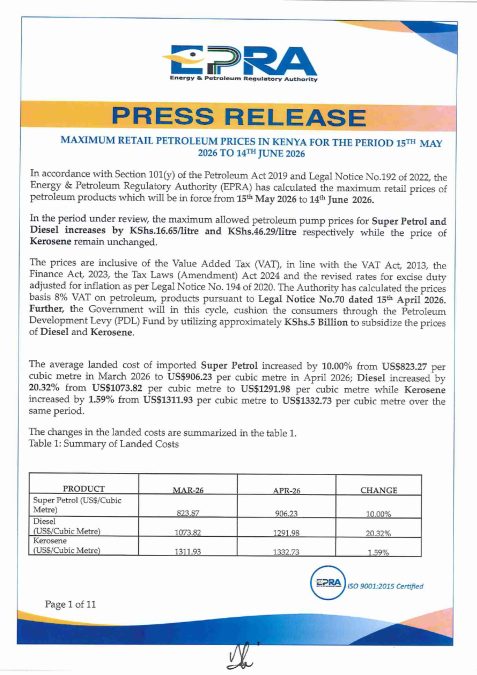
In its latest monthly fuel review released Thursday, May 14, 2026, the regulator said the prices of Super Petrol and Diesel would rise by Ksh16.65 and Ksh46.29 per litre respectively, while Kerosene prices would remain unchanged for the pricing cycle running from May 15 to June 14, 2026.
In Nairobi, Super Petrol, Diesel and Kerosene now retail at Ksh214.25, Ksh242.92 and Ksh152.78 respectively, effective midnight for the next 30 days.
In Mombasa, Super Petrol, Diesel and Kerosene now retail at Ksh211.09, Ksh239.64 and Ksh149.49 respectively.
In Kisumu, Super Petrol, Diesel and Kerosene now retail at Ksh213.91, Ksh243.14 and Ksh153.03 respectively.
The increase marks one of the steepest adjustments in recent months, particularly for Diesel, the fuel that powers much of Kenya’s public transport, freight and agricultural sectors.
EPRA attributed the increase to a surge in global fuel prices and higher import costs.
The average landed cost of imported Super Petrol rose by 10 per cent between March and April 2026, climbing from $823.27 to $906.23 per cubic metre. Diesel posted an even steeper increase of 20.32 per cent, rising from $1,073.82 to $1,291.98 per cubic metre over the same period.
Kerosene, widely used in low-income households, recorded a comparatively modest increase in international cost prices, allowing local pump prices to remain unchanged.
The authority said the government would cushion consumers through the Petroleum Development Levy Fund, deploying approximately Ksh5 billion to subsidise Diesel and Kerosene prices.
“The prices are inclusive of Value Added Tax and reflect changes in international petroleum prices as well as applicable taxes and levies,” EPRA said in the statement.
Kenya imports all its refined petroleum products, leaving local pump prices heavily exposed to fluctuations in global oil markets and foreign exchange rates. Fuel imports are denominated in US dollars, making the Kenyan shilling’s performance against the dollar a key factor in determining retail prices.
Although the exchange rate remained relatively stable during the review period, international petroleum prices rose sharply, particularly for Diesel, driven by increased global demand and supply chain pressures – especially with the ongoing situation at the Strait of Hormuz, where much of the global energy passes through.
The latest adjustment is expected to place additional strain on consumers and businesses already grappling with the high cost of living.
Public service vehicle operators and manufacturers are likely to pass the increased fuel costs to consumers in the form of higher fares and commodity prices in the coming weeks.
EPRA defended the pricing mechanism, saying the Petroleum Pricing Regulations are intended to ensure importers recover legitimate costs while protecting consumers from excessive pricing.
Author
Martin Oduor
The alchemist of literary works - a master wordsmith with a proven record of transforming the raw materials of language into a rich tapestry of emotion, thought, and imagination.
View all posts by Martin Oduor