Advertisement
K-shaped economy: Justina Wamae on why the rich get richer
09th December, 2025 10:43 AM
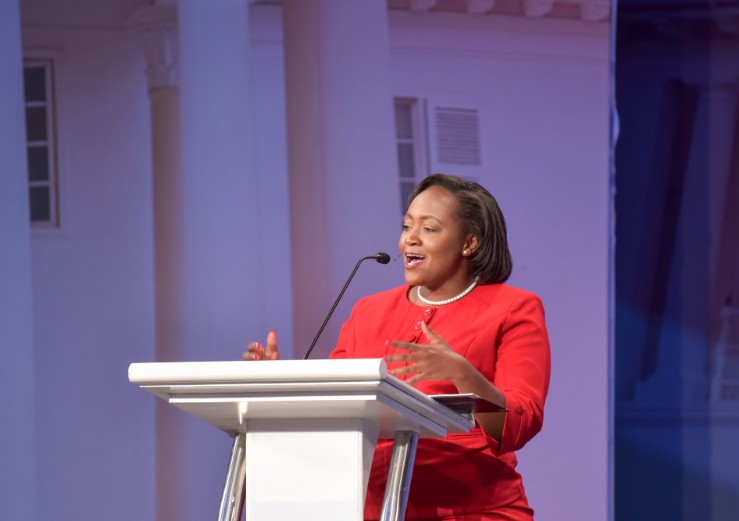
Former Roots Party deputy presidential candidate Justina Wamae has issued a stark warning to Kenyans about the widening gap between the rich and the poor, describing the situation as a classic example of a K-shaped economy.
In a statement shared on her X account on Tuesday, 9 December 2025, Wamae urged ordinary citizens not to blame themselves when they struggle to make ends meet while some continue to buy luxury cars.
Also watch: Justina Wamae details how private sector can unlock Kenya’s economic potential
She highlighted that the current economic trends favour a small segment of the population, leaving many others behind.
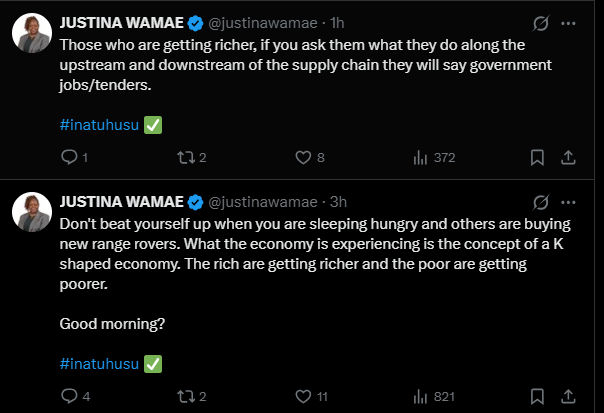
“Don’t beat yourself up when you are sleeping hungry, and others are buying new Range Rovers. What the economy is experiencing is the concept of a K-shaped economy. The rich are getting richer, and the poor are getting poorer,” Wamae stated.
Adding;
“Those who are getting richer, if you ask them what they do along the upstream and downstream of the supply chai,n they will say government jobs/tenders.”
According to economists, a K-shaped economy occurs when different segments of society recover from an economic disruption at drastically different rates.
Also watch: Justina Wamae: Election winners lack real-world business experience
While some people and businesses thrive, others continue to face hardship. Those who do well often own assets, hold well-paying jobs, or benefit from connections in key sectors like government tenders and supply chains.
Meanwhile, lower-income earners are left dealing with rising costs of living, insecure jobs, and stagnant wages. This divergence means that even as parts of the economy grow, the benefits are concentrated among the wealthy, creating deeper inequality.
In such an economy, overall growth figures can be misleading. A thriving stock market or GDP growth does not necessarily translate into improved living conditions for the majority, as gains are largely captured by those already wealthy.