Advertisement
Gachagua moment in the US? Why Americans in millions watched Karmelo Anthony trial
09th June, 2026 11:32 PM

Just a day after millions of Kenyans remained glued to their televisions, mobile phones and social media accounts while following the impeachment case of former Deputy President Rigathi Gachagua on Monday, June 8, 2026, another courtroom drama was unfolding thousands of kilometres away.
In the United States, millions of Americans were also closely following a high-stakes trial involving 19-year-old Karmelo Anthony, a teenager accused of fatally stabbing fellow student Austin Metcalf.
For hours, Americans followed live court coverage, analysed witness testimony and debated legal arguments surrounding the trial of 19-year-old Karmelo Anthony, a Texas teenager accused of fatally stabbing fellow student Austin Metcalf during a school sporting event.

Just as Kenyans waited anxiously for a three-judge bench to determine the political future of Gachagua, Americans waited for a jury to decide whether Anthony was guilty of murder or whether he had acted in self-defence.
The similarities raised an interesting question. What makes millions of people stop what they are doing and spend hours watching a court case unfold?
Who is Karmelo Anthony?
Karmelo Anthony is a teenager from Texas whose name became known across the United States following a fatal confrontation at a high school track meet in April 2025.
According to court proceedings, Anthony and 17 year old Austin Metcalf became involved in an argument over seating arrangements under a team tent during bad weather conditions.
The disagreement escalated into a physical confrontation.
Prosecutors told the court that Anthony pulled out a knife and stabbed Metcalf once in the chest. The wound proved fatal.
The case immediately attracted national attention because both the accused and the victim were teenagers and because the incident began as what many viewed as a minor dispute.
The verdict that America waited for
For more than a year, Americans followed developments in the case.
Supporters of Anthony argued that he acted in self-defence after feeling threatened during the confrontation.
Prosecutors maintained that the use of deadly force was unjustified and that the stabbing amounted to murder.
On Tuesday, June 9, 2026, a jury found Anthony guilty of first-degree murder, rejecting claims that he acted in lawful self-defence.
The verdict instantly became one of the most-discussed topics across American television networks, online forums, and social media platforms.
Why millions of Americans watched the trial
The Karmelo Anthony case contained many of the ingredients that typically draw massive public attention.

First, both the victim and the accused were teenagers whose lives changed forever in a matter of seconds.
Second, the case raised difficult questions about self-defence, personal responsibility and violence among young people.
Third, the trial was broadcast extensively, allowing viewers to follow testimony and evidence in real time.
Finally, the case triggered emotional debates about justice, race, safety in schools and the consequences of split-second decisions.
For many Americans, the verdict represented more than the fate of one teenager. It became a national conversation about society itself.
The Gachagua case that gripped Kenya
Back in Kenya, millions were similarly focused on the impeachment case involving former Deputy President Rigathi Gachagua.
The matter attracted enormous public interest because it involved one of the country’s most prominent political figures.
A three-judge bench was tasked with determining whether legal and constitutional procedures had been followed during the impeachment process.
For supporters and opponents alike, the ruling carried significant political implications.
Television stations provided live coverage while social media platforms filled with commentary, predictions and legal analysis throughout the day.
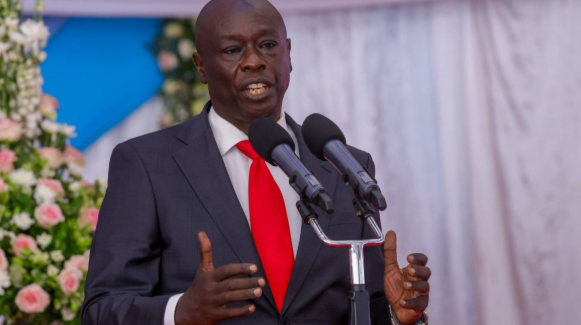
Why Kenyans followed every minute
Just as Americans viewed the Anthony trial as a test of justice, many Kenyans saw the Gachagua case as a test of constitutional governance.
The ruling had the potential to influence political alignments, public trust in institutions and future leadership contests.
Every statement from lawyers, every question from judges, and every legal argument became the subject of intense online discussion.
For many viewers, missing a key moment felt like missing an important chapter in the country’s political history.
What both cases reveal about human behaviour
Although the two cases were vastly different, one involving criminal justice and the other constitutional law, they shared a common feature.
Both involved uncertainty.
Psychologists have long noted that people are naturally drawn to unresolved outcomes. The human brain seeks closure, making court verdicts especially compelling.
Whether it is a murder trial in Texas or a high-profile political case in Nairobi, people become invested because the outcome affects how they understand fairness, accountability and justice.
That is why millions of Americans watched the Karmelo Anthony verdict and why millions of Kenyans followed the Gachagua ruling.